Quick answer
A mixed meet is not the season. Same event, same pool type, across months. Sign in to Gophin (free, no card) at home — not from the stands — and open Best Times or Compare Seasons. Rankings without that context add noise.
After a confusing meet where Rafa dropped time in one event but added in two others, we drove home in silence. That night, we sat down together and pulled up every result from the season. Seeing the full picture, the trends, the context, the events where she was actually still climbing, calmed us both. The noise faded and the real story came through.
Uncertainty fuels anxiety
When swimmers do not know whether they are improving, every meet feels like a verdict. Families see a single time and wonder if the whole season is off track. Without clear markers of evolution, emotions swing wildly after each race.
Unfair comparisons make it worse
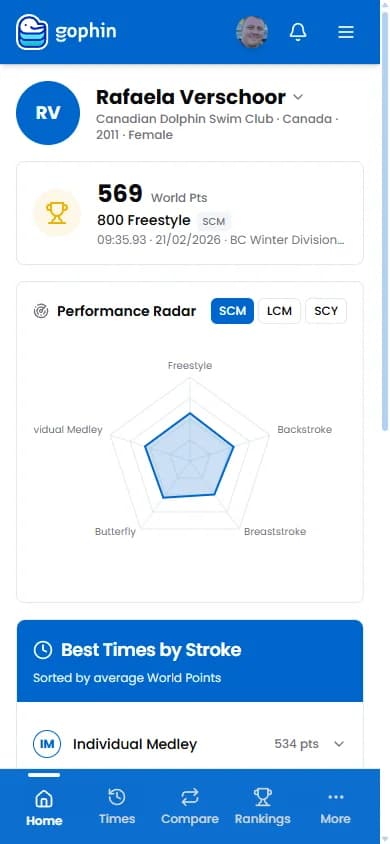
Looking at social media or statewide rankings without context pushes swimmers to compare apples to oranges. Different age groups, events, and training phases create misleading expectations. That pressure steals joy and confidence. For more on why raw rankings mislead, read why swim rankings don't tell the full story.

Context keeps comparisons healthy when rankings create pressure.
Organized data brings emotional safety
Dashboards that show meet results, personal bests, and evolution trends show how the athlete is really progressing. When families can see a stronger second half on the splits or a season that is still pointing the right way, they understand that a slower time does not equal regression. Our guide on how to track swimming times shows how to set this up. Sign in free, no card.
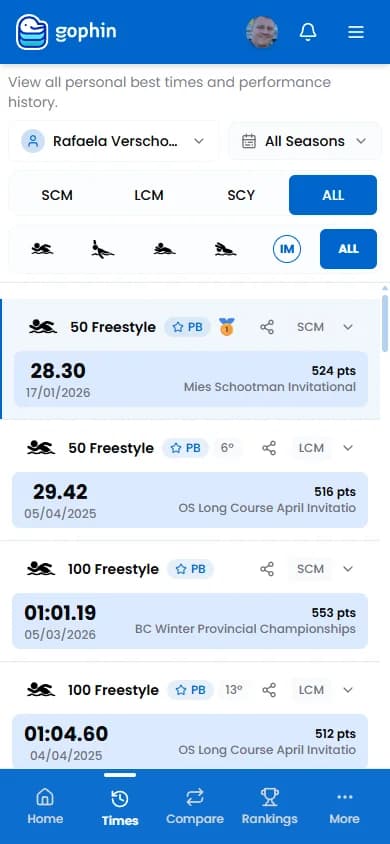

Transparent dashboards keep conversations objective and calm.
Conclusion
Clarity is not just about performance; it is about protecting the swimmer’s mindset. Organize the data and the noise fades away. See how parents are using data to stay grounded in our parent’s guide to calm swim progress.