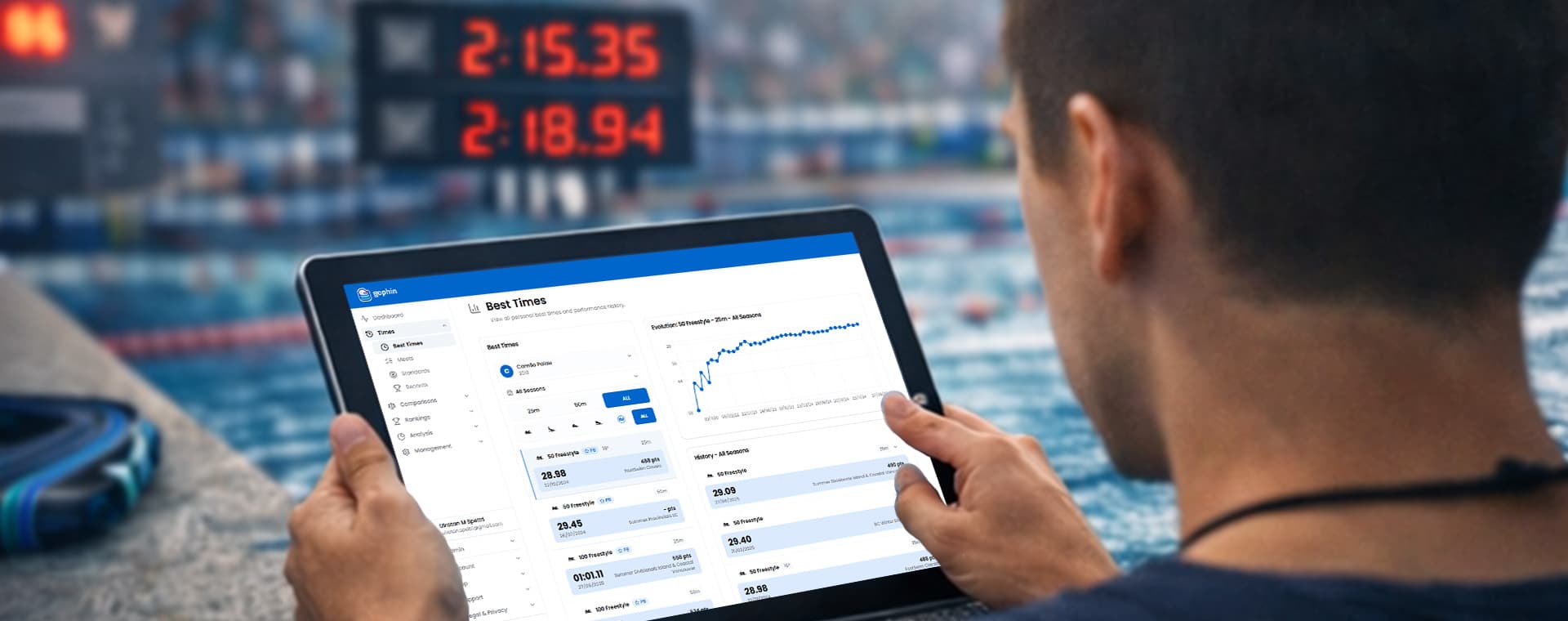
Quick answer
Gophin imports official meet results for the roster: PBs, splits, evolution charts, Compare tools. It does not plan workouts or store taper notes. Sign in free, no card. Take the race picture to the conversation; the sets stay yours.
Last season, Rafa's coach pulled me aside after practice and walked me through how he uses meet data to plan training blocks. He had race splits and progression charts in one place, plus his own taper notes on the side. That conversation made me realize coaches don't just need data; they need the race history without a second spreadsheet.
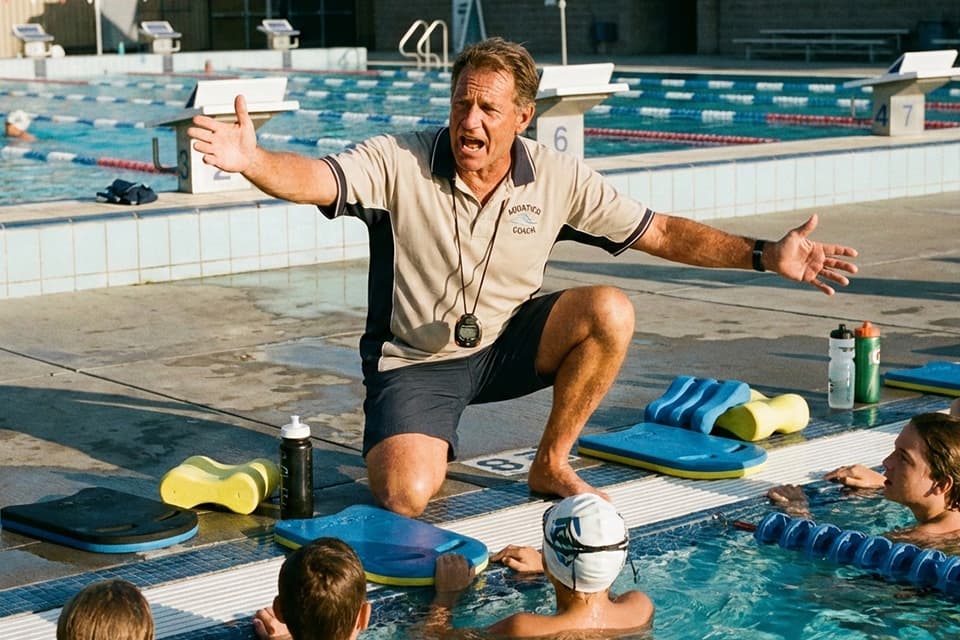
Organized competition data helps coaches spot patterns without spreadsheets.
Spot patterns without spreadsheets
Collecting meet splits and tracking personal best progressions lets coaches see patterns at a glance. Maybe the squad fades on the last 25 after a stretch of travel meets. When those race trends are visual, adjusting sets or recovery becomes a calmer conversation rather than guesswork. Gophin does not log the sets themselves.
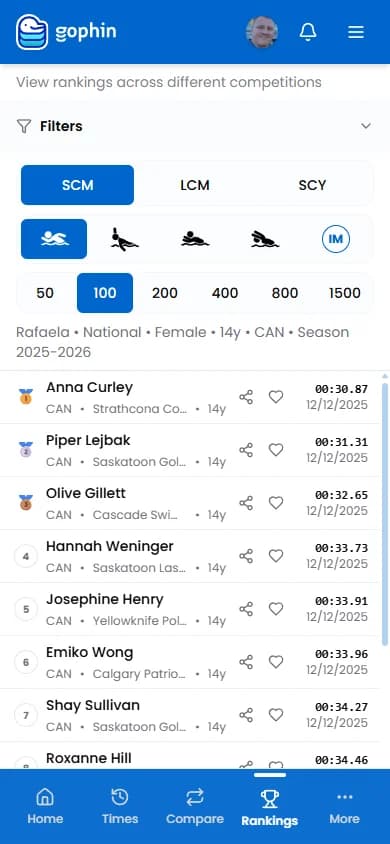
Measure evolution in meaningful ways
Data helps you compare athletes to themselves across the season. Instead of chasing new best times every weekend, look at how often they hold pace on the splits, how they rebound between meets, or whether the second half is closing. Evolution becomes clear when you compare the athlete to themselves. Our article on season-long progress over a single meet dives deeper into why this season-wide lens matters.
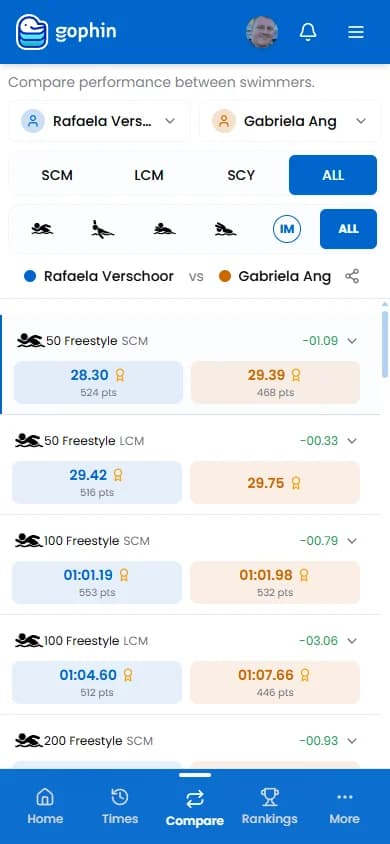
Communicate with confidence
When families ask "How is my swimmer doing?", showing charts and progression data feels more reassuring than vague answers. Organized data transforms conversations: "Your child’s back-half speed is now consistent across three meets, so we’re adding more race-pace sets," or "Here is why we expect a rebound after this training block." Everyone leaves the deck aligned.
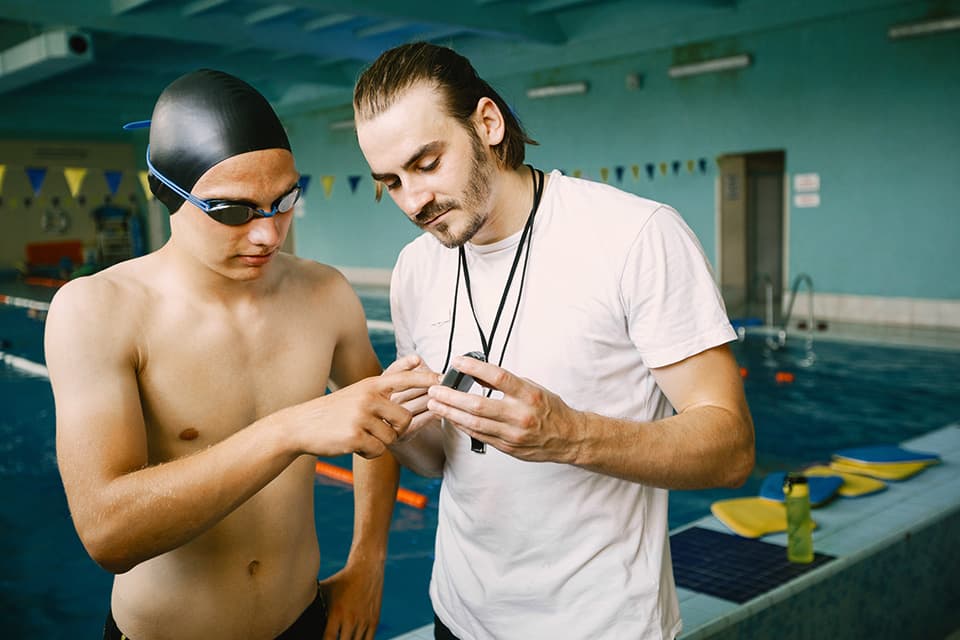
Clear visuals turn tough conversations into collaborative planning.
Conclusion
You do not need a second spreadsheet for race times. Sign in to Gophin (free, no card), favorite the roster, and let official results land after the meet file is up. See how to track swimming times automatically.