Quick answer
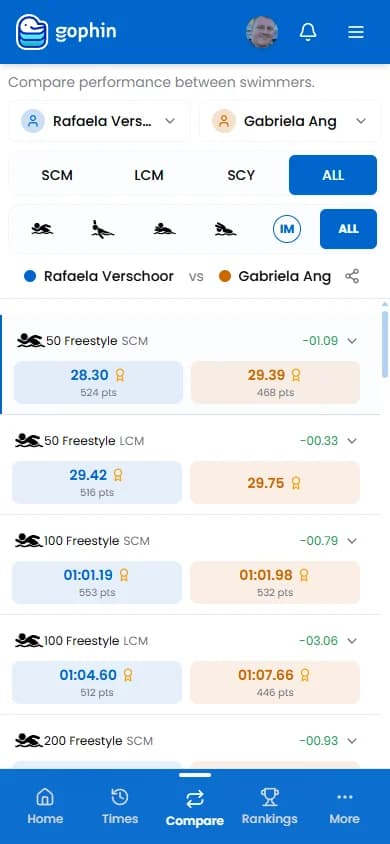
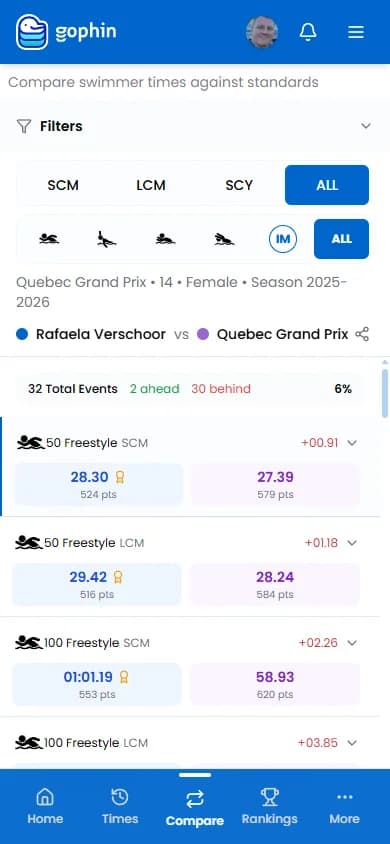
Raw times without age, event, and pool type are noise. Compare a 13-year-old 200 Free to another 13-year-old 200 Free in the same course, not to a 16-year-old on a taper. Sign in to Gophin (free) and use Compare Standards or Compare Swimmers with those filters on.
At a regional meet last winter, Rafa finished her 200 Free and immediately looked at the swimmer two lanes over, a girl who was sixteen and had been training twice as long. "She beat me by four seconds," Rafa said in the car, crushed. I spent the drive home explaining age groups, course types, and why comparing a thirteen-year-old to a senior swimmer is like comparing apples to oranges.
It took a while, but she got it. And that conversation taught me how much context matters when we look at swimming data.
Age, phase, and event change everything
Comparing a 14-year-old mid-distance swimmer fresh off a growth spurt with an 18-year-old sprinter tapering for championships makes zero sense. Age impacts physiology; training phase affects fatigue; event type rewrites the pace strategy. Without aligning those variables, the "comparison" is just noise that pressures athletes and confuses families.
Relative versus absolute comparisons
Absolute times look straightforward, but they hide context like altitude, round, and stroke. Relative comparisons ask: How did the swimmer perform versus their own season best? How far are they from the benchmark appropriate for their age group? That view highlights progress even when the absolute ranking does not move.
The importance of correct benchmarks
Using world-class standards for a developing age-group swimmer is demoralizing. Benchmarks must reflect the athlete’s age, event, and level. Provincial cuts, national cuts, or a realistic letter time give a reference that motivates improvement instead of panic. Once the swimmer reaches that level, the benchmark evolves with them. For a full breakdown of how benchmarks are structured, see our guide on swimming standards by age.
Clarity comes from organized data
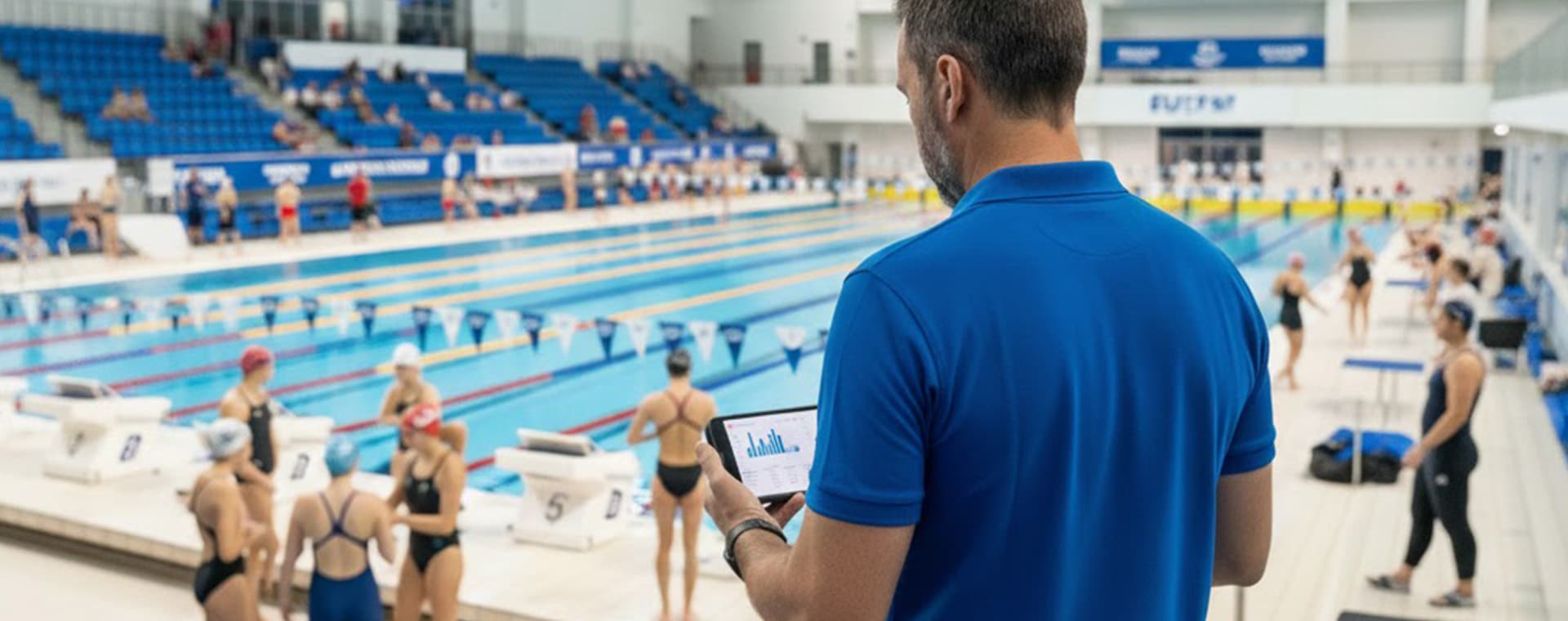
When clubs centralize meet results, personal bests, evolution charts, and standards comparisons, context is always one click away. Coaches defend decisions with evidence, swimmers understand what "good" means for them, and parents follow the story without speculation. Data-driven clarity replaces assumptions with shared reality.
Conclusion
Comparisons will always be part of competitive swimming, but they only add value when the context is transparent. Age, event, course, and the right cut must align before anyone calls it a fair comparison. Gophin does not show training phase. It shows official race times. Our Compare Standards tutorial walks through the filters. Sign in free, no card.