Why Canada’s structure creates consistent swimmers
Competitive swimming in Canada is organized in layers that follow age brackets and technical stages. Each athlete belongs to a group with goals tuned to their development phase, making it easier to calibrate training load, meet volume, and expectations each season. When a staff tracks progression within each bracket—instead of comparing every swimmer at once—the dialogue stays objective and breakthroughs happen without skipping steps.
Age divisions create clear milestones
Clubs set distinct checkpoints for development, age-group, and junior squads, tying every cycle to tangible technique and endurance goals. This segmentation lets coaches review five or six seasons of an athlete and see the full arc: when strength improved, when turns clicked, and how the first heavy training cycle landed. Without that age ruler, small fluctuations look dramatic; with it, coaches contextualize each swim.
Continuous tracking removes surprises
Every meet result is captured and connected to the swimmer’s history regardless of where they race. Constant updates reduce the reliance on parallel spreadsheets, make parent meetings more objective, and help athletes understand whether the current block is working. Partial data creates distorted narratives; when everything sits on one dashboard, it is obvious whether progress stems from technical gains or natural maturation.
Evaluate evolution in cycles, not isolated events
The culture favours six-to-eight-week windows for interpreting trends. Rather than reacting to a single bad swim, coaches compare clusters of races from the same period, weighing load, adaptation, and race strategy tweaks. This cyclical lens signals when to raise volume, extend taper, or add technical checkpoints. The focus shifts from “the last time” to “how the athlete behaved inside the plan.”
Centralized data connects coaches, parents, and swimmers
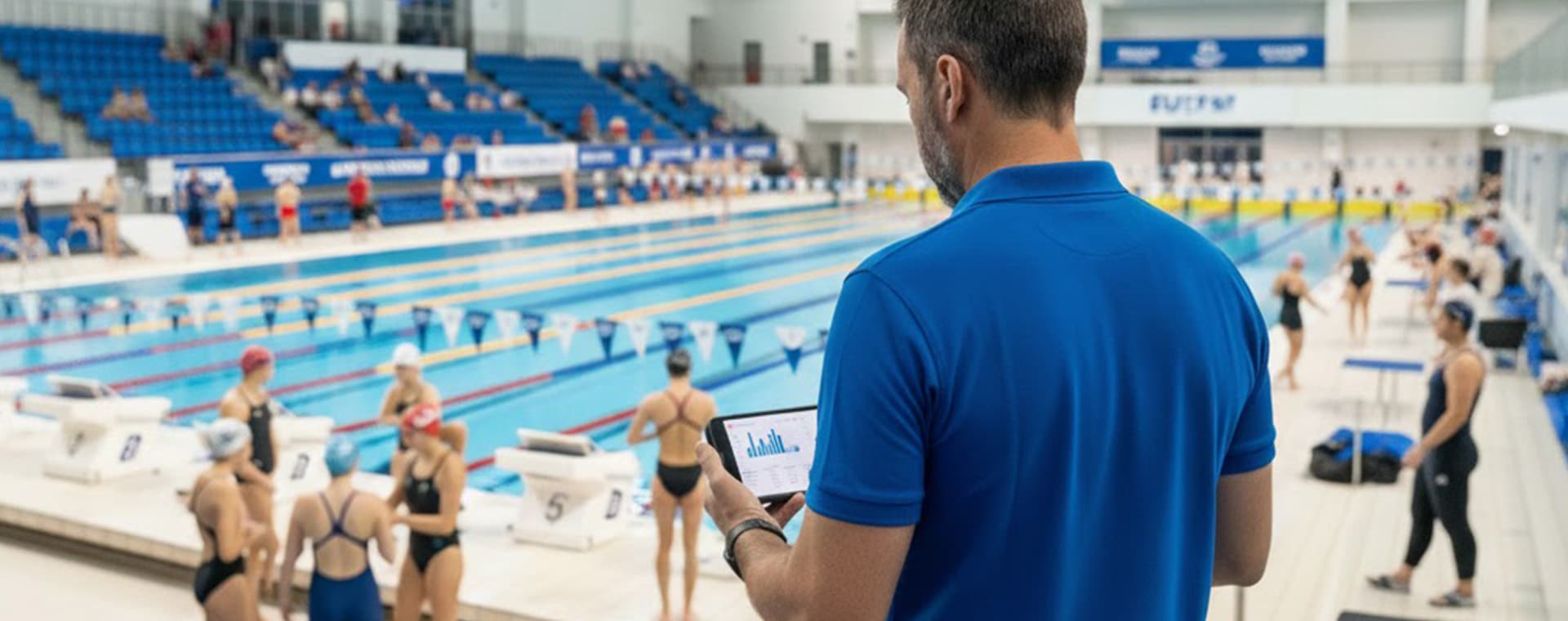
A single hub concentrates splits, training notes, physical checkpoints, and video analysis. Everyone navigates the same timeline with filters by age, event, and season. Parents understand what changed since the previous meet, coaches validate whether targets were met, and swimmers spot quiet wins—like holding speed on the second half—even when a personal best does not appear.
Conclusion
The strength of the Canadian model lies in combining age structure with accessible data. When categories, results, and cycles speak to each other inside one platform, decisions become sharper and development stops relying on gut instinct. That discipline—more than any single technology—is what sustains athletes’ long-term progress.