Quick answer
The drive home is for the person, not a live ranking hunt. Look at the same event, same pool type, after the meet file is up. Sign in to Gophin (free, no card). One slower swim is a data point. The season is the story.
I'll admit it: I used to check Rafa's times obsessively after every meet. On the drive home, at dinner, before bed. I'd compare her swims to the seedings, to last month's times, to other kids in her age group. One night Michelle looked at me and said, "You know you're more anxious than she is, right?" It stung because it was true.
That conversation changed how I approach swim meets. This article is for every parent who has been where I was, caring deeply but channeling it in a way that adds pressure instead of support.
Results are moments; progress is the pattern
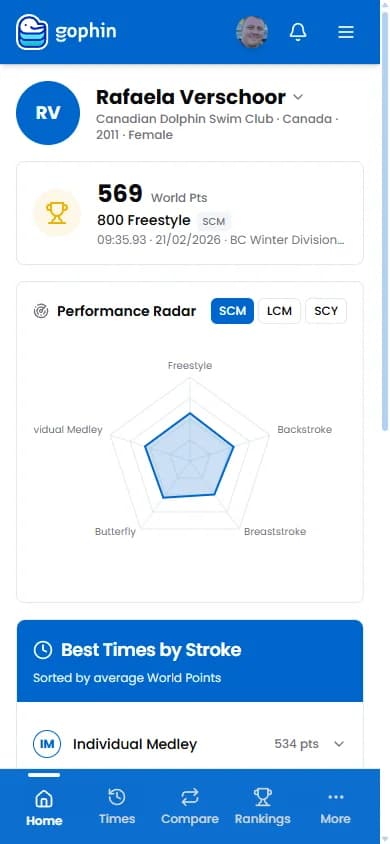
Scoreboards only show the final time. Progress is the pattern: same event, same pool type, across meets. A single slower swim might hide a stronger second half on the splits. Technique belongs to the coach. The chart is the clock.
Play the long game
Growth in swimming is not linear. There are weeks of heavy training, growth spurts, and mental adjustments. Viewing a season, or even multiple seasons, keeps emotions grounded. Ask coaches about target meets, training blocks, and what improvements they expect to see over months, not days.
Organized data keeps anxiety in check
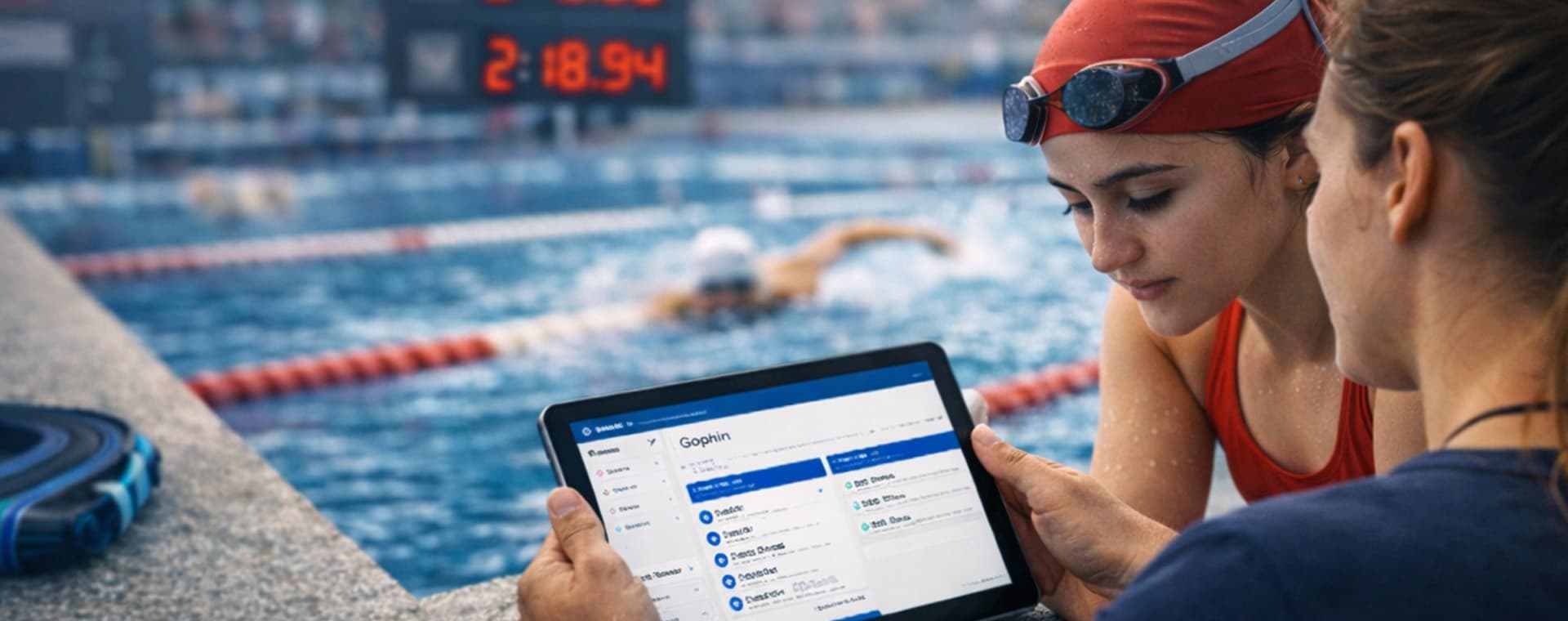
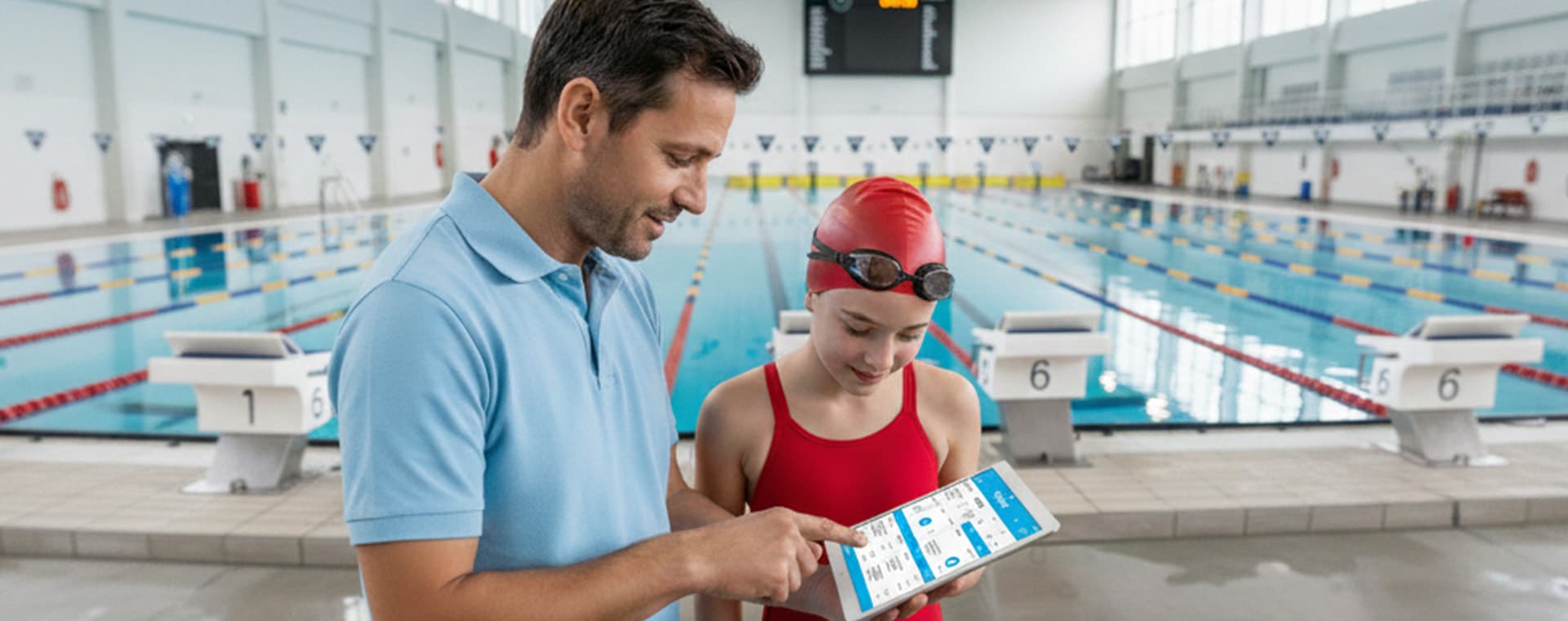
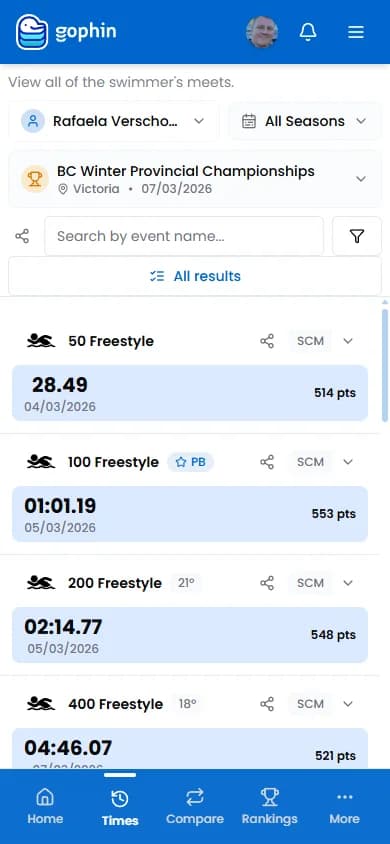
Dashboards with meet results, personal bests, and evolution graphs turn mystery into clarity. You can see when a plateau is normal, when a personal best arrives after months of steady work, and when the athlete is outperforming last season. That transparency helps families support the process rather than react to every race. For a complete walkthrough, see our guide on understanding swim meet results.
Conclusion
The healthiest swim journeys happen when parents celebrate steady progress and trust the plan. Official times make that easier. If you have ever lost track of a time your swimmer needed, learn how to find lost swim meet results. Sign in to Gophin free, no card.