Quick answer
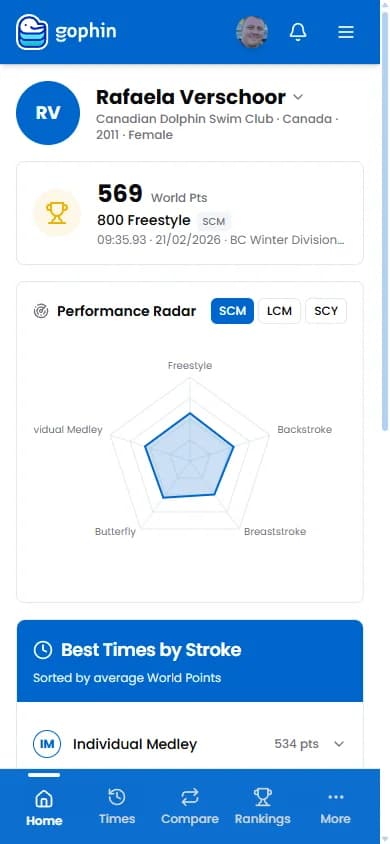
Start at the first sanctioned meet. When personal bests pause, the chart still shows the season. Gophin imports official race times. It does not store practice notes or coach comments. Sign in free, no card.
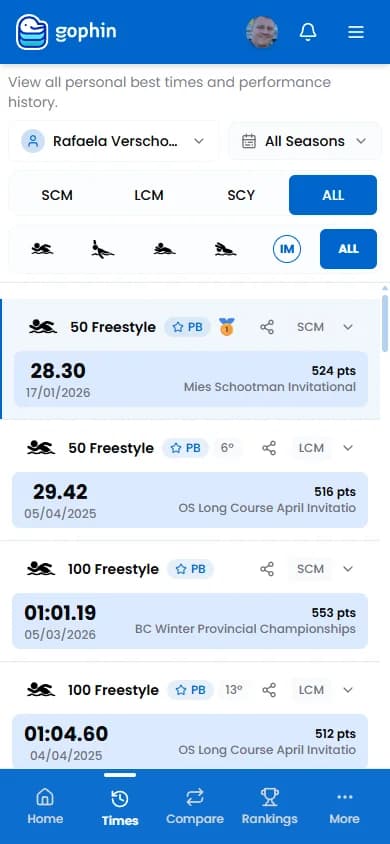
There was a stretch last spring when Rafa hadn't posted a personal best in weeks. She started doubting herself, wondering if she'd peaked, if she wasn't working hard enough. One evening I sat her down and pulled up her 100 Free chart on Gophin. Eighteen months of data, every race plotted. Her face changed when she saw the trend: the line was going down, steadily, meet after meet. She just couldn't feel it because she was too close to it.
That moment reminded me why tracking matters most for young swimmers, not for pressure, but for proof that the work is paying off.
Development is gradual, and that is healthy
Age-group swimmers grow in waves. Technique clicks, then plateaus while the body adapts. Official race times keep those waves visible so families do not panic when the stopwatch pauses. A chart of the same event, same pool type, tells the real story even when personal bests take longer to fall.
History matters from the first meet
Capturing every official result from the earliest races builds a library of context. Coaches can look back at first travel meets and new events. That history powers smarter conversations about rest and race strategy. Gophin does not log the practice that happened between those races.
Data prevents rushed decisions
Without evidence, it is tempting to change squads, strokes, or training loads after one rough weekend. Organized data shows whether a dip is part of normal fatigue or a true warning sign. It also proves when an athlete is ready to move up because they have demonstrated consistency over months, not days.
Parents become partners in the process
When parents see clear dashboards, trend lines, and evolution charts, they understand why patience matters. They can celebrate quiet wins, like a stronger second half on the splits, and support the plan instead of chasing short-term results. Data builds trust across the whole support system. Our parent's guide to calm swim progress explores this dynamic in detail.
Conclusion
Youth swimming thrives on steady guidance. Tracking data from day one keeps expectations grounded, highlights real progress, and protects athletes from pressure to rush. Clarity today becomes confidence tomorrow. To get started, see how to track swimming times with automatic syncing.