Quick answer
Move from lessons to club when they ask to race, can finish a practice without melting down, and the family can handle the calendar. Love of the water is not the same as wanting to compete. Club means more hours, meets, and official times. After the first sanctioned meet, sign in to Gophin (free, no card) so those times have a home.
Rafa was in recreational swim lessons -- just learning strokes, getting comfortable in the water. Then her club held a small internal competition, her first taste of racing. She came home that day and said, "I want to do this for real." Michelle and I looked at each other. We had no idea what "club swimming" even meant, what it would cost, or how it would change our lives.
That one sentence changed everything for our family.
Your child loves the water. They are the last one out of the pool at every lesson, they beg for extra laps, and somewhere in the back of your mind a question is forming: should we try a swim club?
It is a big step. Moving from recreational swimming to a competitive club changes the family schedule, the budget, and the level of commitment. Research by Fraser-Thomas, Cote, and Deakin (2005) in Physical Education & Sport Pedagogy shows that structured youth sport programs promote positive development -- competence, confidence, connection, character, and caring -- when the environment is supportive and age-appropriate. For the right child at the right time, joining a club can be one of the most rewarding decisions you make as a parent.
Here is what you need to know.
What Is the Difference?
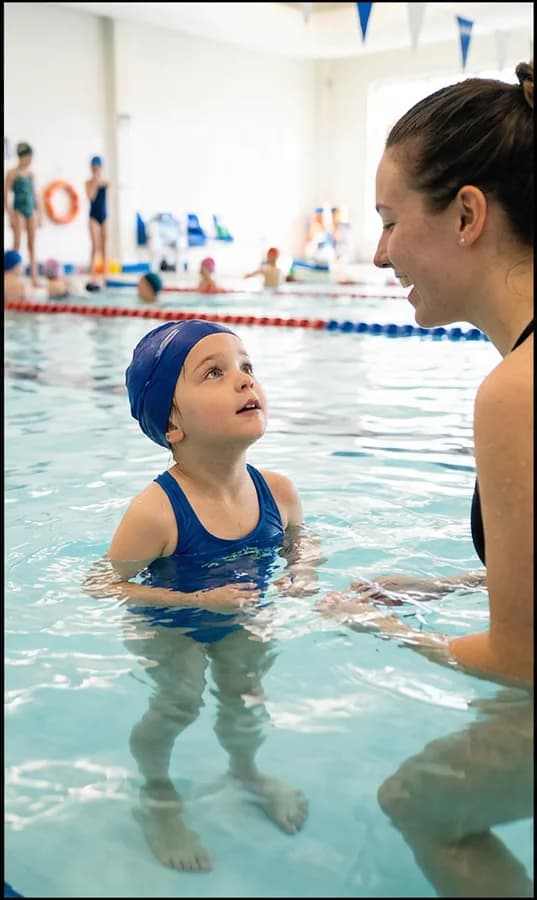
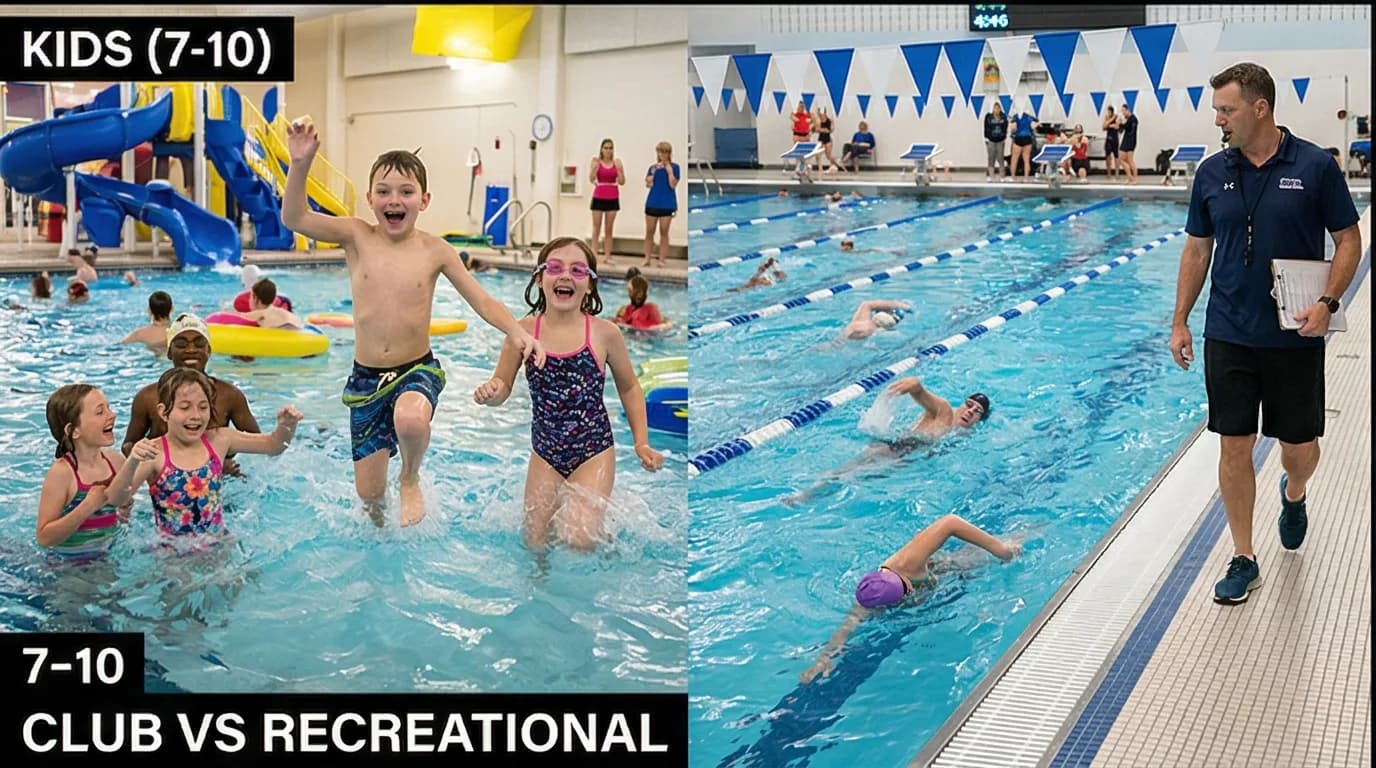
Recreational swimming programs typically meet one to three times per week. The focus is on learning strokes, building water confidence, and having fun. There are no races, no time standards, and no pressure. It is structured play in the water.
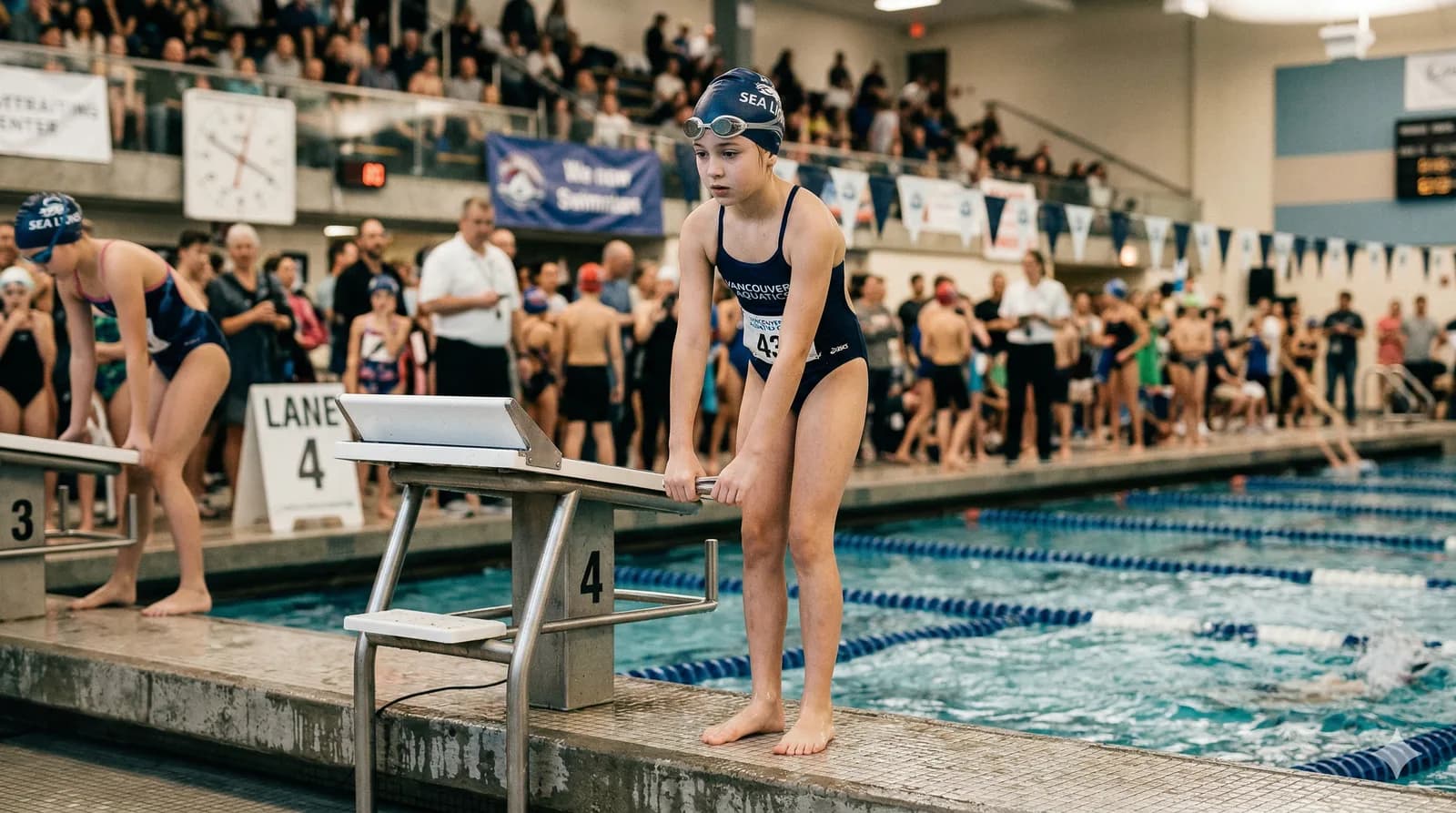
Club swimming is a step up in every dimension. Practices run four to six times per week, sometimes more for older age groups. Swimmers are coached with a focus on technique, endurance, and race strategy. They attend swim meets, compete against other clubs, and track their times throughout the season. There is structure, expectation, and accountability.
Neither path is better in an absolute sense. It depends entirely on your child and what they need.
Signs Your Child Might Be Ready
There is no perfect age or perfect moment to make the switch, but there are reliable signals.
They genuinely love the water. Not just tolerating swim lessons, but lighting up when they get to swim. If your child gravitates toward the pool every chance they get, that enthusiasm is a strong foundation for the demands of club swimming.
They show a competitive spark. This does not have to mean winning. It means they care about improving, they race against themselves in lessons, or they watch other swimmers and want to try harder. That internal drive is essential because external motivation will not sustain a club swimmer through tough training blocks.
They can handle structure. Club swimming requires showing up on time, listening to coaches, following instructions, and pushing through discomfort. If your child generally responds well to routine and direction, they will adapt more easily.
They are physically ready. Most clubs accept swimmers starting around age six to eight, depending on the program. A 2024 clinical report by Drs. Joel Brenner and John DiFiori in the AAP journal Pediatrics emphasizes the importance of age-appropriate training loads -- pushing too hard too early is a leading cause of burnout and dropout, with 70% of kids leaving organized sports by age 13. The child should be able to swim at least one stroke competently for a full length of the pool. Some clubs have tryout requirements; others offer developmental groups for beginners.
What to Expect When You Join
The first thing most families notice is the time commitment. Practices are longer, more frequent, and often at inconvenient hours. Early mornings and weekend meets become part of the rhythm.
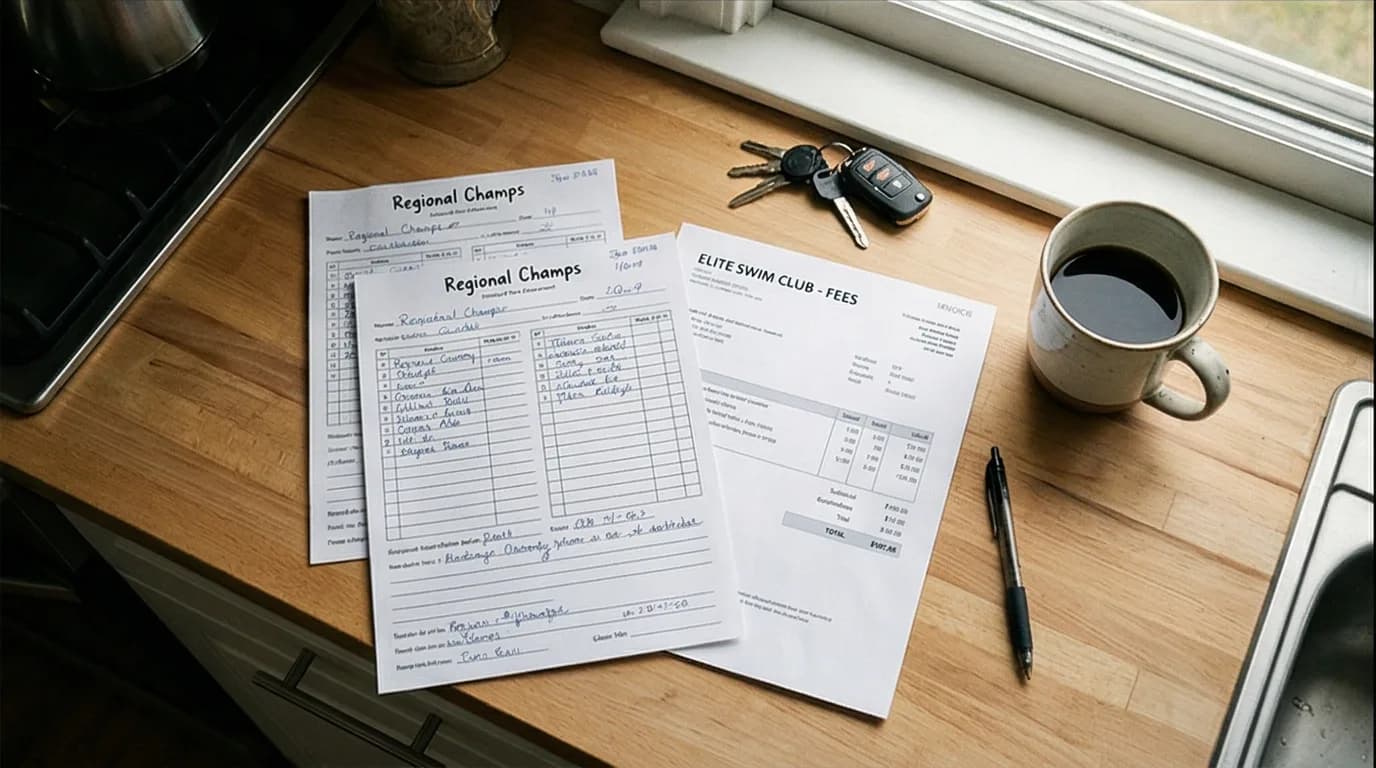
The cost increases too. Monthly club fees, meet entry fees, travel for away meets, equipment, and team gear add up. Some clubs offer financial assistance, and it is always worth asking.
But here is what also changes: your child gains a second family. Club teammates become close friends. The shared suffering of hard sets, the nervous energy before a race, the celebrations after a personal best -- these bonds run deep. Many swim parents say their child's social life is built around the team, and it is one of the healthiest social environments a young person can have.
How to Find the Right Club
Start by researching clubs in your area. Most national swimming federations maintain directories of registered clubs. Talk to other swim parents. Attend a practice as a spectator before committing.
Look for coaches who prioritize development over winning, who communicate well with parents, and who create an environment where athletes feel safe to fail. The quality of coaching matters more than the club's reputation.
Many clubs offer a trial period, typically one to two weeks, where your child can attend practices before you pay full fees. Take advantage of this. Watch how your child responds to the environment. Are they excited after practice, or drained and unhappy?
Making the Transition Smooth
If you decide to move forward, ease into it. Some clubs have transition or pre-competitive groups that bridge the gap between recreational and full competitive training. These programs are ideal because they introduce your child to the structure of club swimming without the full intensity.
Set realistic expectations for the first season. Your child will not be the fastest. They will feel overwhelmed at their first meet. They may want to quit after a particularly hard practice. All of this is normal. What matters is whether, over time, they keep coming back because something about the sport speaks to them.
Swimming has a way of finding the right kids, and the right kids have a way of finding swimming.
After the first sanctioned meet, the official times exist whether you track them or not. Sign in to Gophin (free, no card) so you are not hunting PDFs at 11 PM. It does not replace the club. It replaces the spreadsheet.
Sources
- Fraser-Thomas, J., Cote, J., & Deakin, J. (2005). "Youth sport programs: an avenue to foster positive youth development." Physical Education & Sport Pedagogy.
- Brenner, J.S. & DiFiori, J.P. (2024). "Overuse Injuries, Overtraining, and Burnout in Young Athletes." Pediatrics, 153(2). American Academy of Pediatrics.