Quick answer
A first swim meet is a long day: pack two towels, backup goggles, snacks, and a chair. Parents stay in the stands, not on deck. Find event, heat, and lane on the heat sheet (NT means no time — that is normal). Races are short; the meet is not. DQs happen. Ask if they had fun before you ask about the time.
The first time I walked into a swim meet was January 2023, at the Mies Schootman Invitational in Vancouver. I had no idea what a heat sheet was, no idea where to sit, and no idea when Rafa was actually swimming. I spent the first hour wandering the bleachers, squinting at tiny names on a printout, feeling completely lost.
Every swim parent starts there. Here is what I wish someone had told me that day.
Your child has been going to practice for weeks, maybe months. They have gotten faster, learned the strokes, and now their coach says those three exciting words: "Time for a meet." If you have never been to a competitive swim meet before, here is everything you need to know so you can show up prepared and actually enjoy the day.
Before You Leave the House
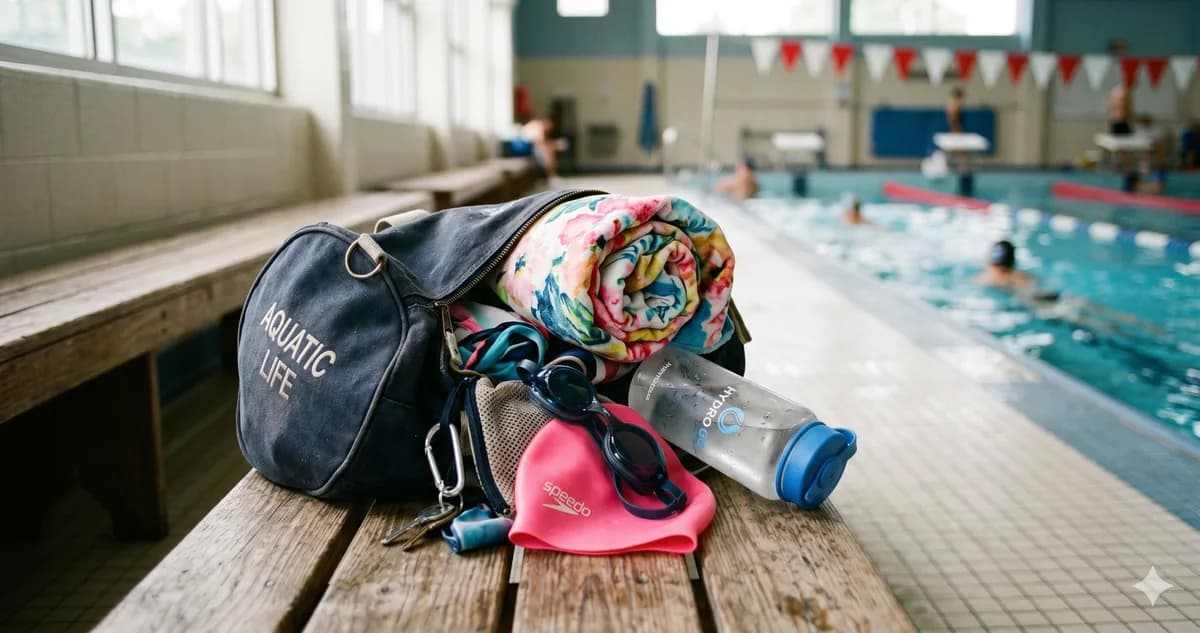
A swim meet is not a drop-off event. Plan to stay for the whole thing, and pack accordingly. Here is what to bring:
- Two towels (one for warmup, one for later -- they will both be soaked)
- Goggles and a backup pair (goggles break at the worst possible moment)
- Team suit and cap (your coach will tell you what is required)
- Snacks and water (granola bars, fruit, crackers -- nothing heavy)
- A chair or blanket (bleachers get uncomfortable after hour three)
- A book or something for yourself (there is a lot of waiting between events)
Skip the tech suit. First meets are a team suit and cap. Save the expensive racing suit for a championship your coach actually names.
What Happens When You Arrive
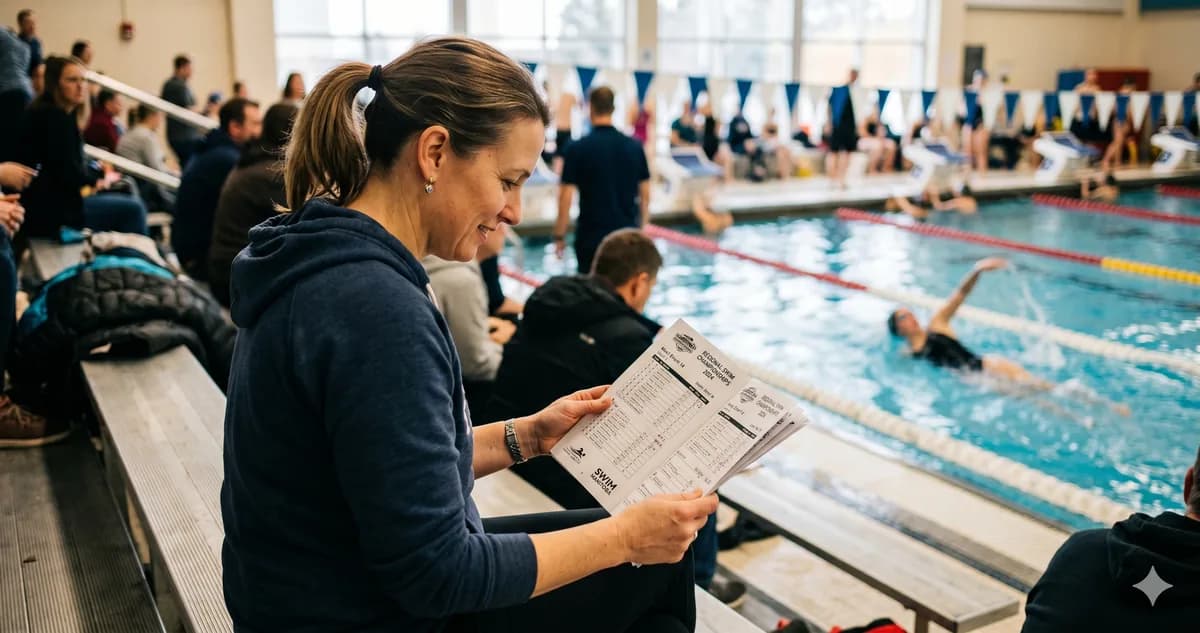
Most meets start with a warmup session, usually 30 to 45 minutes before the first event. Your swimmer will go with their team to the pool deck. You will go to the spectator area.
This is important: parents are not allowed on the pool deck. This is a standard rule enforced by USA Swimming and Swimming Canada to ensure athlete safety and fair competition. The deck is for swimmers, coaches, and certified officials only.
Understanding the Heat Sheet
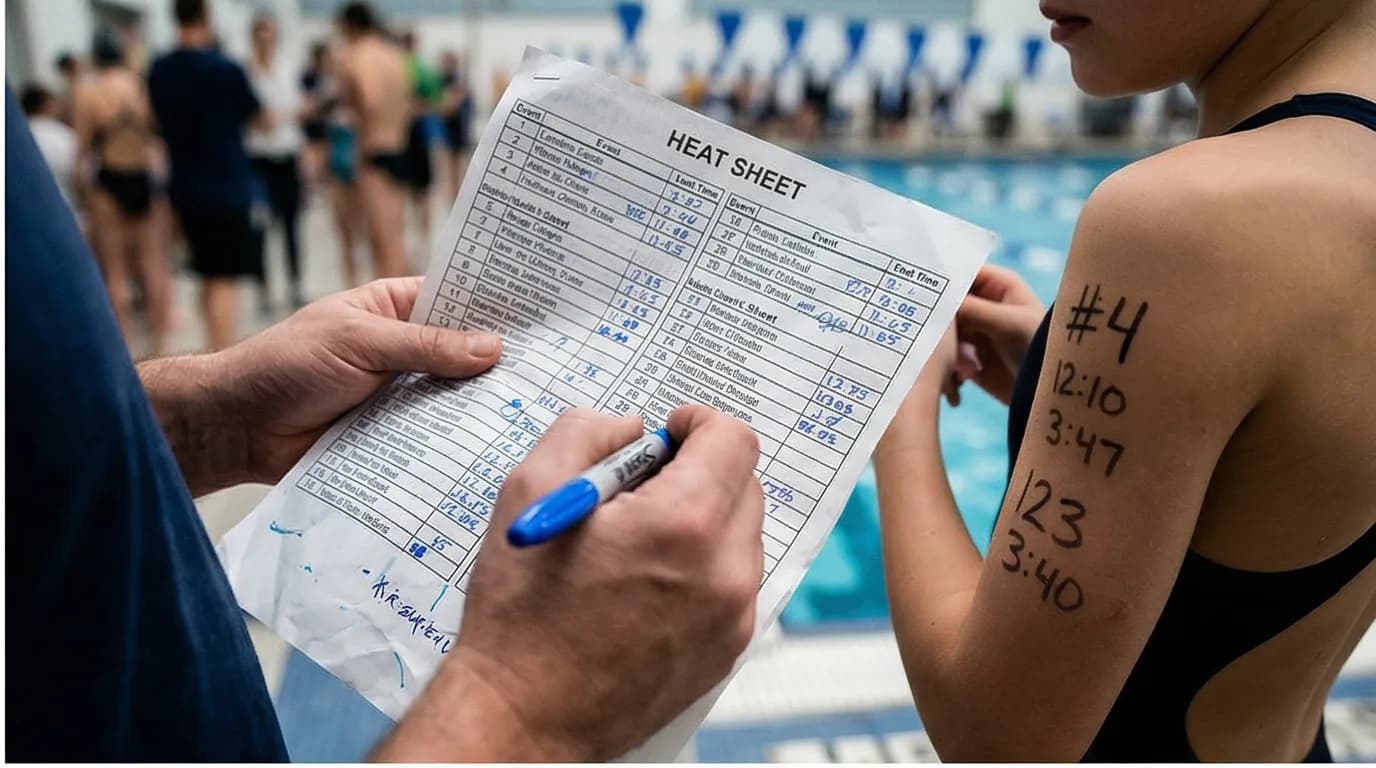
When you arrive, you will likely receive (or be able to download) something called a heat sheet. This is the program for the meet. It lists every event in order and shows which heat and lane your child is swimming in.
"NT" next to your child's name means no time -- it is their first time swimming that event in competition. That is completely normal.
Circle your child's events so you know when to pay attention. Meets can have dozens of events, and your child might only swim in two or three of them.
The Racing Part
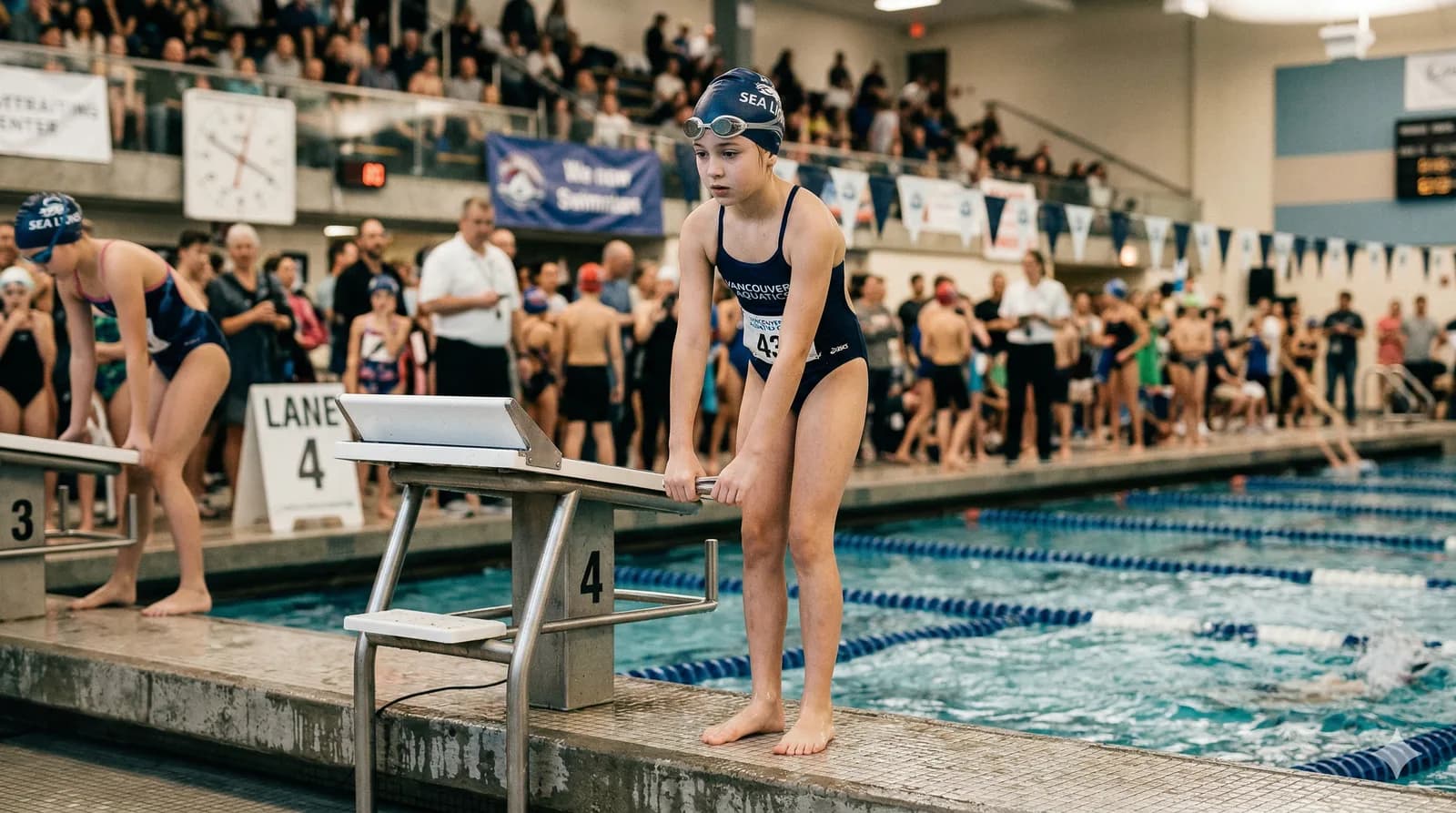
Each race follows the same basic pattern: the announcer calls the event and heat, swimmers step onto the blocks (or enter the water for backstroke), the starter says "Take your mark," and a beep or horn goes off.
For younger swimmers, races are short -- often 25 or 50 meters. They are over before you finish finding the right camera angle on your phone. Under USA Swimming and Swimming Canada rules, every lane has an electronic touchpad at the wall that records the time to the hundredth of a second, and results are usually posted within minutes.
About Disqualifications
At some point, your child will probably get a DQ -- a disqualification. It means an official observed a technical infraction: a wrong turn, an illegal kick, or touching the wall incorrectly.
DQs are part of the learning process. Every Olympic swimmer has been disqualified at some point. The correct response is: "That is okay, now you know what to work on." The incorrect response is to argue with the officials or make your child feel like they failed.
How Long Does a Swim Meet Last?
Short answer: longer than you think. A typical age-group meet can run three to five hours. Your child might swim for a total of three minutes across the whole day.
Yes, three minutes of actual swimming in five hours of being there. Welcome to swim parent life. The rest of the time is warmup, waiting, cheering for teammates, and trying to figure out which tiny person in a cap and goggles is yours.
The Emotional Rollercoaster
Your child might cry before their first race, or they might be so excited they cannot sit still. They might finish and be devastated even though they did great, or come in last and be thrilled because they did not get disqualified.
All of these reactions are normal. Swimming is one of the few sports where kids compete individually, in front of a crowd, with their times posted publicly. That takes courage.
Parent Etiquette (The Short Version)
- Stay off the deck. Seriously.
- Do not coach from the stands. Your child has a coach. Trust them.
- Cheer for everyone, not just your kid. The swimming community is small and supportive.
- Do not ask about times the second your child gets out of the pool. Ask if they had fun.
- Do not compare your child to other swimmers. Not out loud, not in your head if you can help it.
- Thank the volunteers. Swim meets run on volunteer parents -- timers, officials, concession workers. These are other families giving their time.
After the Meet
On the drive home, resist the urge to analyze every race. Instead, try: "What was your favorite part?" or "I loved watching you race." There will be time for talking about technique and times later. Right now, your child just did something brave. Let them feel good about it.
Your first swim meet will feel chaotic and a little overwhelming. By your third meet, you will know the routine. By your tenth, you will be the parent explaining heat sheets to the new family in the stands. That is just how it works in swimming -- everyone was new once.
Sources
- USA Swimming. Rules and Regulations -- meet conduct, deck access policies, and electronic timing standards. usaswimming.org
- Swimming Canada. Competition procedures and meet management guidelines. swimming.ca
Related guides for swim meet day
- Swim meet warmup, why it matters
- Swim meet packing checklist
- How to read a heat sheet
- What to say after a bad race
- Understanding swim meet results
After the meet file is published, sign in and open Meets. Free, no card. You do not need to photograph the scoreboard.