Quick answer
Make 5 AM work with bags packed the night before, a breakfast they will actually eat in the car, and a carpool if you can. You will not hit 10 hours of sleep on a 4:30 alarm. Protect every minute, and talk to the coach if two-a-days are eating the nights. If every morning is a fight and times are sliding, 5 AM is not a hill to die on.
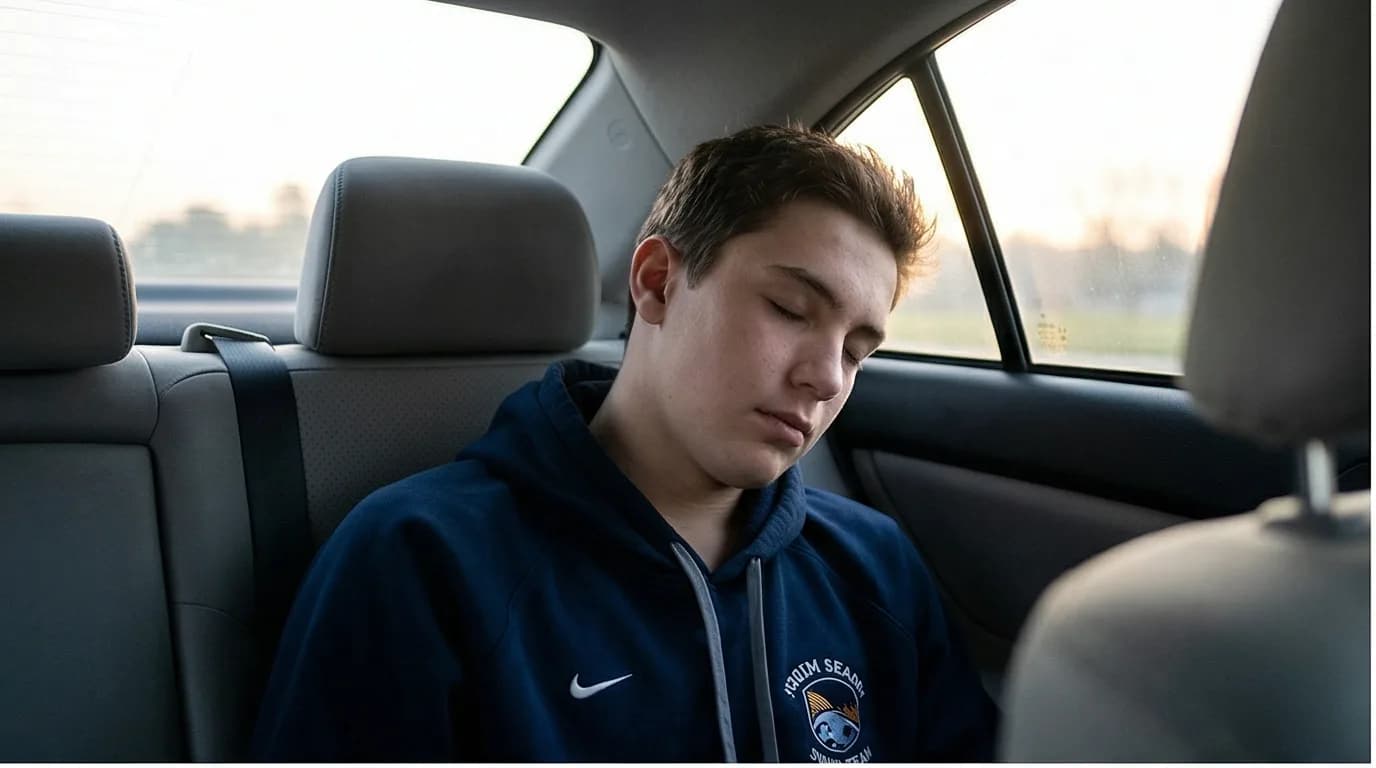
The alarm goes off at 4:45 AM. Michelle is already in the kitchen making breakfast while Rafa is still half asleep on the couch, one sock on, staring at nothing. I grab the swim bag, the water bottle, and the keys, and we drive through empty Vancouver streets in near-total silence. This is our routine three mornings a week. It is not glamorous. But somewhere between the dark parking lot and the sound of her hitting the water, I realized these mornings are ours -- and I would not trade them.
If your family is living this life, or about to start: the car is cold, the roads are dark, and you briefly wonder how you ended up here. With the right systems it does not have to be a daily battle. It can become a routine your family is quietly proud of.
The Reality of Early Mornings
Let us be honest: 5 AM practices are hard. They are hard on the swimmer, hard on the parent doing the driving, and hard on the rest of the household that gets woken up by the noise.
But they exist for a reason. Pool time is limited, and as swimmers progress, they need more training hours. Morning sessions allow clubs to fit in the volume their athletes need without conflicting with school schedules. For older swimmers, morning practice is often the only way to get two sessions in a day.
Understanding the "why" behind early mornings does not make the alarm less painful, but it does make it easier to accept as part of the commitment.
Adjusting the Sleep Schedule
The single most important thing you can do for your early-morning swimmer is protect their sleep. The American Academy of Sleep Medicine (AASM) recommends 9-12 hours of sleep for children ages 6-12, and 8-10 hours for teenagers -- and athletes do better at the upper end. A child getting up at 4:30 who falls asleep at 8:30 or 9:00 PM gets about eight hours, not ten. That is the honest math. Protect every minute. Do not add a second session if the nights are already collapsing. Our sleep guide covers the Stanford research; this article is about surviving the alarm.
Some practical steps that help:
- Set a firm "screens off" time at least 30 minutes before bed. The blue light from phones and tablets genuinely disrupts the ability to fall asleep.
- Keep the bedroom cool and dark. Blackout curtains are a worthwhile investment for swimmers.
- Shift the entire evening forward. If dinner is normally at 7:00, move it to 6:00 or 6:15. Homework needs to be done before dinner, not after.
- On weekends without morning practice, try to keep wake-up times within an hour of the weekday schedule. Sleeping until noon on Saturday makes Monday morning brutal.
This is a family adjustment, not just a swimmer adjustment. When one person in the household has a 4:30 alarm, everyone feels it.
Meal Prep the Night Before
Nobody wants to think about food at 4:30 in the morning. The solution is to eliminate decisions before they happen.
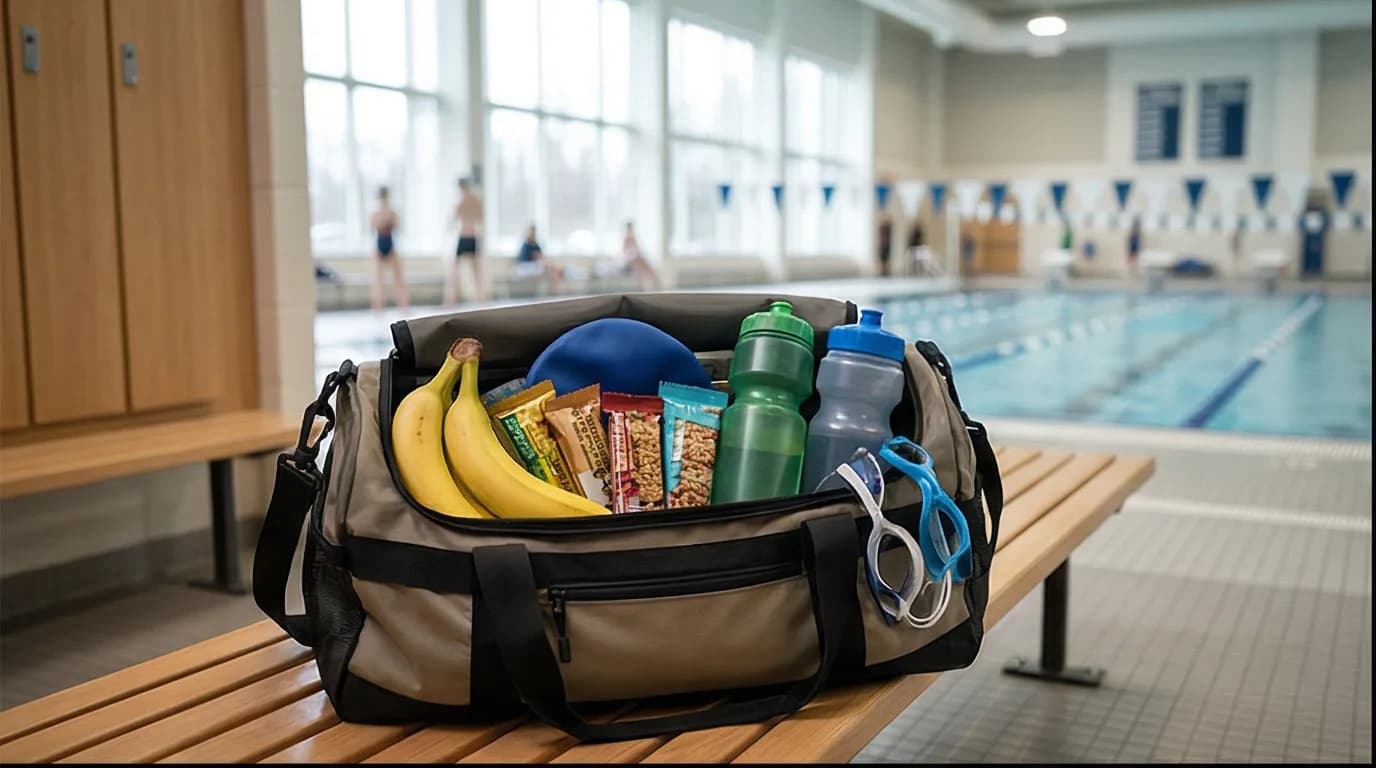
Pack the swim bag the night before: goggles, cap, water bottle, towel, a change of clothes. Lay out what your child will wear to practice. Prepare a small pre-practice snack that is easy to grab: a banana, a small granola bar, or a piece of toast with peanut butter. Nothing heavy, nothing complicated.
For the post-practice meal, prepare it the night before as well. A container of overnight oats, a smoothie ready to blend, or a packed breakfast they can eat on the way to school. The less thinking required in the morning, the smoother everything goes.
Carpool Strategies
If you are the only parent doing the driving, it gets exhausting fast. Carpools are not just convenient -- they are essential for long-term sustainability.
Talk to other families on your child's training group. Most swim parents are in the same situation and are eager to share the load. A rotating carpool with two or three families can mean you only drive two mornings a week instead of five.
Set clear expectations from the start: pickup times, what happens if someone is late, how to communicate changes. A group chat dedicated to carpool logistics keeps things organized and reduces morning chaos.
If your child is old enough and the distance is short, some families arrange for older swimmers to walk or bike to the pool together. There is safety in numbers, and it builds independence.
Making It a Routine, Not a Chore
The difference between families that survive morning practice and families that burn out often comes down to attitude. If every morning starts with a fight, the resentment builds quickly on both sides.
A few things that help shift the tone:
- Let your child have some control. Maybe they choose the music in the car. Maybe they get to pick the breakfast. Small choices create ownership.
- Acknowledge the sacrifice without dwelling on it. A simple "I know this is early, and I am proud of you for getting up" goes further than you think.
- Create small rituals. Some families stop for hot chocolate on the drive home once a week. Others have a quiet no-talking rule in the car that both parent and child appreciate at that hour.
- Do not make every morning about swimming. The car ride can be a time to talk about anything else -- school, friends, weekend plans. It is surprisingly good one-on-one time.
The Bond It Creates
Here is something swim parents rarely expect: those early morning drives become some of the best memories. The quiet intimacy of being the only two people awake. The slow sunrise on the drive home. The conversations that happen when guards are down because it is too early for pretenses.
Many swim parents, even years after their child has stopped competing, describe the morning routine as one of the things they miss most. Not the cold car or the dark roads, but the closeness it created.
Tips From Experienced Swim Parents
Parents who have been through years of morning practices consistently share the same advice:
- Go to bed when your kid goes to bed, at least on practice nights. Your sleep matters too. A Stanford University study led by Dr. Cheri Mah (2008, 2011) showed that swimmers who extended sleep to 10 hours per night improved their 15m sprint times by 0.51 seconds -- proof that protecting sleep is protecting performance.
- Keep a spare set of goggles and a towel in the car. You will need them someday.
- Do not try to be cheerful at 4:30 AM. Just be present.
- It gets easier around the three-week mark. The body adapts if you let it.
- The pride your child feels after finishing a tough morning set is worth every early alarm.
Morning practice is not for every family, and it is okay to decide it does not work for yours right now. But if you choose to commit, know that you are building something together -- not just a swim career, but a shared experience of showing up when it is hard.
And that is worth setting the alarm for.
Gophin will not wake you at 4:45. After the meet file is up, sign in (free, no card) and see whether the mornings are showing up on the clock. If times stall and every morning is a fight, talk to the coach about load.
Sources
- American Academy of Sleep Medicine (AASM). Recommends 9-12 hrs for ages 6-12, 8-10 hrs for teens. Athletes benefit from the upper end of these ranges.
- Mah, C.D. et al. (2008, 2011). Stanford University sleep extension study. Swimmers improved 15m sprint by 0.51s with 10 hrs/night sleep. Presented at SLEEP 2008; published in Sleep (2011).