Quick answer
A swim ranking shows where your swimmer sits among peers in an event and age group on a given day. It is a map, not a verdict: useful for seeing who is ahead and how close the next step is, but it changes every meet and does not predict a swimmer's ceiling. Measure your swimmer against their own past times first, and use the ranking as a target to chase.
At 14, Ariarne Titmus left Tasmania, the island at the bottom of Australia, and moved with her family across the country. The reason was simple. She wanted better training and a real shot at the top.
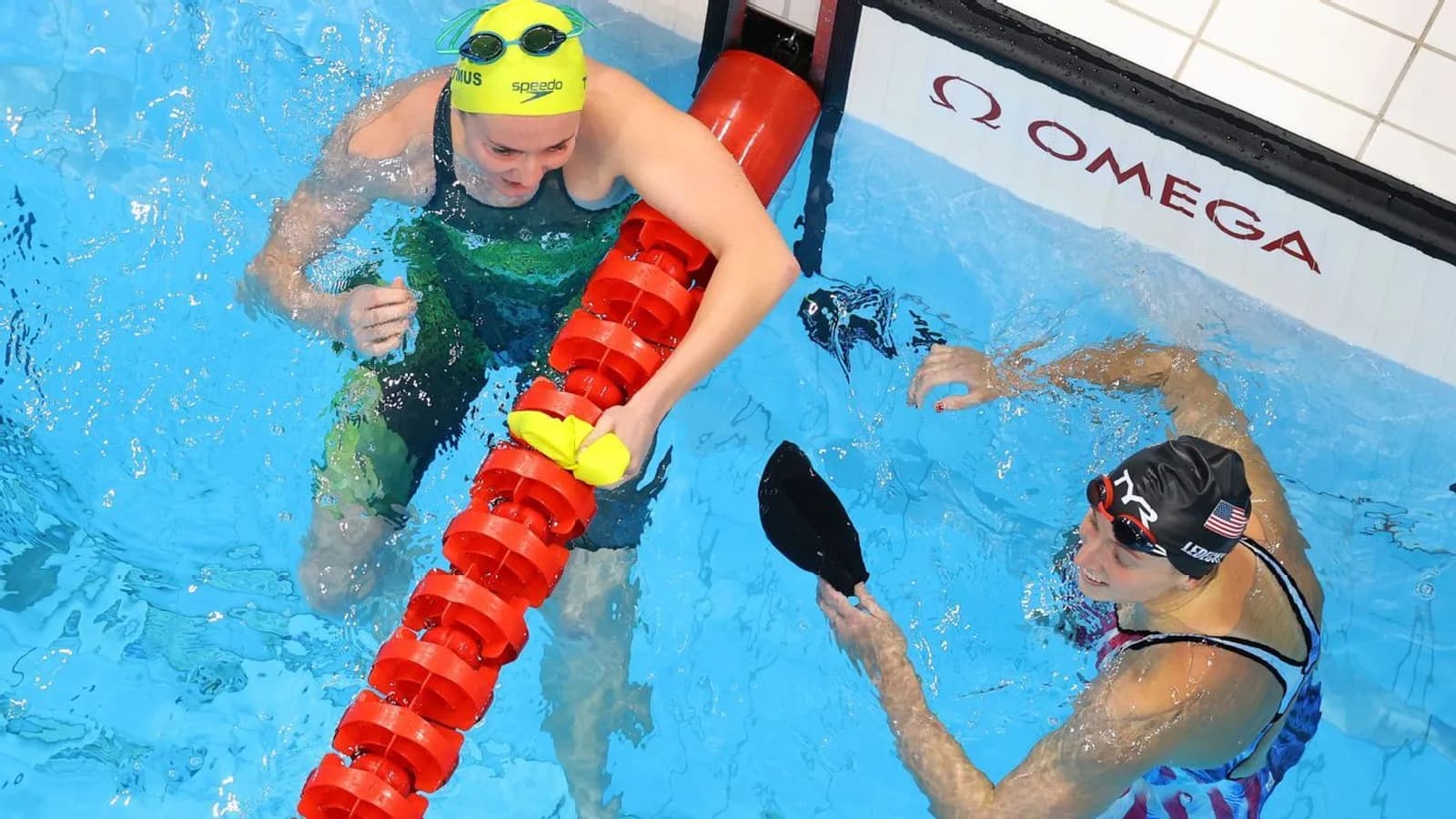
There was a name she had set her sights on. Katie Ledecky, the American who had become the standard every distance swimmer was measured against, the one sitting at the top of every list. Titmus did not move to be near her. She moved to chase her.
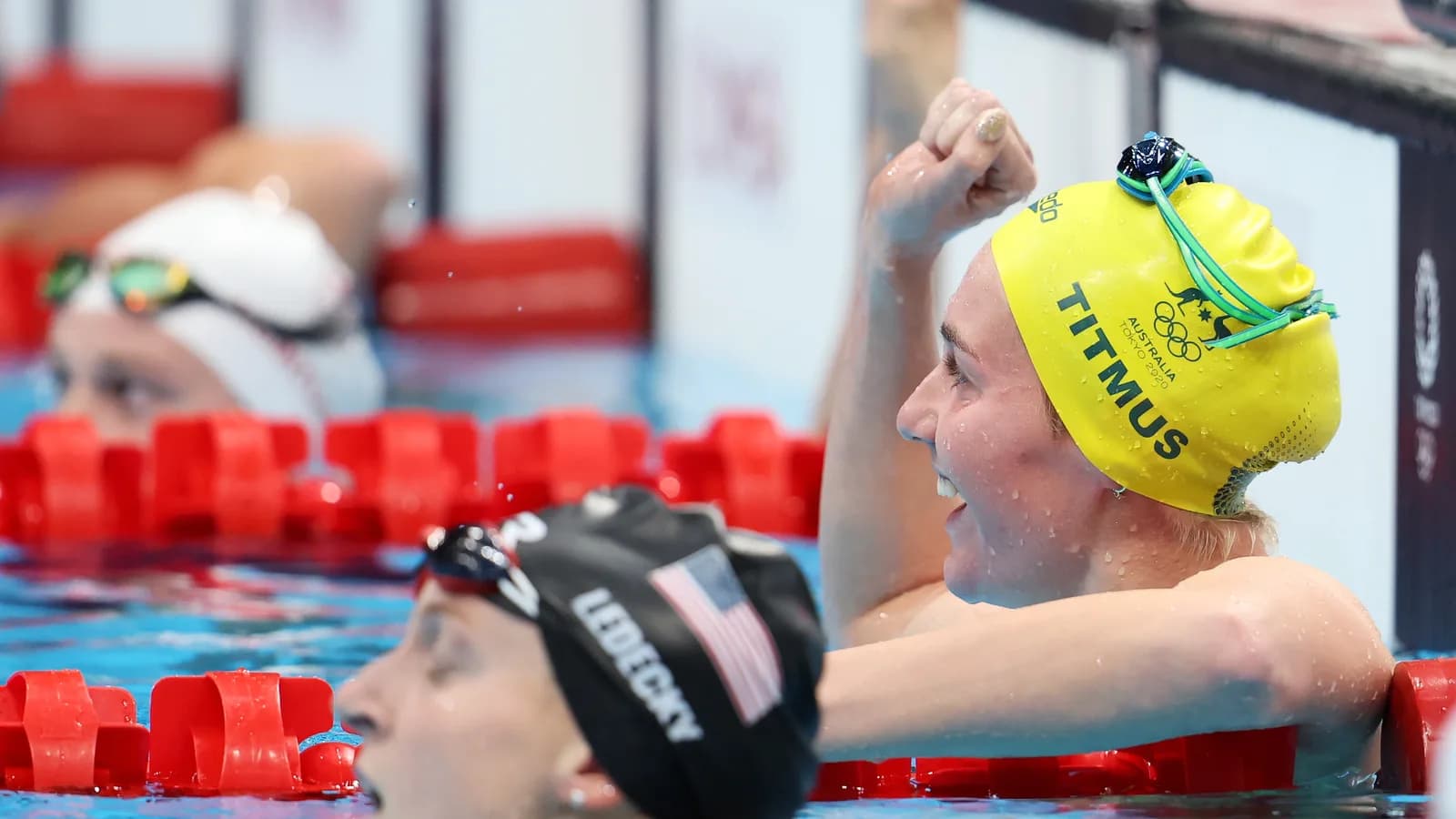
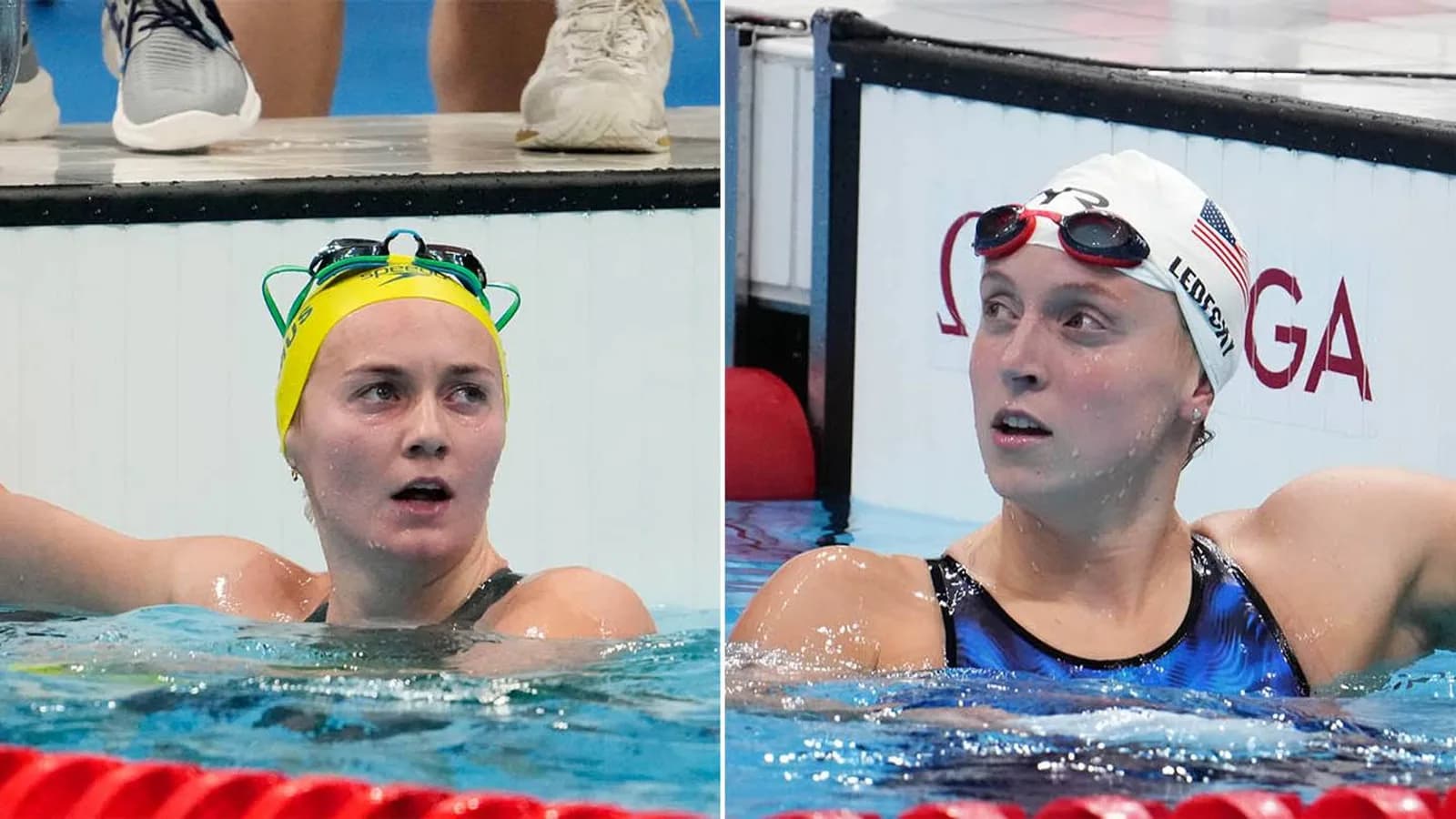
Six years later, at the Tokyo Olympics, she caught her. Titmus won the 400 metre freestyle final, 3:56.69 to Ledecky's 3:57.36, less than a second apart. The first thing she did afterward was talk about the swimmer she had just beaten. "I wouldn't be here without her," Titmus said. "She set this amazing standard for middle distance freestyle for girls, and if I didn't have someone like that to chase, I definitely wouldn't be swimming the way I am."
That is the most useful way to think about a ranking. Not as a verdict on your swimmer, but as a map of who is ahead and how close the next step really is.
What a ranking actually measures
A ranking is a snapshot. It lines up the swimmers in an event, an age group, and a region by their best times, and it tells you where your swimmer sits on a given day.
That is genuinely useful information. It shows who is in the race, how deep the field is, and how far away the next swimmer up the list is. What it does not do is predict the future. Rankings get reshuffled every meet. A swimmer two spots back in October can be two spots ahead by February, and a name near the top at 13 can be in a completely different place at 16.
So a ranking answers "where does my swimmer stand right now," and it answers that well. It does not answer "how good will my swimmer become." Those are different questions, and treating the first as if it were the second is where a lot of parent anxiety comes from. We unpacked more of this in Why Swim Rankings Do Not Tell the Full Story.
The swimmer ahead is a target, not a ceiling
Here is the reframe that changes everything.
When you see another swimmer a few spots above yours on the list, it is easy to read that as a ceiling. A quiet verdict on how far your swimmer can go. Titmus read the exact same situation as something else. The swimmer at the top was not a wall. She was a target, and a number that told her precisely how far there was to go.
Chasing the best is what made Titmus the best. The gap was not discouraging, it was a direction. Every great swimmer had someone above them on a list at some point, and most of them will tell you that person is part of why they got fast.
The kid one lane over who is always a body length ahead is not your swimmer's problem. They might be the single best thing for your swimmer's motivation, if everyone frames it that way.
The healthiest yardstick: your swimmer versus their own past self
None of this means external comparison should be the main measuring stick. It should not.
The healthiest way to measure progress is against your swimmer's own past self. Are they faster than they were last season? Are their splits more even? Are they closing races better than they did six months ago? Those questions keep the focus where a young swimmer can actually control it, and they protect motivation during the long stretches when the rankings are not moving in their favour.
Personal progress is the foundation. A ranking is the supplement. If you want a clean way to track the foundation, see Season Best vs Personal Best: What Actually Counts, which is all about measuring a swimmer against themselves over time.
Use the ranking the way Titmus used Ledecky. Not as the only number that matters, but as the one that gives a personal goal a face and a direction.
Where a ranking becomes useful
Practically, a ranking helps your swimmer in three ways.
- Context. It shows the depth of the field and where your swimmer fits in it, which makes a vague goal concrete.
- A target. It puts a specific time and a specific name on "the next step," which is far more motivating than "swim faster."
- Belonging. Seeing their name on the list, even outside the top spots, tells a young swimmer they are in the race. That matters more than parents often realise.
The most useful question to bring to a coach is not "will my swimmer reach the top of the rankings." It is "who is the next swimmer up the list, what is their time, and what gets my swimmer there." That turns a ranking from a source of pressure into a plan.
How Gophin shows the map
Inside Gophin, rankings are one of the most opened features, and that is on purpose. They are built to show a swimmer who is in their race and how close the next step is, drawn from official competition databases, with no manual entry.
You can see your swimmer's basic rankings for free. The fuller view, with complete rankings across events and age groups, is free for everyone too.
See where your swimmer ranks, free
The number is a direction
Titmus did not become an Olympic champion in spite of the swimmer ahead of her. She became one because of her.
A ranking is not a verdict on your swimmer. It is a map. It shows who is in the race, how close the next step is, and that they already belong in it. Give a young swimmer someone to chase, and the number stops being pressure. It becomes a direction.
Open Gophin and see your swimmer's rankings, free
Sources
- Wikipedia. Ariarne Titmus (born Launceston, Tasmania, 2000; family relocated to Queensland in 2015 for training; coach Dean Boxall). en.wikipedia.org/wiki/Ariarne_Titmus
- Olympics.com. Tokyo 2020 women's 400m freestyle final result and Ariarne Titmus quote. olympics.com
- ESPN. "Ariarne Titmus beats Katie Ledecky for gold in Olympic women's 400-metre freestyle," July 2021 (3:56.69 to 3:57.36). espn.com
- The Washington Post. Coverage of the Tokyo 2021 400m freestyle final, Titmus caught Ledecky near the 300m mark. washingtonpost.com