Quick answer
A ranking is one weekend, one list, one age group. It does not show growth spurts, course type, or a stall that lasted a season. Compare the same event, same pool type, across months. Sign in to Gophin (free) and use Best Times plus Compare Seasons. Rankings stay one signal, not the whole story.
After a growth spurt last year, Rafa's rankings slipped in almost every event. On paper she looked slower. But when I pulled up her race splits, the second half was faster than it used to be, even if the finish time looked worse. The ranking had not caught up to the new body she was learning to race with.
That gap between what rankings say and what the data actually shows is exactly what this article unpacks.
Rankings are snapshots, not stories
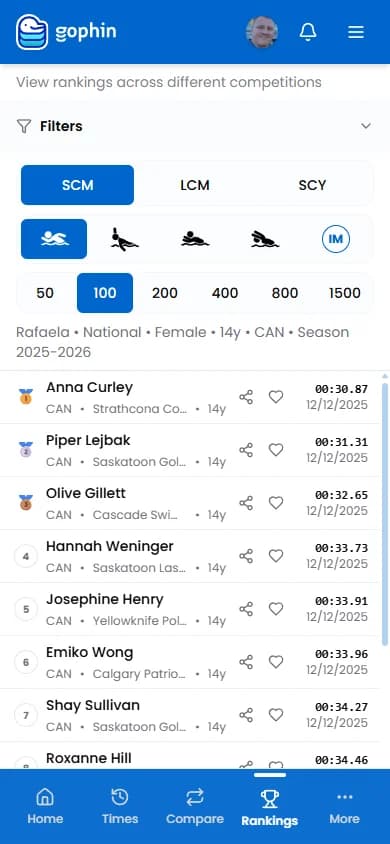
Leaderboards show who touched first on a given weekend, but they hide the rest of the journey. A swimmer can hold a top-three ranking because of one tapered meet months ago while still fighting inconsistency across the rest of the schedule. Static tables ignore whether the athlete raced up an age group, swam a new event, or returned from injury. Without that context, people celebrate or panic based on incomplete evidence.
Progress lives inside longitudinal history
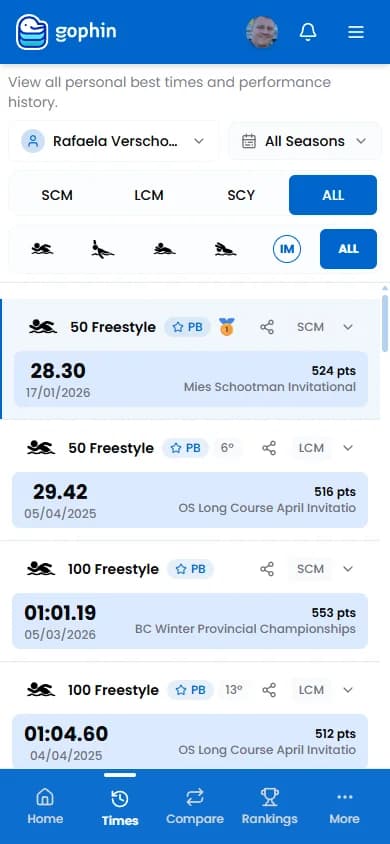
Evolution becomes visible when you line up times, meet results, and personal bests over time. Did the swimmer post faster 200m times consistently this season? How did their personal bests progress across three consecutive meets? Historical data reveals micro-improvements that rankings never capture. By importing each official race, families see whether times are moving — not whether one list went up.
Fair comparisons require age and event alignment
Comparing a 13-year-old racing the 400 IM with an 18-year-old sprinter distorts reality. Organized systems filter by age, course, event, and even round so coaches can evaluate apples to apples. That context also shows when a swimmer is ahead of last year’s curve or when a temporary plateau is normal for their stage of development. Rankings alone cannot provide that nuance. Our article on why context matters in swimmer comparisons explores this in depth.
Organized data brings clarity to everyone involved
When meet results, splits, personal bests, and progression charts live in a single hub, the conversation shifts from "Why did the ranking drop?" to "What do we do next?". Swimmers see whether race times are moving. Coaches explain decisions with evidence. Parents follow the season without decoding spreadsheets. Gophin does not log practice. Rankings become one signal inside a richer story of official results.
Conclusion
Rankings will always matter, but they should never be the only reference. The combination of historical context, fair comparison, and centralized insights paints the real picture of a swimmer’s evolution. Put the data in order, and the progress speaks for itself. To start tracking your own progress beyond rankings, see how to track swimming times. Sign in to Gophin free, no card.