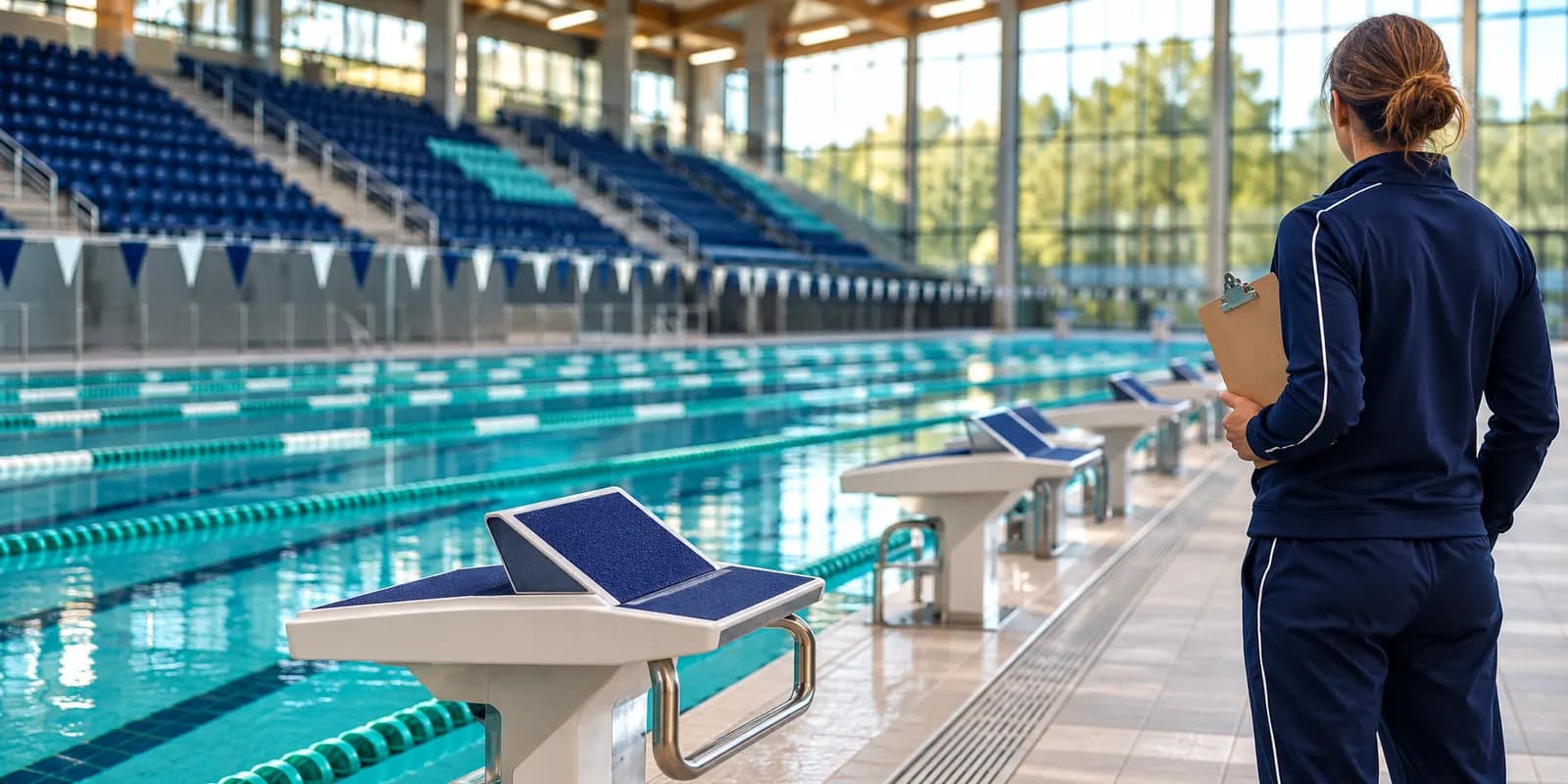
Quick answer
To check Canadian championship qualification, identify the exact competition and year first: Canadian Swimming Trials, Canadian Swimming Open and Canadian Swimming Championships use different standards and entry conditions. Match the event, category, accepted course and qualifying window in the official meet package. A time comparison alone does not confirm an accepted entry.
“Does my swimmer have a Canadian national cut?” sounds like a yes-or-no question. In practice, the useful first question is “For which meet?” A fast time may meet one target without meeting another, and a screenshot labelled “Canadian standards” can hide the column that makes the difference.
This guide is for families planning the step beyond provincial competition. It explains how to organise the check, what the current documents can tell you and how to keep a promising time separate from a confirmed championship entry.
Three names that should not be combined
Swimming Canada's standards and preliminary competition information page is the starting point. On 13 November 2026, it listed a standards file named 2027–2028 Swimming Canada standards EN 10.26.2026 and preliminary information for the 2026–2027 meet season.
Use the exact competition name when selecting a target:
| Competition | What to establish before comparing |
|---|---|
| Canadian Swimming Trials | The appropriate Trials category and that edition's entry requirements |
| Canadian Swimming Open | The Open standard and the courses accepted by the meet |
| Canadian Swimming Championships | The championship age category and its applicable standard |
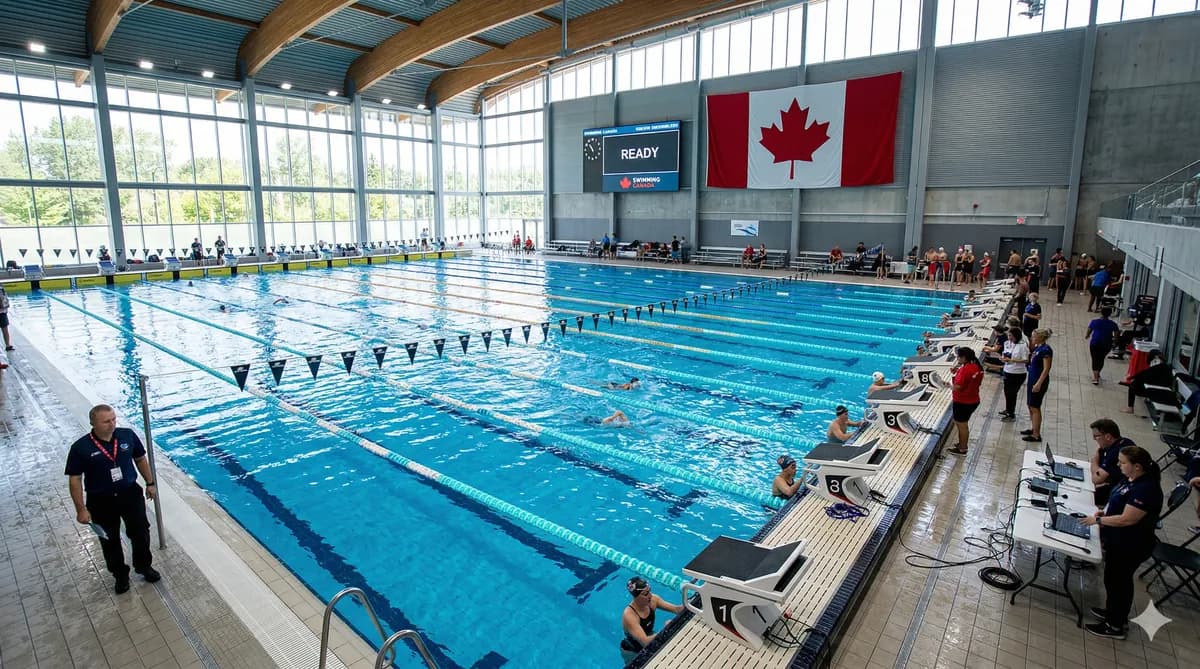
The 2027 preliminary information lists the Canadian Swimming Championships pool competition for 27 July–1 August 2027 in Toronto, with categories 13–14, 15–17 and 18 & over. These are preliminary details, not a replacement for the final package.
A current file name is not the whole rulebook
The standards PDF linked by Swimming Canada has separate headings for Trials, Canadian Open and CSC. Read the column heading and notes along with the time, not just the row for “100 free.”
There is a practical reason to check both documents: the preliminary meet information still contains a placeholder under the Championships standards field. When an overview and a separately updated standards sheet do not provide a complete answer together, ask the coach to confirm the applicable final document. Do not fill a missing rule with an assumption from another meet.
The broader Swimming Canada standards guide explains the system. This article focuses on deciding which championship comparison is actually relevant to your swimmer.
Make a one-event qualification record
Before comparing a whole season, complete the check for one event. Record:
- The competition name and year.
- The swimmer's applicable competition category.
- The exact event and course of the official swim.
- The official result and the date it was achieved.
- The standard column and qualifying window specified for the meet.
That small record prevents several common mistakes. A lifetime best may fall outside the window. A time in one pool may not be an accepted entry in another. A remembered birthday category may not match the meet's age-determination rule.
Keep the supporting result available for the coach. A neat comparison table is useful preparation, but accepted proof and eligibility remain part of the official entry process.
Keep yards and metres separate
Canadian families sometimes encounter a US comparison first, especially when searching for “good swim times.” A USA Swimming motivational A or AA result is not a Canadian championship cut.
Likewise, a yards-to-metres estimate is not an official metres result. Some competitions publish specific provisions for accepted entry courses; use those provisions instead of assuming that a mathematically converted number will be accepted.
For an explanation of the pool labels, see SCY, SCM and LCM. When recording the swimmer's history, preserve the course in which each swim actually occurred.
Account for age without rewriting history
A swimmer's current age is not always enough to decide a future entry category. The edition's meet package defines the relevant age date or birth-year conditions. Check that rule before choosing the standard row.
If the next competition uses a different category, the swimmer's old result remains a personal achievement. The target has changed; that does not mean the athlete has become slower. Our age-up planning guide offers a calm way to discuss that change.
It also helps to separate three family notes: “target time reached,” “eligibility checked with coach” and “entry confirmed.” They describe different stages and should not be treated as interchangeable badges.
Use Gophin for the comparison step
Open Compare → Standards, select the swimmer and choose the relevant Canadian set. Check its season and category against the official document before reading the gap. If the exact edition is not listed, return to the source instead of using a nearby standard as if it were the same.
Check your swimmer against the available Canadian standards
Use the comparison tutorial for the screen controls. Choose a few meaningful gaps to discuss with the coach. The aim is to turn a large standards sheet into a clear conversation about the swimmer's next step.
Questions parents ask
Is qualifying for Trials the same as qualifying for Canadian Championships?
No. They are separate competitions with their own standards and conditions. Use the full meet name and year whenever discussing a cut.
Does the app's comparison confirm eligibility?
It helps compare performances with a selected standard. The meet package and official entry process determine eligibility and acceptance. Confirm those with the coach.
Should I use the preliminary schedule to book travel?
Check the latest official meet page and the swimmer's entry status first. Preliminary information is useful for planning, but details and requirements can be updated before the competition.





Comentários
Ainda não há comentários. Dúvidas sobre tempos, competições ou o app são bem-vindas.