Quick answer
Canadian competitive swimming is layered: club and regional meets, then each province's championship cuts (Swim BC, Swim Ontario, and the others), then Eastern or Western, then Age Group Nationals, Senior Nationals, and Trials. Sign in to Gophin (free) and open Compare Standards for the set that matches the meet. Full pathway: our Swimming Canada standards guide.
When Rafa started competing, I had no idea how Canadian swimming was organized. Clubs, age groups, provincials, nationals, it was a maze. I spent weeks asking other parents and Googling federation websites, trying to understand the path from a local meet to something bigger. I had to learn the entire structure from scratch, and honestly, I wish someone had just laid it out for me.
Why Canada’s structure creates consistent swimmers
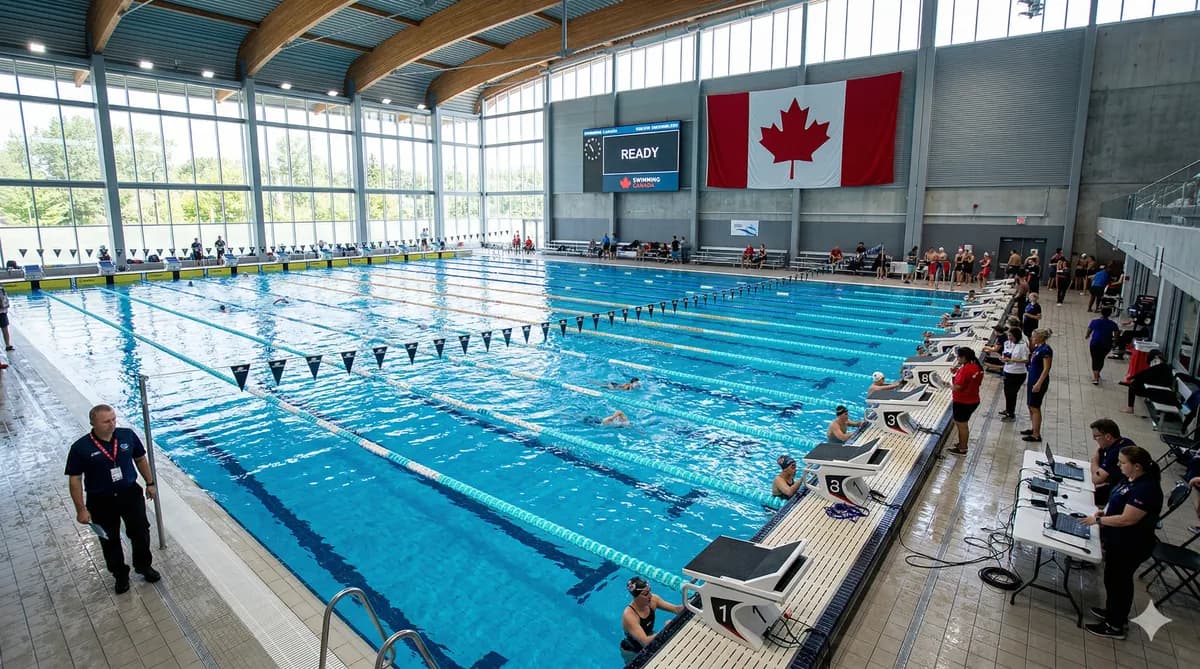
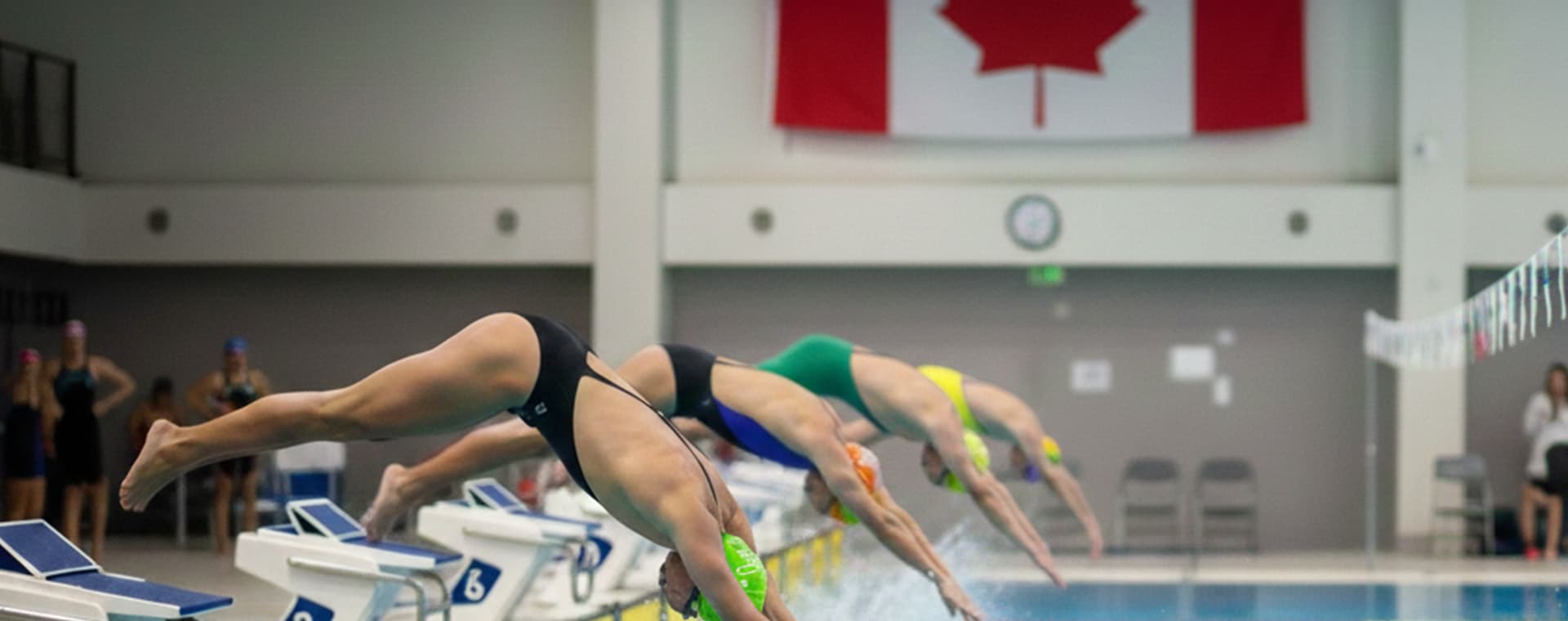
Competitive swimming in Canada is organized in layers that follow age brackets and the meet pathway. Each athlete belongs to a club group with a calendar that should match their age and level. When a staff tracks official times within that bracket, instead of comparing every swimmer at once, the dialogue stays objective and kids skip fewer steps. Gophin does not set the training load. The coach does.
Age divisions create clear milestones
Clubs set distinct groups for development, age-group, and junior squads. That segmentation lets coaches review five or six seasons of official times and see the full arc: when the 100 Free actually moved, when a new age group made the ranking look worse. Without that age ruler, small fluctuations look dramatic. For the cuts themselves, see our Swimming Canada standards guide.
Continuous tracking removes surprises
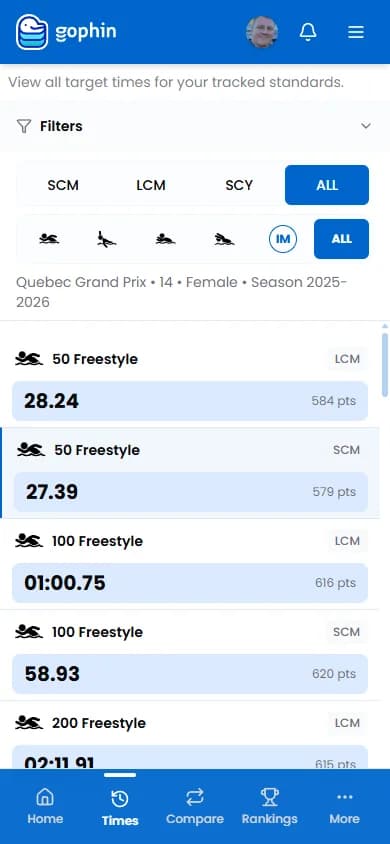
Every sanctioned meet result can sit in one history regardless of where they race. That reduces parallel spreadsheets and makes parent meetings more objective. Partial data creates distorted narratives. Gophin shows the official times. It cannot tell you whether a drop came from technique or a growth spurt — that conversation is with the coach.
Evaluate evolution in cycles, not isolated events
Rather than reacting to a single bad swim, look at a cluster of races in the same event and pool type. That lens tells you whether last Saturday was noise. Volume, taper, and technical checkpoints stay with the coach. Gophin holds the race file.
Centralized data connects coaches, parents, and swimmers
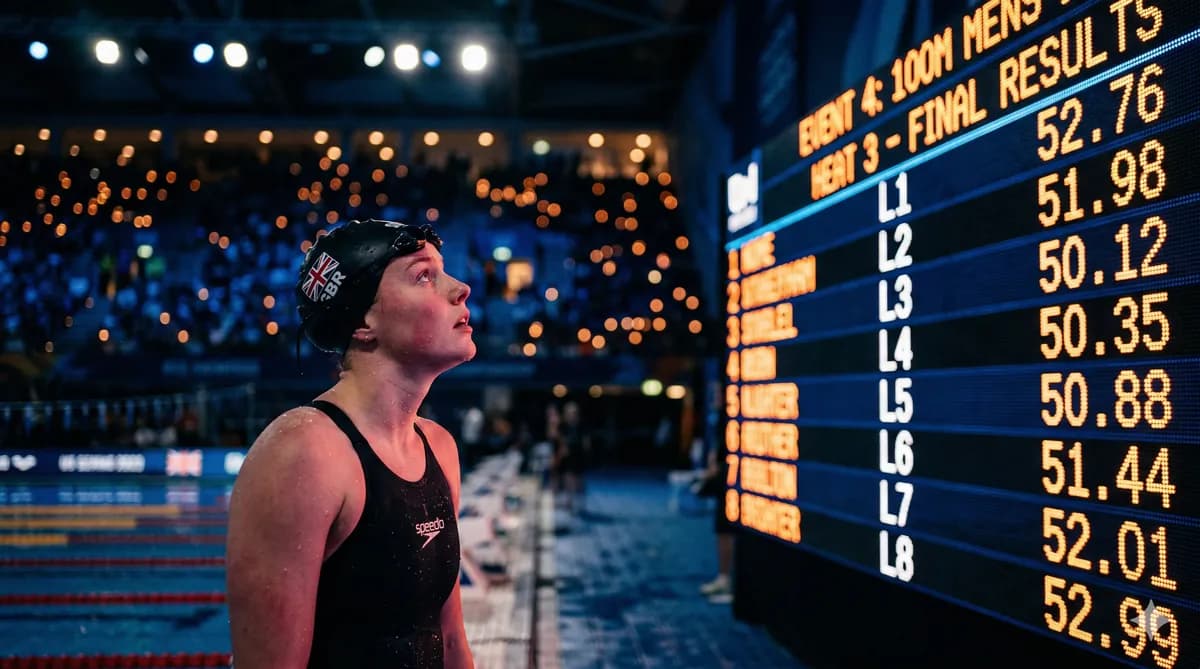
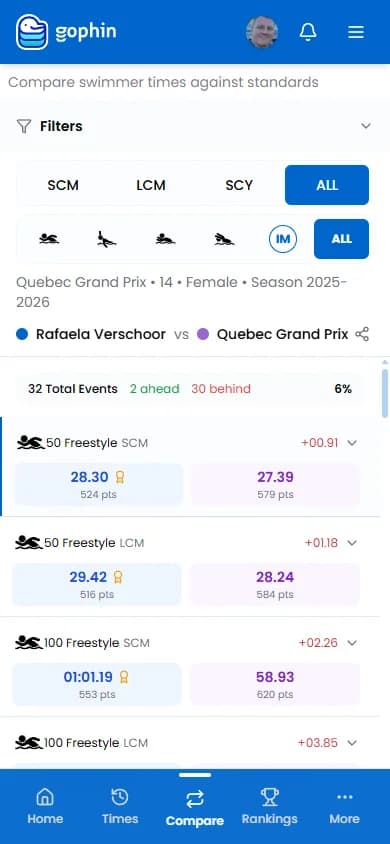
A single hub concentrates meet results, personal bests, evolution charts, and standards comparisons. Everyone navigates the same timeline with filters by age, event, and season. Parents understand what changed since the previous meet, coaches validate whether targets were met, and swimmers spot quiet wins, like holding speed on the second half, even when a personal best does not appear.
Conclusion
The strength of the Canadian model lies in combining age structure with accessible data. When categories, results, and cycles speak to each other inside one platform, decisions become sharper and development stops relying on gut instinct. That discipline, more than any single technology, is what sustains athletes’ long-term progress. To start centralizing your swimmer’s data, read our guide on how to track swimming times. Sign in to Gophin free, no card.