Quick answer
Swim meet recovery after a championship runs in three phases. First 24 hours: prioritize sleep, hydration, and easy carbs, no pool work. 48 hours: gentle movement (walk, easy swim, light stretching) and a real conversation about how the meet went. 72 hours and beyond: gradual return to normal training intensity, with one full rest day before the next hard session.
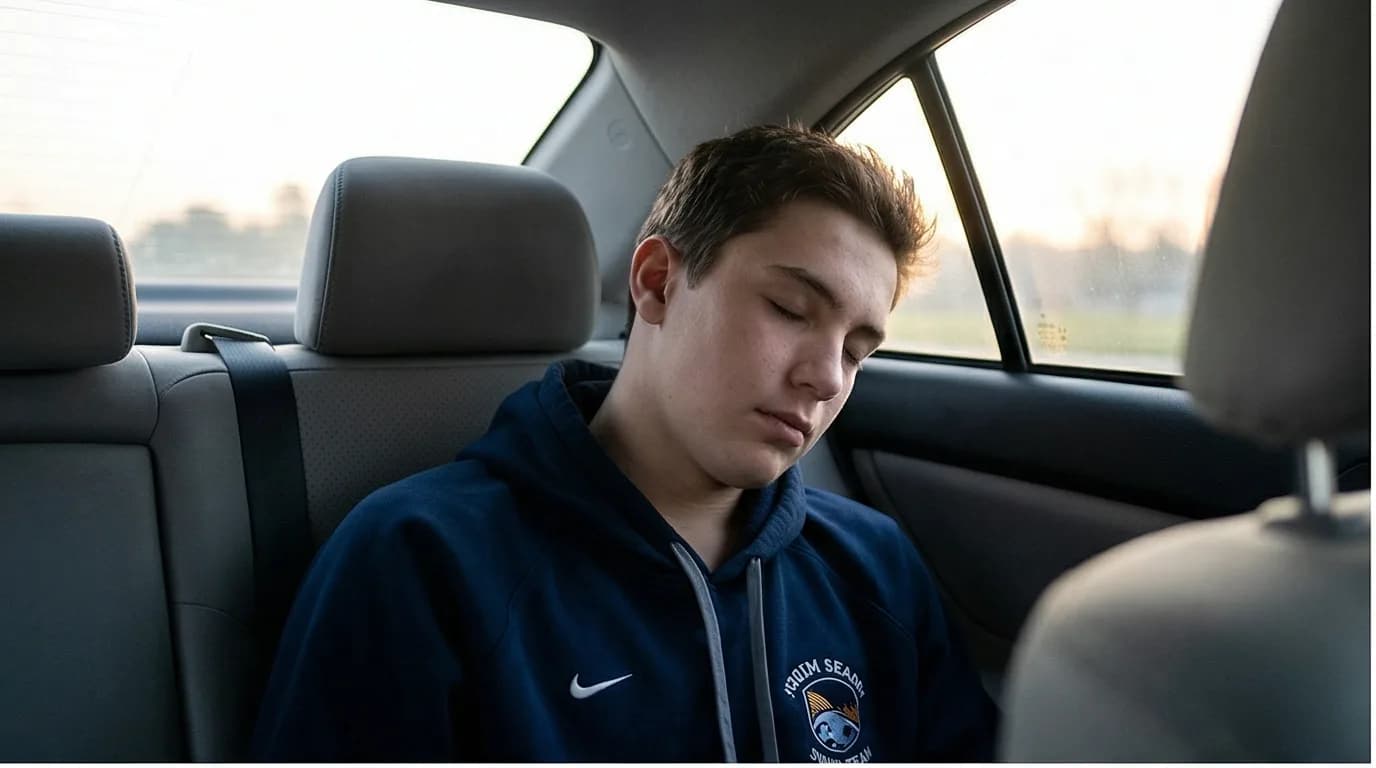
After Rafa's first BC Provincials, she walked out of the pool, sat in the back seat, and was asleep before we hit the highway. She did not eat dinner. She did not want to talk about her races. She slept eleven hours, woke up sore, and asked if she could skip school. I almost said yes.
If you have lived through a championship weekend with a young swimmer, you know that look. They are not just tired. Something deeper has emptied out, and you are not entirely sure what to do about it.
Here is what is actually happening, and what helps in the first 24, 48, and 72 hours.
What Actually Happens to the Body After a Big Meet
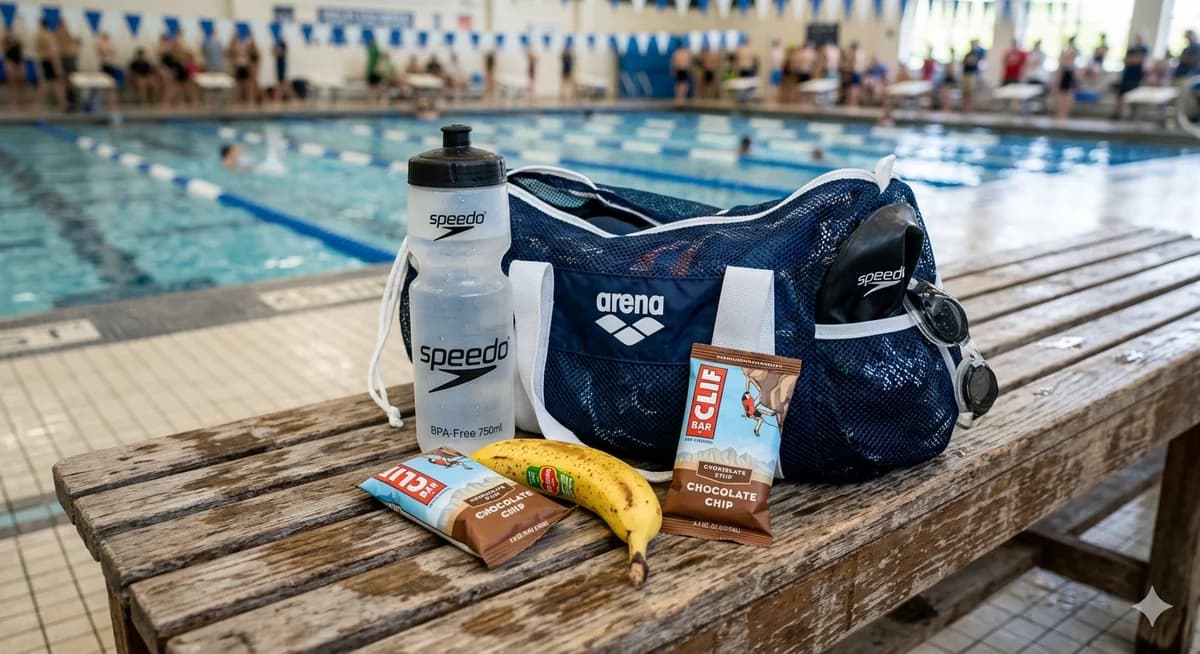
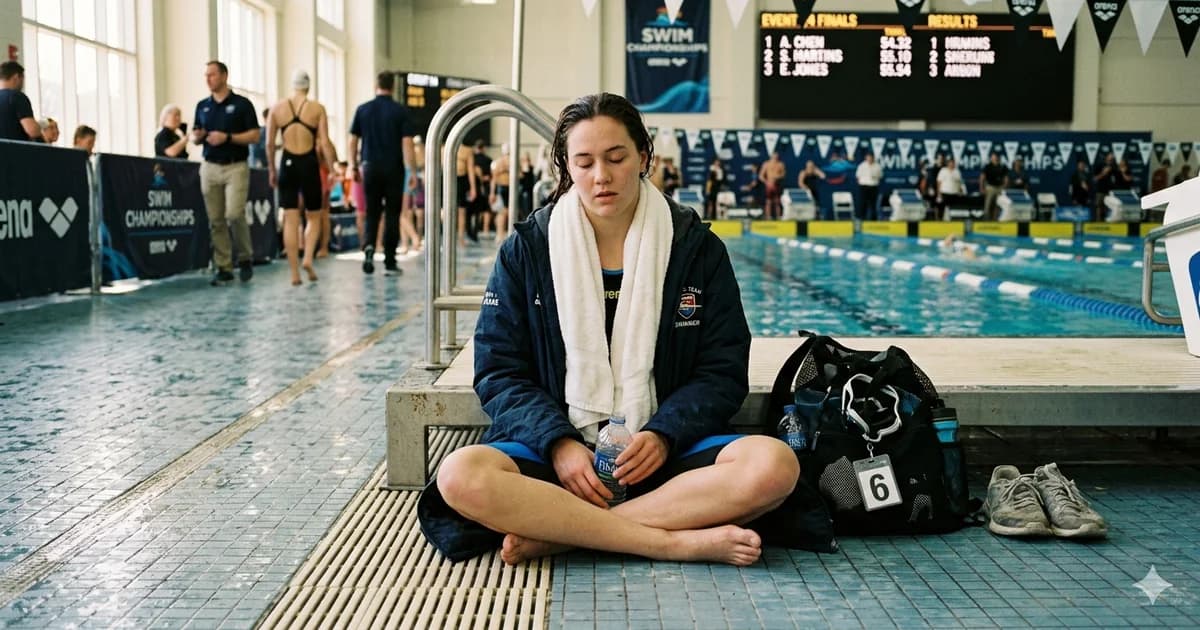
A championship meet is not one race. It is three or four days of early warmups, multiple races per session, finals at night, and almost no time to refuel between events. By the end, your swimmer's body is dealing with several things at once.
Muscle glycogen, the body's stored carbohydrate fuel, gets drained over multiple race sessions. Cumulative sleep deficit builds up because hotel rooms, pre-race nerves, and late finals all push bedtime later than usual. Cortisol stays elevated from competition stress, and the central nervous system is fatigued from repeated maximum-effort efforts. Add in the dehydration that comes from racing in chlorine and warm pool decks, and you have a swimmer who looks fine on the outside but is running on empty.
This is normal. It is not a sign that something is wrong. But the recovery window matters, and parents play a real role in it.
The First 24 Hours: Sleep, Food, Water, Stillness
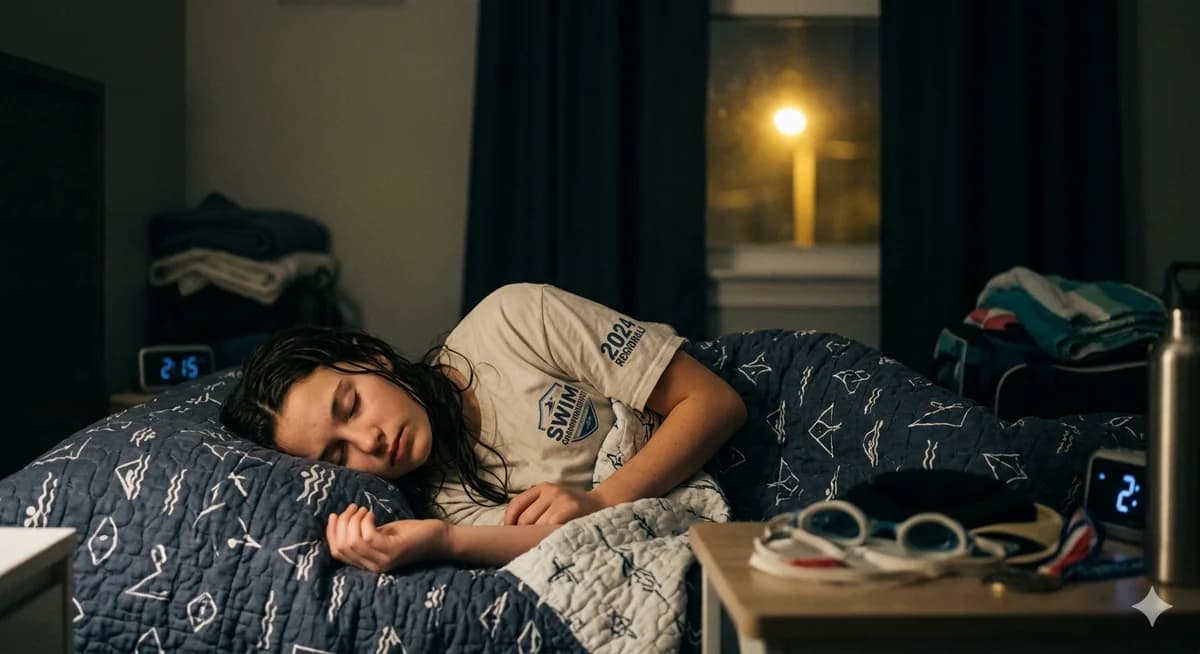
The first day after a championship is not the day to do anything extra. The body needs three things in this window, in roughly this order.
Sleep first. Research on competitive youth swimmers consistently points to 9 hours as the recovery sleep target, with elite athletes often needing more after high-stress competition. If your swimmer wants to sleep 10 or 11 hours the first night, let them. Pull the blackout curtains. Turn off the bedroom lights. If school the next morning is unavoidable, talk to the teacher about a late start when possible.
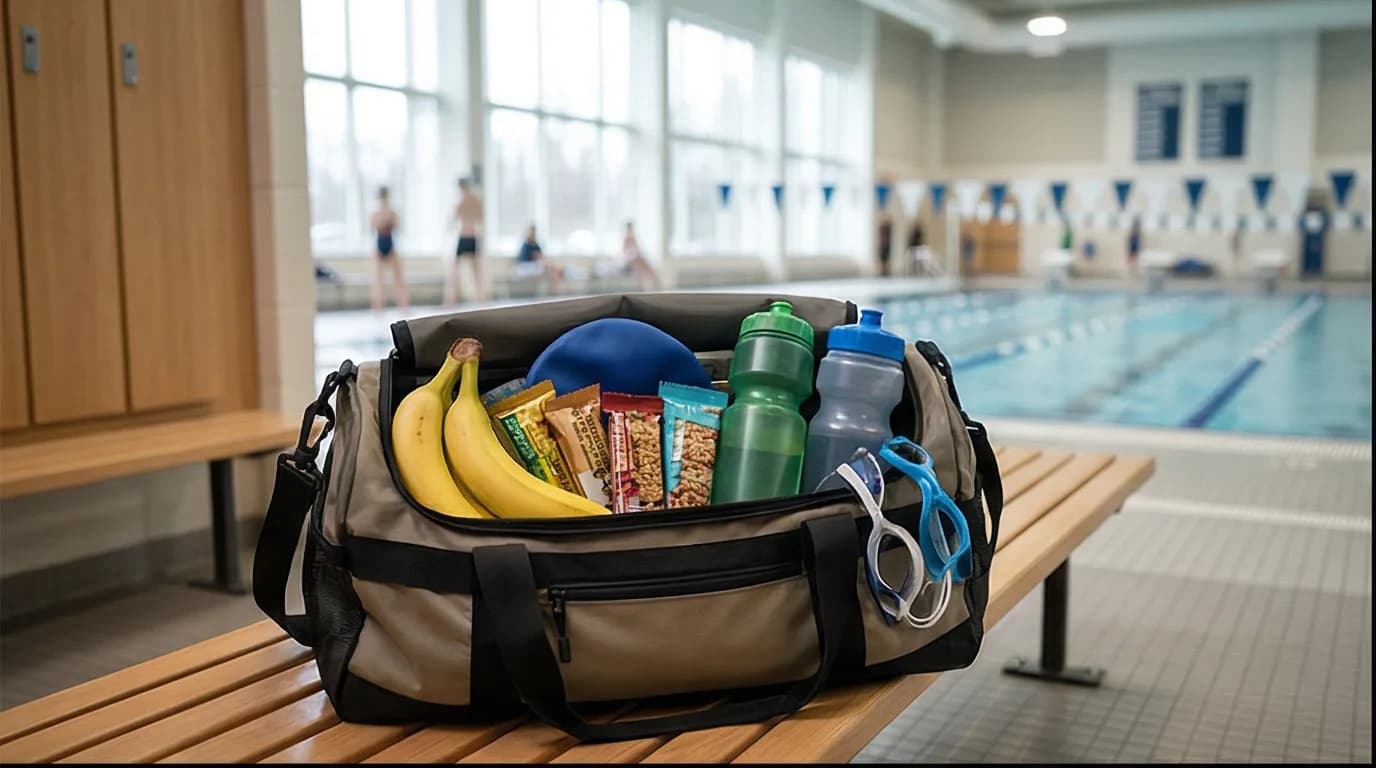
Refuel slowly. USA Swimming nutrition guidance recommends getting protein in within about 30 minutes of finishing the last race, then balanced meals (roughly half carbs, a quarter protein, a quarter healthy fats) over the next day. Do not push a giant restaurant meal right after finals. Most swimmers cannot eat much immediately after racing. A smoothie with protein, banana, and oats does more work than a steak dinner they only pick at.
Rehydrate. Aim for 20-24 ounces of fluid for every pound lost during the meet (a rough but useful guideline from sports nutrition research). Plain water for most of it, with one or two electrolyte drinks mixed in. Skip soda and energy drinks. They sound rewarding and they are, briefly, but caffeine and sugar mess with the sleep that matters more.
No big plans. Resist the urge to schedule a celebration dinner, a party, or a long drive home that ends at midnight. The body is recovering whether you let it or not. Help it.
48 to 72 Hours: Active Recovery, Not Active Training
By the second or third day, your swimmer will probably feel restless. The deep fatigue lifts, but they are still not race-sharp. This is the active recovery window, and the goal is gentle movement, not "let's get back to it."
What helps in this window:
- A short, easy walk (20-30 minutes, conversational pace) helps blood flow without adding stress
- Light stretching or foam rolling for sore shoulders, hips, and lats
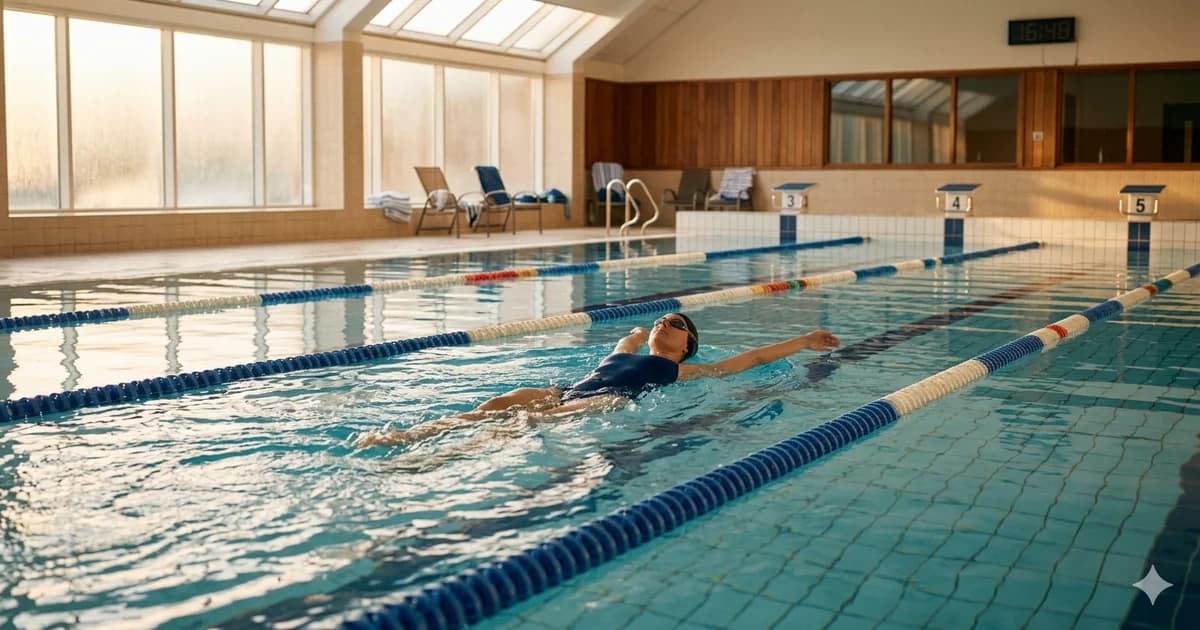
- An easy pool session if their coach schedules one. Easy means easy. 1500-2000 meters of drills and aerobic swimming, no race pace, no main set
- Normal meals, back to the usual eating pattern with extra carbs and fluids
What does not belong in this window:
- Hard practice or "make-up" sets to compensate for the meet
- Dryland circuits or weight room work
- A new training block starting Monday morning
- Any "let's see if you can hold that time" intervals
Most age group coaches build this in. If your swimmer has practice scheduled the day after a championship, ask the coach what they are doing. A good coach will tell you it is a recovery swim, not a training swim. If the schedule looks aggressive, it is reasonable to ask.
Red Flags: When Recovery Is Not Recovery
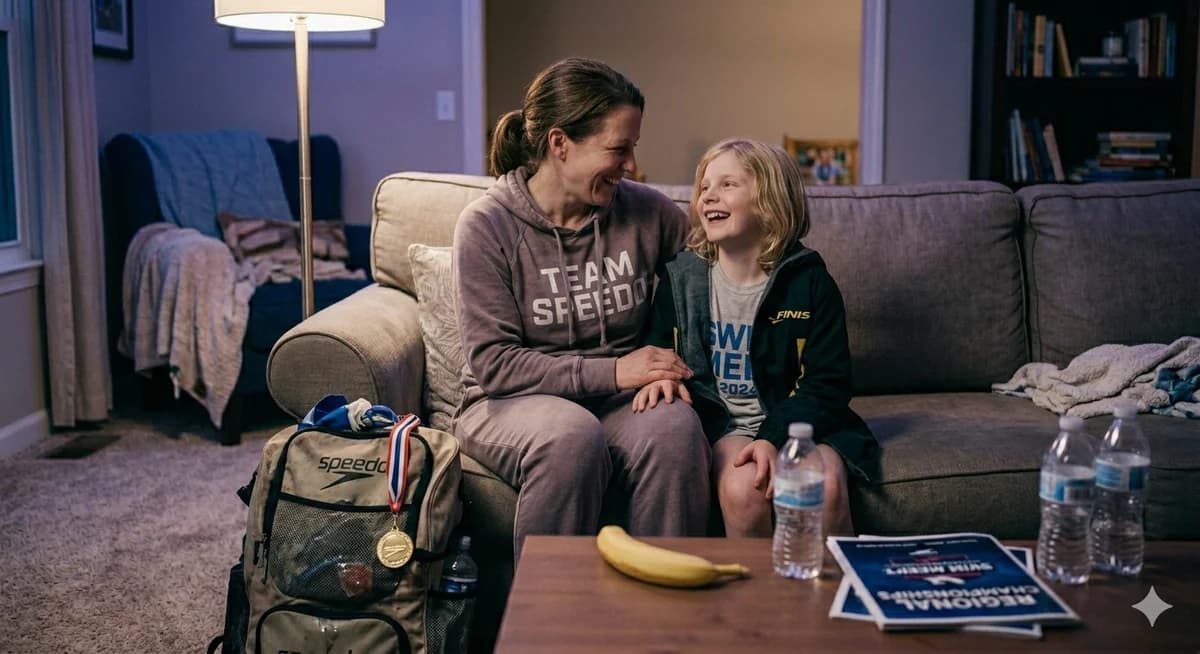
Most post-meet exhaustion clears up within 3-5 days. If it does not, pay attention. The signs of overtraining or under-recovery in young swimmers are not always dramatic.
Watch for:
- Sleep that does not restore. They are sleeping 9-10 hours and still waking up exhausted, for more than a few days
- Mood that stays flat. Some post-meet emotional dip is normal. Persistent irritability, withdrawal, or loss of interest in swimming for more than a week is worth a conversation
- Lingering soreness or unexplained injuries. Stiff shoulders that do not loosen up, a new ache that was not there before
- Resting heart rate elevated in the morning compared to their usual baseline
- Appetite drop that lasts more than 2-3 days
- Sickness within a week of the meet. A heavy training and racing block suppresses immune function. A cold or stomach bug after a championship is common, but a pattern of getting sick after every big meet is a signal to talk to the coach about volume
If you see two or three of these together for more than a week, talk to the coach. Talk to your family doctor if it stretches longer. Young swimmers do not always recognize when they are overdoing it. They often need an adult to call it.
What Parents Can Do (Without Hovering)
The hardest part of recovery week is staying out of the way while still being present. Some things that genuinely help:
Cook the meals. Take "what's for dinner" off their plate (literally). Make the favorites. Keep snacks visible and accessible.
Lower the stimulation. Less screen time the first two nights, especially the high-arousal stuff (competitive games, social scrolling, meet videos). Their nervous system needs quiet.
Skip the post-meet review. Do not replay the races. Do not analyze splits at the dinner table. If they want to talk about it, listen. If they do not, leave it alone. There is time for that later.
Protect the schedule. This is not the week for a school project all-nighter, a sleepover, or a packed weekend of social plans. Build in genuine downtime.
Watch your own emotions. A bad swim or a missed cut is hard. Your disappointment is real. But the recovery week is not when to process it with them. Talk to your spouse, the other swim parents, or your group chat. Not your swimmer.
When to Get Back to Normal
Most young swimmers are ready for a normal training week 4-7 days after a championship, depending on the size of the meet, their age, and how many races they swam. A two-day local meet needs 24-48 hours. A four-day national-level championship may need a full week before they feel like themselves again.
Trust the coach's plan. If the team has a scheduled "down week" after the meet, that is intentional. It is not lost training. It is the foundation of the next training block.
Tracking the Pattern Over Time
The way your swimmer recovers from championships is information. Some kids bounce back in two days. Some need a week. Knowing your swimmer's pattern, season after season, lets you plan differently next year, including how to approach the next taper cycle.
Keeping a simple log of meet results and how they felt after helps. Once the meet is over, see how this meet stacks against last year on Gophin, free, no card needed. Best Times, Meets, and Records are free for everyone, so you can track every season without logging into multiple sites.
One Last Thing
Championship meets are big moments. The drive home is quiet. The next morning is slow. The week after is not the week to push.
Sleep, food, water, and stillness do most of the work. Your job is to set the table and stay out of the way.
And once the meet is logged, let Gophin keep the recovery pattern visible across seasons, no card needed.
Sources
- USA Swimming. "Nutrition and Recovery" parent resources. Recommended post-race nutrition timing and macronutrient balance for age group swimmers. usaswimming.org
- Frontiers in Psychology / Taylor & Francis. "Perceived recovery-stress states and sleep in pre- and post-menarche elite youth swimmers" (2025). Sleep and recovery markers in competitive youth swimmers. doi.org/10.1080/1612197X.2025.2481451
- SwimSwam. "The Top 4 Rules For Post Swim Meet Recovery." Practical recovery framework. swimswam.com
- Author experience. Vancouver, BC. Multiple meets with Rafa, including her first BC Provincials.