Quick answer
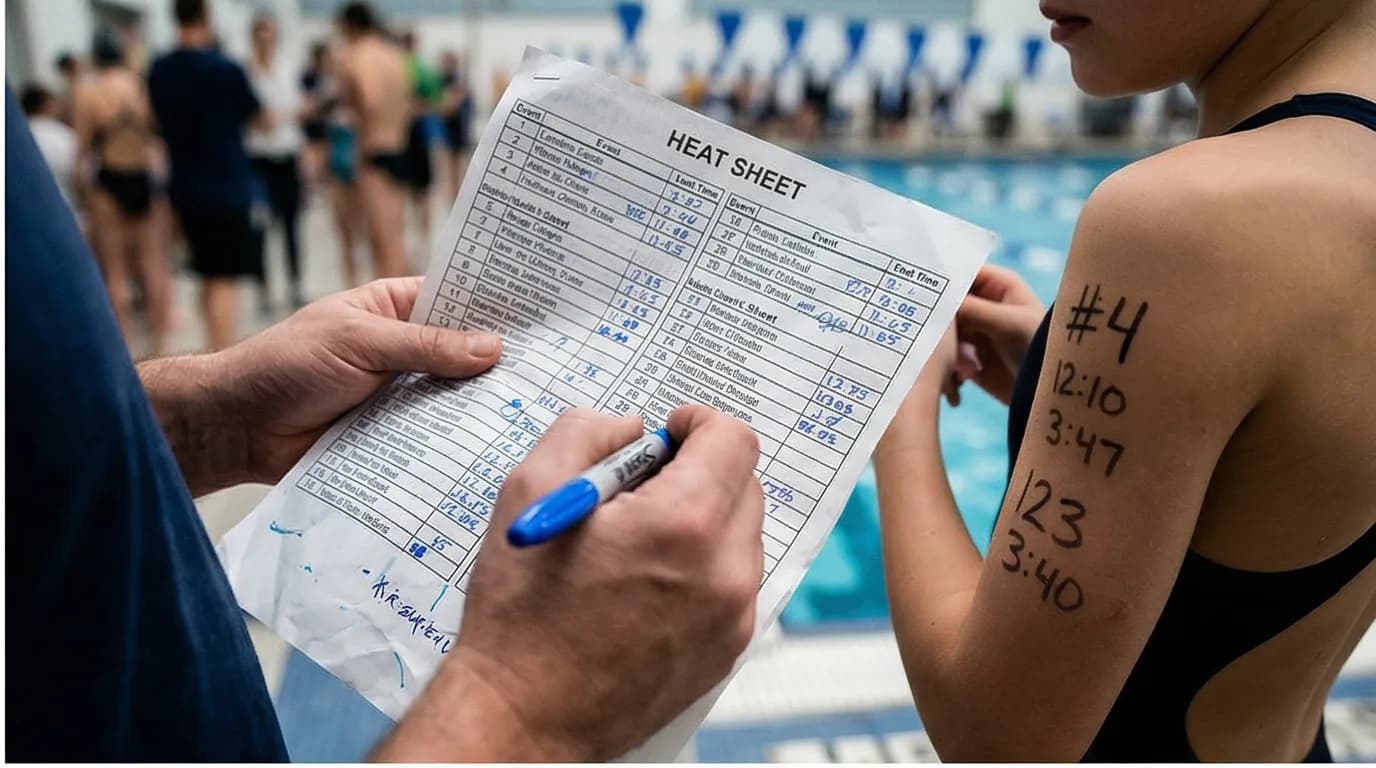
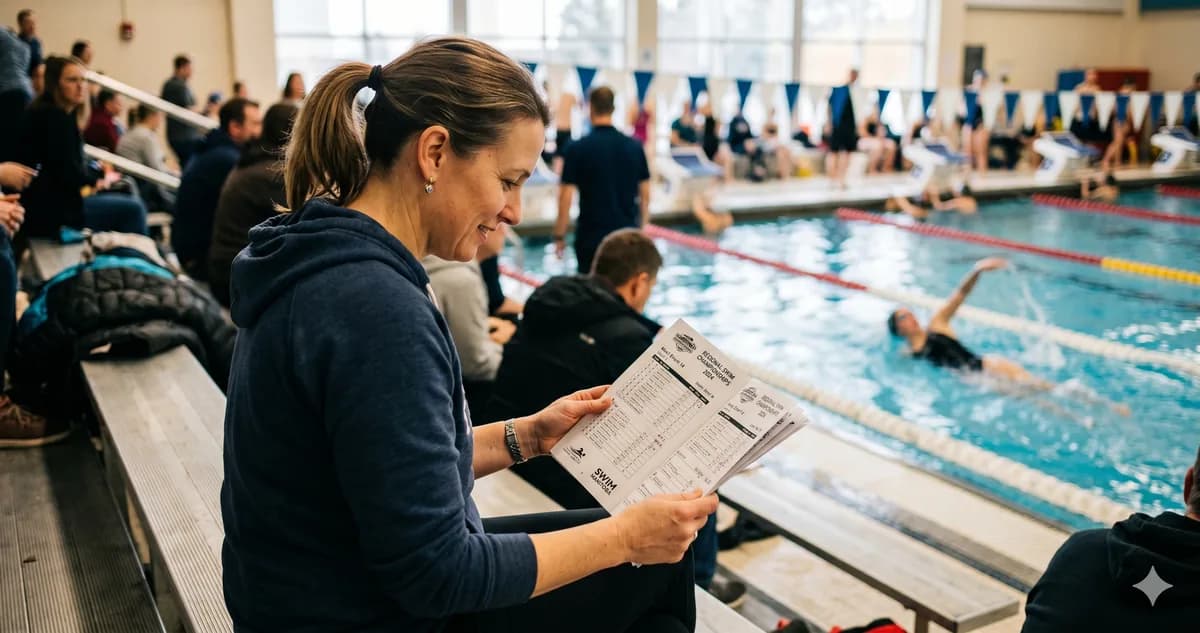
A psych sheet lists who is in each event, ranked by seed time, before heats are assigned. A heat sheet lists heat, lane, and race order. Use the psych sheet the night before. Use the heat sheet on deck.
The first time someone handed me a psych sheet at one of Rafa's meets in Vancouver, I nodded politely and pretended to know what I was looking at. It was a stack of printed pages with names, times, and numbers I could not decode. Another parent next to me was studying it like it was a stock report.
Two weeks later, at a different meet, the same parent asked me if I had seen the heat sheet yet. I assumed she meant the psych sheet. She did not.
If you are a swim parent, you will eventually hear both terms used loosely, and you will need to know the difference. Here is the plain version, what each one is for, and how to actually use them before and during a meet.
What Is a Psych Sheet?
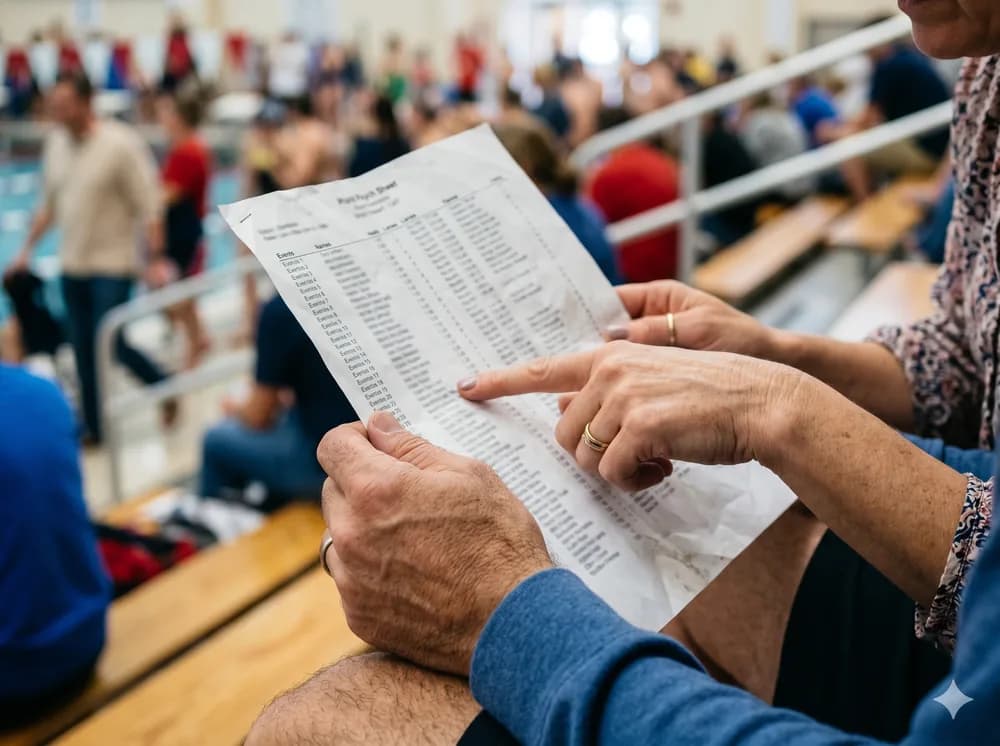
A psych sheet is a list of every swimmer entered in every event at the meet, ranked by their seed time, from fastest to slowest. It is published a few days before the meet, sometimes a week or more in advance.
It does not tell you which heat or lane your swimmer will be in. That is the heat sheet's job, which we'll get to.
What the psych sheet does tell you:
- Who is racing in each event
- Each swimmer's seed time (their fastest qualifying time used to enter)
- Where each swimmer ranks against the others entered
- The total number of swimmers in the event
That last detail, the total count, matters more than people realize. A 100 free with 12 swimmers entered runs in two heats. A 100 free with 84 swimmers entered runs in 11 or 12 heats. That changes how the meet day is going to flow.
Psych sheets are useful early. Heat sheets are useful late.
What Is a Heat Sheet?
A heat sheet is the meet program for the day. It includes everything in the psych sheet, plus heat and lane assignments for each swimmer.
It is published either the night before, the morning of, or sometimes both (one version for warmups, an updated version after scratches). On meet day, the heat sheet is the document you actually need on the deck.
The heat sheet tells you:
- The order of events for the day
- The number of heats per event
- Which heat and lane each swimmer is in
- Estimated start times for each event (sometimes)
If your swimmer is in event 12, heat 3, lane 4, that information lives on the heat sheet. We have a full walkthrough on how to decode all of that in How to Read a Swim Meet Heat Sheet.
Psych Sheet vs Heat Sheet: The Real Difference

The shortest version: psych sheets are about ranking, heat sheets are about logistics.
A psych sheet tells you, "Here is everyone racing the 100 free, ranked by seed time. Your swimmer is currently 18th out of 84." That is useful for mental prep, goal setting, and knowing the level of the field.
A heat sheet tells you, "Your swimmer is in heat 3, lane 5, scheduled to start around 9:42 AM." That is useful for being in the right place at the right time.
Both come from the same entry data. The psych sheet is the snapshot before lanes are assigned. The heat sheet is the snapshot after.
How to Actually Read a Psych Sheet
Psych sheet formatting varies between meet hosts, but most follow the same structure. Here is what you are looking at, top to bottom.
Event header. "Event 12, Girls 13-14 100 Yard Freestyle." This tells you the event number, gender, age group, distance, and stroke. Match this to the meet schedule to know when it will run.
Swimmer rows. Each line is one swimmer. Most psych sheets show the swimmer's name, club, and seed time. Some include the swimmer's age and sometimes their qualifying meet.
Seed time. This is the time used to rank the swimmer for this event. It is usually the swimmer's most recent qualifying time within the meet's eligibility window. Sometimes it shows "NT" for "no time," meaning the swimmer has never raced this event before. NTs go to the back of the field.
Ranking position. Sometimes printed, sometimes implied by the order. The fastest seed time is at the top. The slowest is at the bottom.
If you see two swimmers with the same seed time, they will appear in alphabetical order or by entry order, depending on the meet's policy. Same seed time does not mean same heat, that gets sorted on the heat sheet.
How Seed Time Affects Lane Assignments

This is the connection between psych sheet and heat sheet that confuses most parents.
Lane assignments come from seed times. The fastest swimmers in an event usually end up in the last heat (the "fast heat"), placed in the middle lanes (lanes 3, 4, or 5 depending on pool width). This is by design. Faster swimmers race against each other in the final heat, with the fastest in the middle lane.
The pattern works like this:
- Fastest seed time: middle lane of the final heat
- Next fastest: lanes adjacent to the middle in the same heat
- Mid-pack swimmers: middle heats
- Slowest seed times and NTs: earliest heats, often outside lanes
The thing to know: lane assignment is not random. It is driven by seed time. Knowing your swimmer's seed time and rough position on the psych sheet gives you a strong guess at when they will swim, even before the heat sheet drops.
How Swimmers Use the Psych Sheet for Mental Prep
Smart swimmers use the psych sheet for two things: knowing the field and setting realistic targets.
Knowing the field. If your swimmer is seeded 18th out of 84 in an event, they are in the upper third. That is useful information. They are not racing for the win, but they are competitive. If they are seeded 3rd out of 12, they are in the medal hunt. Different meet, different mindset.
Setting realistic targets. A swimmer can look at the seed times above and below them and set a goal. "Drop one second and I move from 18th to 12th." That is a concrete, measurable target tied to actual swimmers in the meet, not just an abstract time goal.
The trap to avoid: psych sheets show seed times, not what people will actually swim. The swimmer seeded 5th might drop two seconds and win. The swimmer seeded 1st might add half a second and finish 4th. Seed times are the starting point, not the result.
For a deeper look at how seed times relate to PBs and SBs, see Season Best vs Personal Best: What Counts.
How Parents Should Use the Psych Sheet
For parents, the psych sheet is mostly an early planning tool. Here is the practical use.
Estimate meet length. Big events with lots of heats take longer. A psych sheet with 60+ swimmers in multiple events means a long day. Pack and plan accordingly.
Spot scheduling conflicts. If your swimmer is in events 12 and 14, and event 13 has 10 heats, they will have a meaningful break. If event 13 has 2 heats, they will need to warm down and warm back up fast.
Set expectations. Look at where your swimmer is seeded. If they are seeded 30th out of 35, do not expect a top-10 finish. If they are seeded 4th out of 8, top 3 is realistic. This avoids the post-race "why didn't they win" conversation.
Skip the rest. Do not over-analyze the psych sheet. It is a starting snapshot, not a prediction. Your swimmer will swim what they swim. The seed times of the kids around them do not change how your swimmer races.
Where to Find the Psych Sheet
Psych sheets are usually posted on the host club's meet info page or on the governing body's meet portal a few days before the meet. Your club coach will often share a link by email or team app.
If you race in events covered by official competition databases and ranking platforms, you can also see seed-time-equivalent data (each swimmer's recent best in the event) in Gophin's Rankings view. Gophin includes full rankings access, free for everyone.
One Last Thing
A psych sheet is a snapshot of who is in the meet and how they line up. A heat sheet is the meet day plan. Get both, in that order, and you will walk into the pool deck knowing what to expect.
Once the meet is over and the times go official, you can compare the psych-sheet seed against actual race times in Gophin, free, no card needed.
Sources
- USA Swimming. Meet management resources and definitions of psych sheets, heat sheets, and seed times. usaswimming.org
- Swimming Canada. Officials and meet management documentation. swimming.ca
- World Aquatics. Competition Regulations, February 2026 update. Lane and heat assignment rules. worldaquatics.com