Quick answer
Swimming is a strong first sport because it is a water-safety skill, low impact on growing joints, full-body, and every kid races — there is no bench. It is not the only good first sport. It is one that still matters if they never go to Trials. After they join a club and race, official times have a home in Gophin. Sign in free, no card.
When Rafaela was ten, Michelle and I just wanted her to move. Get off the couch, get some exercise, do something physical. Swimming was supposed to be "just an activity" -- nothing serious, nothing competitive. Three years later, she was competing at BC Provincial Championships with 44 meets under her belt, training fifteen hours a week, and telling us she wants to go professional.
We never planned this. Swimming found her -- and it changed everything.
When parents think about enrolling their child in a first sport, the usual candidates come to mind: soccer, basketball, gymnastics. Swimming rarely tops the list, and yet it quietly checks every box that matters for a child's physical, emotional, and social development.
A 2006 review by Dr. Richard Bailey in the Journal of School Health concluded that sports participation in childhood is linked to physical, academic, social, and emotional development. Among all youth sports, swimming stands out for a unique combination of reasons.
Here is why swimming deserves a closer look -- and why many families who discover it first never look back.
It Saves Lives
This is the most important reason, and it belongs at the top. Drowning is one of the leading causes of accidental death in children under fourteen. Teaching your child to swim is not just a recreational activity. It is a survival skill.
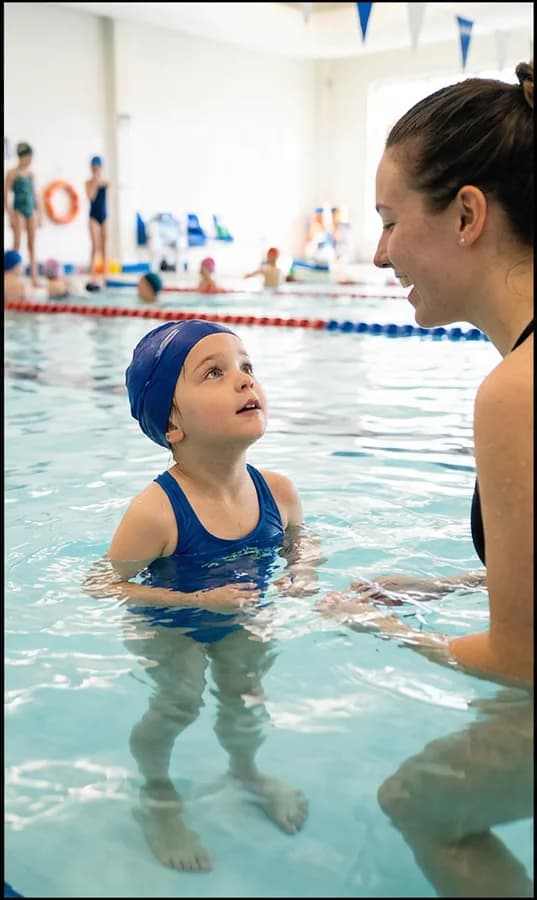
A child who is comfortable in the water, who knows how to float, tread water, and swim to safety, carries that ability for life. No other youth sport offers this kind of direct, life-saving benefit. Before swimming is a competitive endeavour, it is a form of protection.
Low Impact on Growing Bodies
Young children's bones, joints, and muscles are still developing. A 2024 clinical report by Drs. Joel Brenner and John DiFiori in the American Academy of Pediatrics journal Pediatrics highlights that high-impact sports carry a higher risk of overuse injuries during these formative years, especially repetitive stress injuries to growth plates.
Swimming is one of the lowest-impact sports a child can do. The water supports the body, reducing stress on joints while still providing a challenging workout. Children can train hard without the pounding that comes with running, jumping, or cutting on hard surfaces.
This makes swimming an excellent foundation sport. The fitness, coordination, and body awareness it builds transfer well to any sport your child might pursue later.
Full-Body Exercise
Most sports emphasize specific muscle groups. Soccer is primarily legs. Throwing sports are arms and shoulders. Swimming works the entire body in every stroke. Arms, legs, core, back, shoulders, and cardiovascular system are all engaged simultaneously.
This full-body conditioning gives young swimmers a well-rounded fitness base. They develop strength, flexibility, endurance, and coordination in a single activity. For a growing child, this balanced development is exactly what their body needs.
Individual Progress Without the Bench
In many team sports, playing time is not guaranteed. A child might sit on the bench for most of a game, watching others play while their confidence quietly erodes.
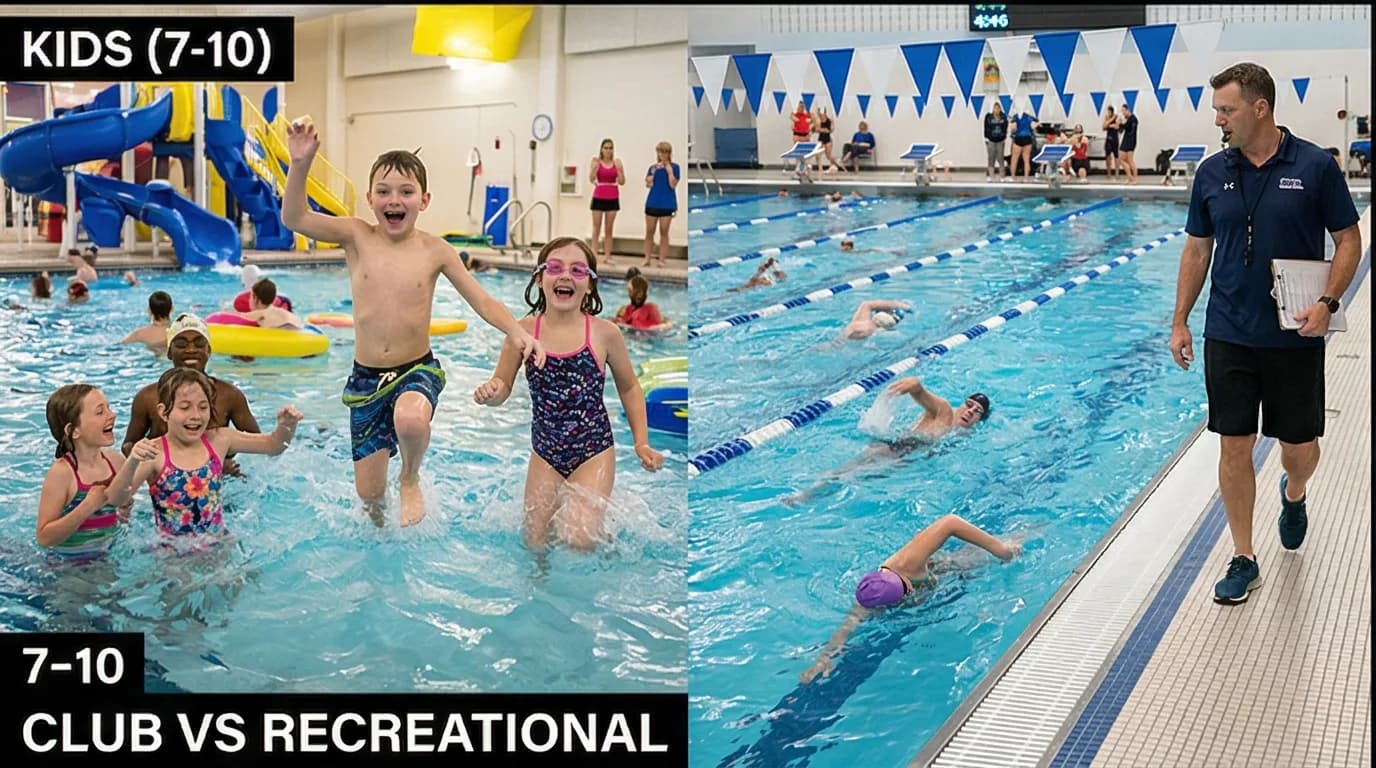
Swimming does not have a bench. Every swimmer races. Every swimmer gets a time. Progress is measured against your own previous performances, not against a roster of teammates competing for a spot. A child who finishes last in their heat can still celebrate a personal best time.
This structure is powerful for building self-esteem. A child learns that improvement is always possible, that their effort is always counted, and that success is defined by their own growth.
A Year-Round Sport
Many youth sports are seasonal. Pools stay open most of the year. That consistency helps habits and fitness. A good club still builds in rest weeks. Year-round does not mean seven days a week with no off-ramp.
It also means your child is not stuck in a four-month gap between seasons with nowhere to put the energy. The calendar has structure. It should also have recovery.
Teaches Self-Reliance
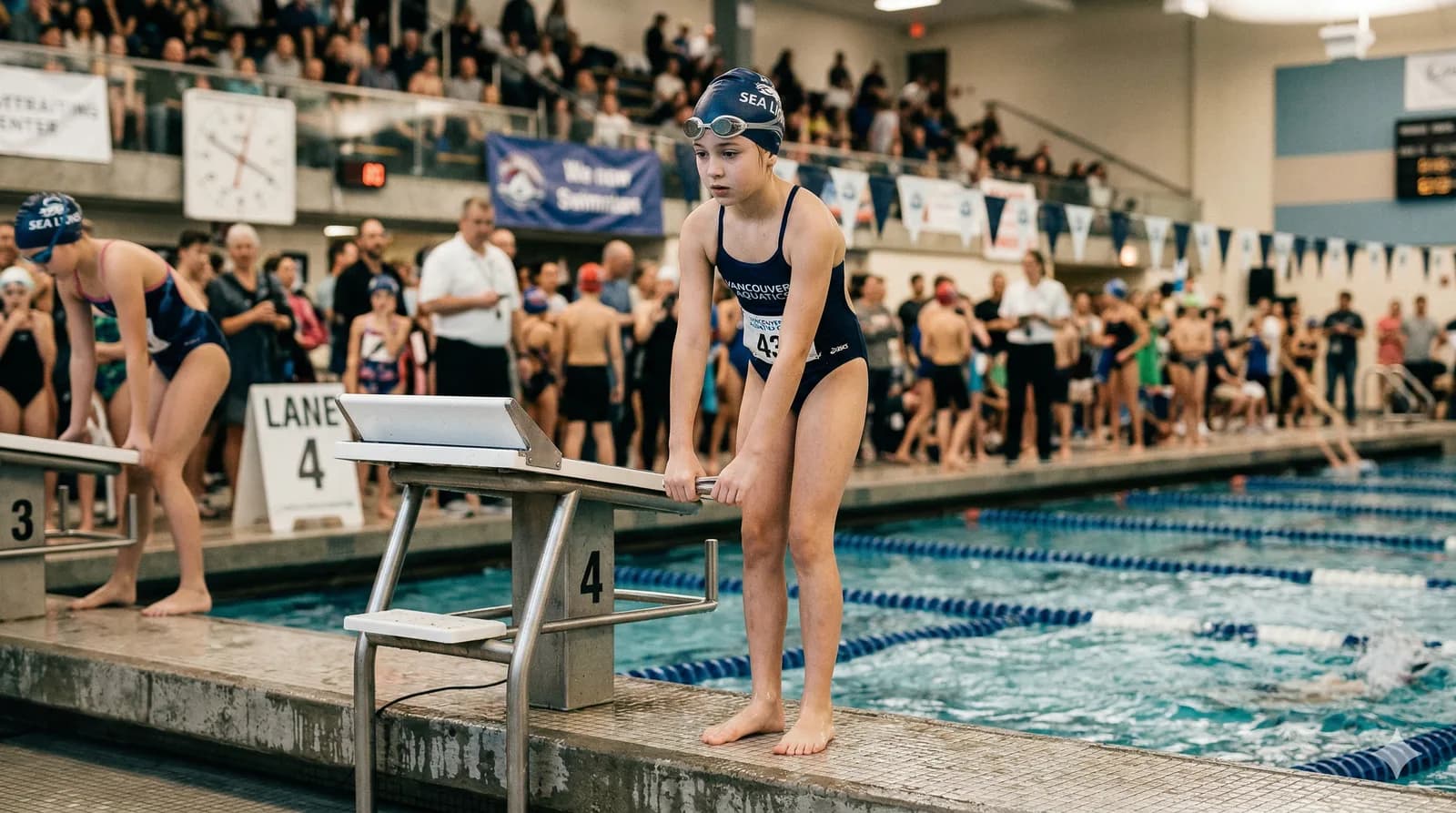
When the race starts, there are no teammates to pass to, no coach calling plays from the sideline. It is the swimmer and the water. They have to manage their own pace, their own technique, their own mental state.
This develops a kind of self-reliance that is hard to find in team-oriented sports at a young age. Swimmers learn to take responsibility for their own performance, to problem-solve in the moment, and to be accountable to themselves. These are skills that serve them well in every area of life.
Accessible to All Body Types
Swimming is one of the rare sports where there is no "right" body type. Tall swimmers, short swimmers, stocky swimmers, lean swimmers -- all of them can find events that suit their strengths. Michael Phelps and Janet Evans could hardly look more different, and both dominated the pool.
This inclusivity matters, especially for young children who are still growing and whose bodies may not fit the mould of other sports. In swimming, every body belongs.
A Foundation for Everything Else
Even if your child eventually moves to another sport, the years spent in the pool will serve them. A landmark study by Prof. Robyn Jorgensen at Griffith University, tracking over 7,000 children, found that young swimmers were 11 months ahead in oral expression, 6 months ahead in math reasoning, and 20 months ahead in understanding directions -- benefits that go far beyond the pool. The cardiovascular fitness, the discipline of regular training, the comfort with physical discomfort, and the experience of individual competition all translate to whatever comes next.
Swimming is a strong first sport. If they later move to soccer or track, the water time still counts. It does not have to be the only sport they ever do.
When they start racing at sanctioned meets, the times already exist in official records. Sign in to Gophin (free, no card) so you are not hunting PDFs after the first invitational.
Sources
- Bailey, R. (2006). "Physical education and sport in schools: a review of benefits and outcomes." Journal of School Health.
- Brenner, J.S. & DiFiori, J.P. (2024). "Overuse Injuries, Overtraining, and Burnout in Young Athletes." Pediatrics, 153(2). American Academy of Pediatrics.
- Jorgensen, R. et al. (2014). Griffith University study of 7,000+ children. Swimmers +11 months oral expression, +6 months math reasoning, +20 months understanding directions.