Quick answer
Growth spurts often stall or reverse swim times for months even when training stays hard. Longer limbs wreck timing. Compare this season to last season in the same course, not to a teammate who already grew. Sign in to Gophin (free) and use Compare Seasons so one slow meet is not the whole story.
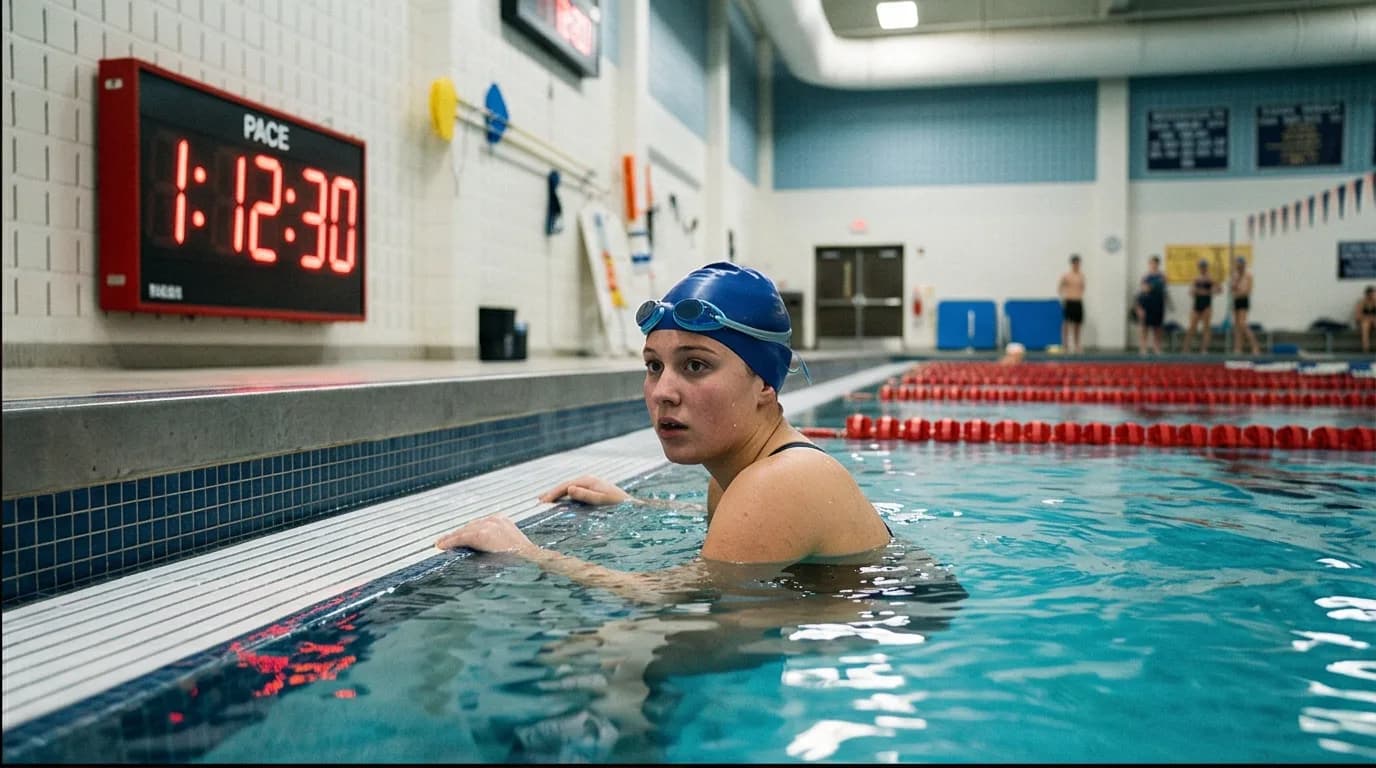
Rafa hit 5'4" the summer she turned 13. We measured it on the doorframe in May, again in August, and the line had moved nearly two inches. She was thrilled. She was also, for the first time since she started swimming at 10, slower in the pool than she had been the year before.
She had dropped two seconds in her 100 free between ages 11 and 12. Between 12 and 13, she added back a second and a half. Same training. More effort, in fact. And the times went the wrong way.
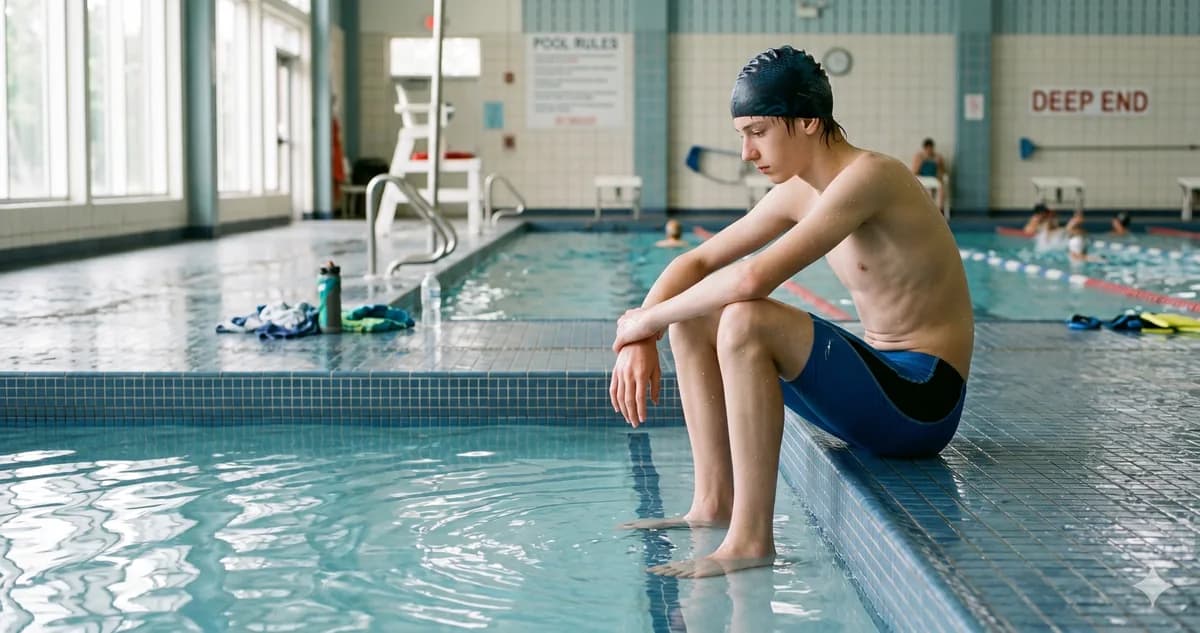
If you are a swim parent watching your kid grow four inches in a year and somehow get slower, this is for you. The plateau or backslide that often comes with a growth spurt is not a coaching failure, not a motivation problem, and not a sign that your swimmer is washed up at 13. It is biology. And it almost always passes.
Here is what is actually happening, what the research shows, and how to talk about it without making it worse.
What Happens During a Growth Spurt
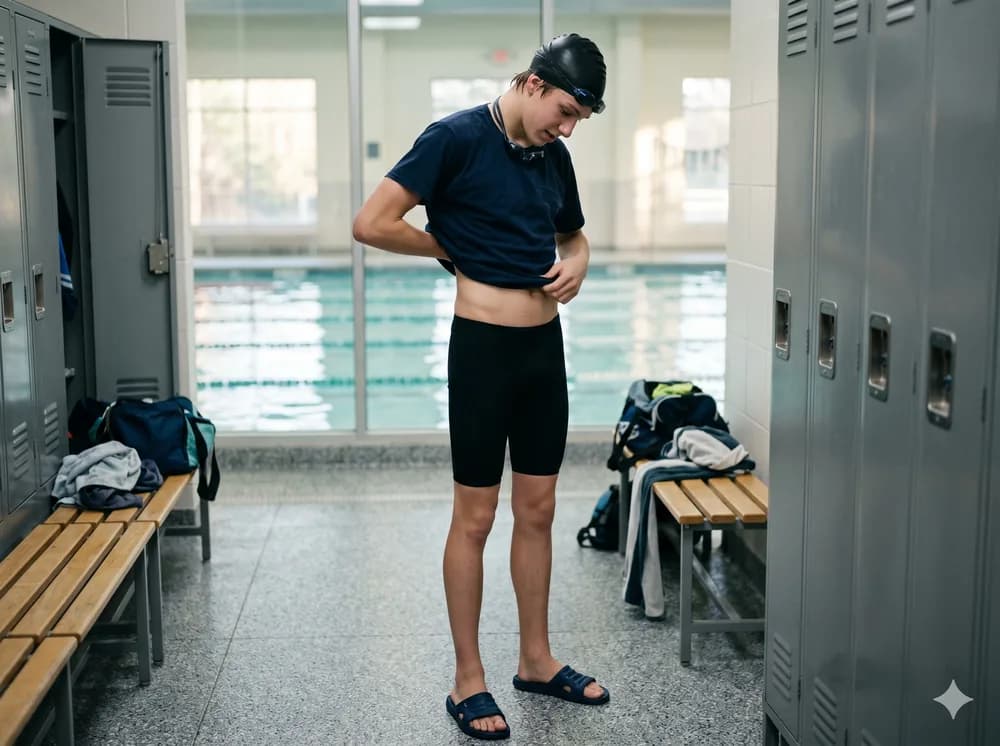
The adolescent growth spurt typically peaks around age 12 in girls (give or take 2 years) and around age 14 in boys (give or take 2 years). During this window, several changes happen at once:
- Bones lengthen quickly. Long bones in the arms and legs grow before muscles, tendons, and ligaments fully adapt.
- Levers change. A swimmer who has spent four years calibrating their stroke at one body size suddenly has different proportions, often longer arms and legs relative to torso.
- Coordination temporarily drops. Motor patterns built around the old body have to recalibrate to the new one.
- Center of mass shifts. Body composition changes, which affects buoyancy and body position in the water.
- Recovery time increases. Growing tissue requires energy. Sleep needs go up. Tolerance to high-volume training often drops.
- Strength-to-bodyweight ratio temporarily declines. Muscle mass takes time to catch up to the new skeletal frame.
None of these changes are bad. They are exactly what is supposed to happen. But they all affect how a stroke feels and how fast a swimmer moves through the water in the short term.
Why Stroke Mechanics Change Mid-Growth
A swimmer's stroke is built around their body, the proportions, the center of mass, the strength-to-weight ratio of that specific season. When a body changes faster than the stroke can adapt, race times reflect it.
Here is how each physical change affects the water:
- Longer arms change the catch. A swimmer who built their freestyle catch at 4'10" arm length now has 5'2" levers entering the water at the same angle. The pull pattern that produced a smooth, propulsive catch last year now over-rotates the shoulder or pulls past the body's midline. Recalibration takes weeks of stroke work, not days.
- Longer legs change the kick. Bigger levers move more water per kick but also create more drag if the kick is not driven from the hip. Many young swimmers go through a window where the kick goes from "tight and fast" to "loose and dragging" before the new motor pattern locks in.
- Higher center of mass affects body position. As limbs grow before the torso fills out, body position in the water can ride lower, especially in the legs, which increases drag dramatically.
- More body to move, less proportional strength. Until muscle mass catches up to the new skeletal frame, every stroke is propelling more body weight with the same or less force per stroke.
This is why the same 1:08 effort that worked at 12 produces a 1:09 at 13, even with more training, more focus, and more time in the water. The mechanics are not failing. They are renegotiating with the new body.
For the emotional and motivational side of swimming through a flat performance stretch, our existing piece on why the plateau is normal covers what to say (and what not to say) when your swimmer is in it.
How Recovery Needs Shift During Growth
This is the most under-discussed part of growth-spurt swimming. A growing body is not just performing in the pool. It is building bone, lengthening tendons, expanding lung capacity, and laying down muscle. All of that takes calories, sleep, and time.
What changes during heavy growth windows:
- Sleep needs go up. Growth hormone is released primarily during deep sleep. A 12-year-old in active growth often needs 9 to 11 hours per night, even when their schedule and social life resist it.
- Caloric needs spike. A growing competitive swimmer can need 20 to 40 percent more calories than the same swimmer 12 months earlier. Persistent fatigue or slow recovery between practices is often under-fueling, not under-training.
- Recovery between hard sessions takes longer. Two-a-day practices that worked at 11 may need a recovery day inserted at 13. The body that is rebuilding tissue needs more time to bounce back from the same training stimulus.
- Cumulative load tolerance drops temporarily. A swimmer mid-growth-spurt who keeps up with peers' weekly volume may compensate by under-recovering, which shows up as more illness, more soreness, and slower times.
Parents and coaches who treat growth as just "the kid is taller now" miss this. The kid is also rebuilding their body from the inside, and that rebuild competes for the same energy as training.
What Coaches Often Adjust
A good coach watching a swimmer go through a growth spurt will usually shift one or more of:
- Training volume. Slightly less yardage, especially in the heaviest growth months, often produces better times than pushing through.
- Stroke focus. More technical work, less aerobic grind. Building the new stroke with the new body is a higher-leverage use of pool time than chasing race-pace sets.
- Strength work. Bodyweight and light-resistance dryland focused on stability (especially shoulder and core) supports the new frame without overloading still-fragile joints.
- Race selection. Fewer events per meet, more focus on technical execution rather than racing every event.
- Recovery scheduling. Built-in rest days, deload weeks, or rotating intensity blocks.
These are coach decisions, not parent decisions. But knowing what good adjustments look like helps you have a useful conversation with the coach when you check in.
What to Track Instead of Just Best Times

When a swimmer is mid-growth-spurt, comparing every race to a lifetime best is a recipe for despair. The lifetime best was set in a different body. It will get broken eventually, but probably not this season.
What is worth tracking instead:
- Season-best times. A reasonable baseline for the current body and current training cycle.
- Time progression within the season. Is the swimmer dropping time across this season, even if they are still slower than last year's best?
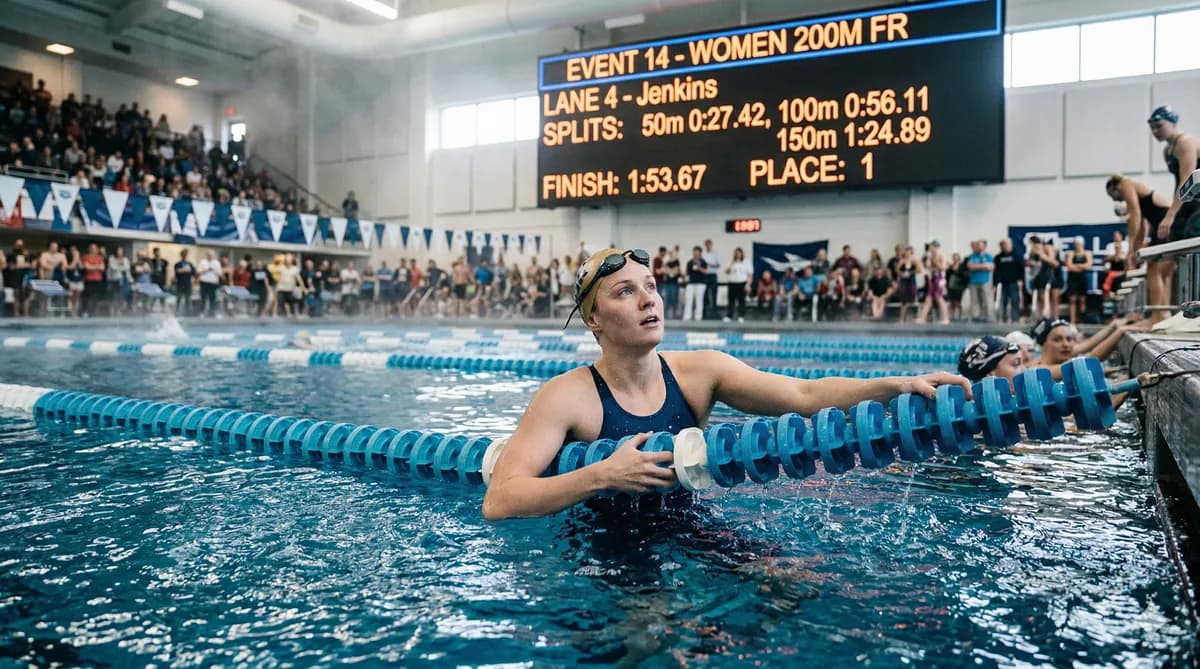
- Splits, not just final times. Often the back half of a race shows real improvement (better fitness, better racing) even when the total time is slower.
- Stroke count and rate. A swimmer adapting to longer levers may take fewer strokes per length. That is a sign the body is re-learning efficiency.
- Effort and feel, race to race. Not always quantifiable, but coaches and swimmers can usually tell when something is clicking again.
This is a place where having every meet result in one place actually matters. A single bad race in a vacuum looks catastrophic. The same race plotted alongside the last 18 months of times often looks like exactly what a growth spurt does, a temporary flat spot in a long upward trend.
If you want to see your swimmer's full progress curve in one view, watch the growth-spurt arc settle on Gophin's progress chart, free, no card needed. Sometimes "plateau" looks a lot less scary when you can see the whole picture instead of just the last meet.
How to Talk About It
How parents and coaches talk about a growth-spurt plateau matters as much as the training. The wrong message ("you used to be faster, what happened?") can break a swimmer's relationship with the sport. The right message keeps them in the pool through the messy years and into the productive ones on the other side.
A few principles:
Do not pretend it is not happening. A swimmer who knows they are slower this season does not need their parent to tell them everything is fine. They need their parent to say "your body is doing something hard right now, and we know it is frustrating."
Do not catastrophize. "You used to be top of your group" is not useful. Neither is "maybe you are losing your love of the sport." Most growth-spurt plateaus look like that from the outside. They are almost always something else.
Talk about the long arc. Most national-level swimmers had a flat year somewhere between 12 and 16. Many had two. The path is rarely linear.
Trust the coach, but stay engaged. A good coach will adjust training around growth and watch for signs of overload. Stay in the loop. Ask how your swimmer is responding to the current cycle.
Watch for injury risk. Bodies in growth spurts are at higher risk for overuse issues. Shoulder pain especially. For more on that, see our swimmer's shoulder prevention guide.
When to Be Concerned
Most growth-spurt plateaus resolve on their own. A few signs warrant a conversation with the coach (and possibly a sports physician):
- Times getting significantly slower (not just plateauing) for more than 2-3 consecutive meets
- Persistent pain in any joint, especially shoulders, knees, or lower back
- Sudden loss of motivation that lasts beyond a single rough patch
- Significant drops in energy, appetite, or sleep quality
- Signs of overtraining: chronic fatigue, frequent illness, mood changes
A growth-spurt plateau is normal. Burnout, overtraining, and injury are not. Knowing the difference matters.
Key Takeaways
Growth spurts are when many young swimmers slow down before they speed up again. Bodies that lengthen faster than they coordinate produce stroke inefficiencies that take time to resolve. The plateau is biology, not failure.
What helps:
- Track season-best and within-season progression, not just lifetime best
- Look at the long-term trend, not the last meet
- Talk about it honestly without catastrophizing
- Watch for injury risk during high-growth periods
- Trust the process and the coach
The kids who stay in the sport through the growth-spurt years are the ones who break through on the other side. The ones who quit at 13 because their times stopped dropping never get to find that out.
Sources
- de Mello Vitor, F. and Böhme, M.T.S. "Growing up and reaching for the top: A longitudinal study on swim performance and its underlying characteristics in talented swimmers." Journal of Sports Sciences. tandfonline.com
- "Does Higher Maturation Make Age-Grouped Swimmers Faster? A Study on Pubertal Female Swimmers." MDPI Applied Sciences. mdpi.com
- "The Impact of a Swimming Training Season on Anthropometrics, Maturation, and Kinematics in 12-Year-Old and Under Age-Group Swimmers." NIH PMC. pmc.ncbi.nlm.nih.gov
- Swimming World Magazine. "The Dreaded Plateau: Causes and Cures." swimmingworldmagazine.com
- Crawfish Aquatics. "Understanding Athlete Progressions of Training" (LTAD framework). crawfishaquatics.com
- "At What Age Do Swimmers Peak in Their Performance?" SwimMirror. swimmirror.com