Quick answer
Yes, swimmers sweat in the pool. Cool water hides it. More than three in four young athletes in one study arrived at practice already behind on fluids. Water before, at the wall, and after. Skip a new energy drink on race day. Gophin does not track hydration. It tracks official race times after the meet file is up.
Halfway through a long meet in Victoria, I looked over and noticed Rafa's water bottle was still completely full. It was noon. She had already raced twice, warmed up, warmed down, and the bottle had not been touched. When I asked her about it she looked at me like I was crazy, "Dad, I'm literally in water all day. Why would I be dehydrated?" That moment was a wake-up call for me, and probably for a lot of swim parents who assume the pool takes care of hydration.
Here is the thing: it does not.
There is a common myth that swimmers do not sweat because they are in water. They absolutely do. According to the American College of Sports Medicine (ACSM) position stand on exercise and fluid replacement, adequate hydration is essential for maintaining health, safety, and optimal athletic performance. Competitive swimmers can lose between 500 millilitres and over a litre of sweat per hour of intense training. The cool water masks the sensation, but the fluid loss is real, and it affects performance more than most families realize.
A 2015 study by Arnaoutis et al., published in the Journal of Strength and Conditioning Research, found that more than three out of four young athletes arrived at practice already dehydrated. Only about one in four began training properly hydrated. If your child finishes practice feeling sluggish, headachy, or unusually tired, dehydration might be part of the picture.
Yes, You Sweat in the Pool
During a hard practice, your child's core temperature rises just like it would in any other sport. The body sweats to cool down. Because the pool water washes the sweat away immediately, swimmers rarely notice it happening. That is why swimming is one of the sneakiest sports for dehydration. By the time a swimmer feels thirsty, they are already behind on fluids. (A separate nutrition paper by Shaw et al., 2014, found swimmers often need far more energy than non-athletes. That is fuel, not a sweat measurement. The hydration evidence is the ACSM stand and the Arnaoutis study above.)
How Much to Drink: Before, During, and After
A simple framework can help your swimmer stay on top of hydration.
- Before practice (2 hours out): 400 to 500 ml of water. This gives the body time to absorb the fluid before getting in the pool.
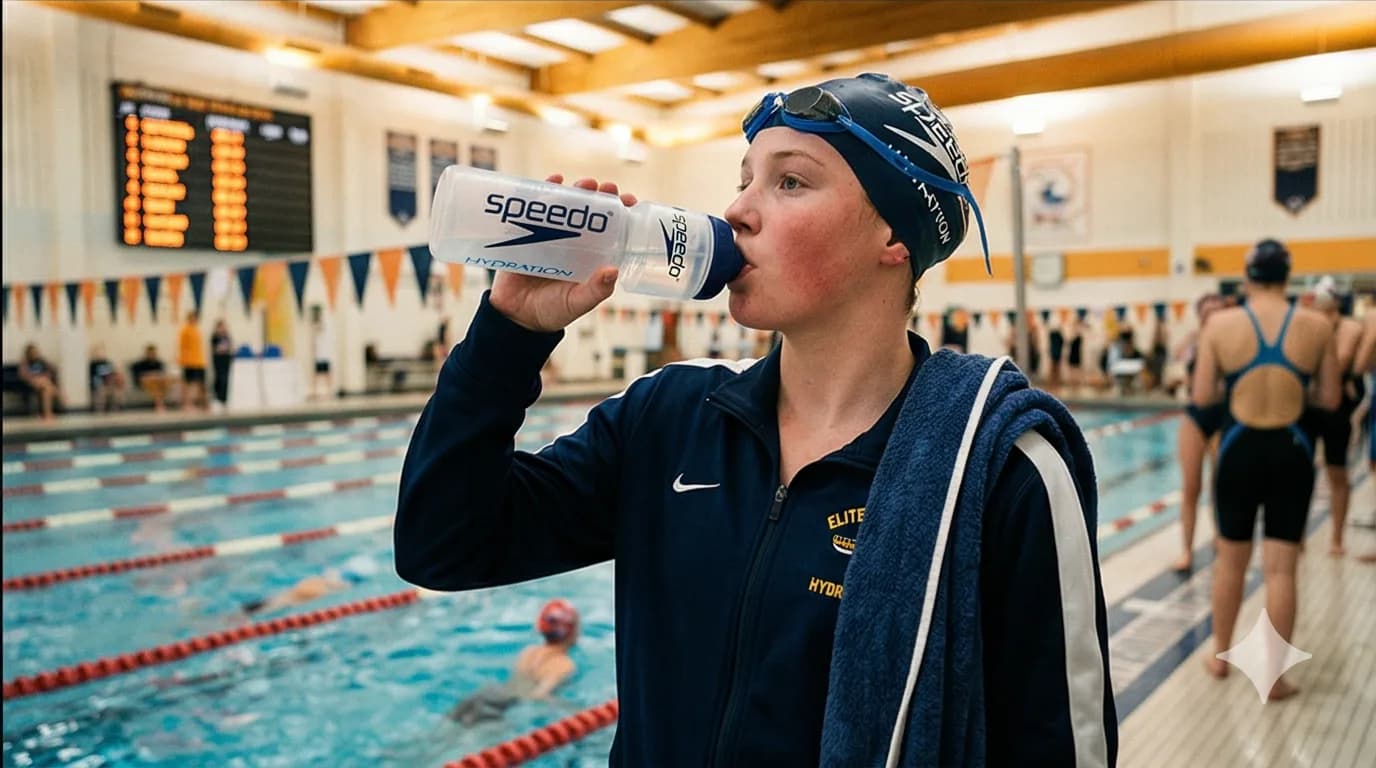
- During practice: 200 to 300 ml every 15 to 20 minutes. Most coaches allow water bottle breaks at the wall. If your child's coach does not, it is worth a respectful conversation about it.
- After practice: At least 500 ml within the first 30 minutes. If practice was especially long or intense, more is needed.
These are general guidelines. Larger swimmers, hotter pool environments, and longer sessions all increase the need.
Signs of Dehydration to Watch For
Dehydration does not always announce itself dramatically. The early warning signs are subtle:
- Dark yellow urine (healthy hydration produces pale, straw-coloured urine)
- Headaches during or after practice
- Muscle cramps, especially in the calves or feet
- Unusual fatigue or sluggishness in the water
- Dizziness or lightheadedness when standing on the blocks
If your child reports any of these regularly, hydration habits are the first thing to examine.
What to Drink
For most practices under 90 minutes, plain water is the best choice. It is simple, effective, and does not come with added sugars or artificial ingredients.
For longer or more intense sessions, an electrolyte drink can help replace the sodium and potassium lost through sweat. Look for options that are low in sugar. Many sports drinks on the market contain as much sugar as a soda, which can actually work against hydration by slowing fluid absorption.
What to avoid: sugary sodas, energy drinks, and anything with high caffeine content. These can cause energy crashes, stomach discomfort, and actually increase fluid loss.
Meet-Day Hydration
Meet days are long. Your child may be at the pool for six to eight hours but only race for a few minutes total. The biggest mistake families make is waiting until race time to think about hydration.
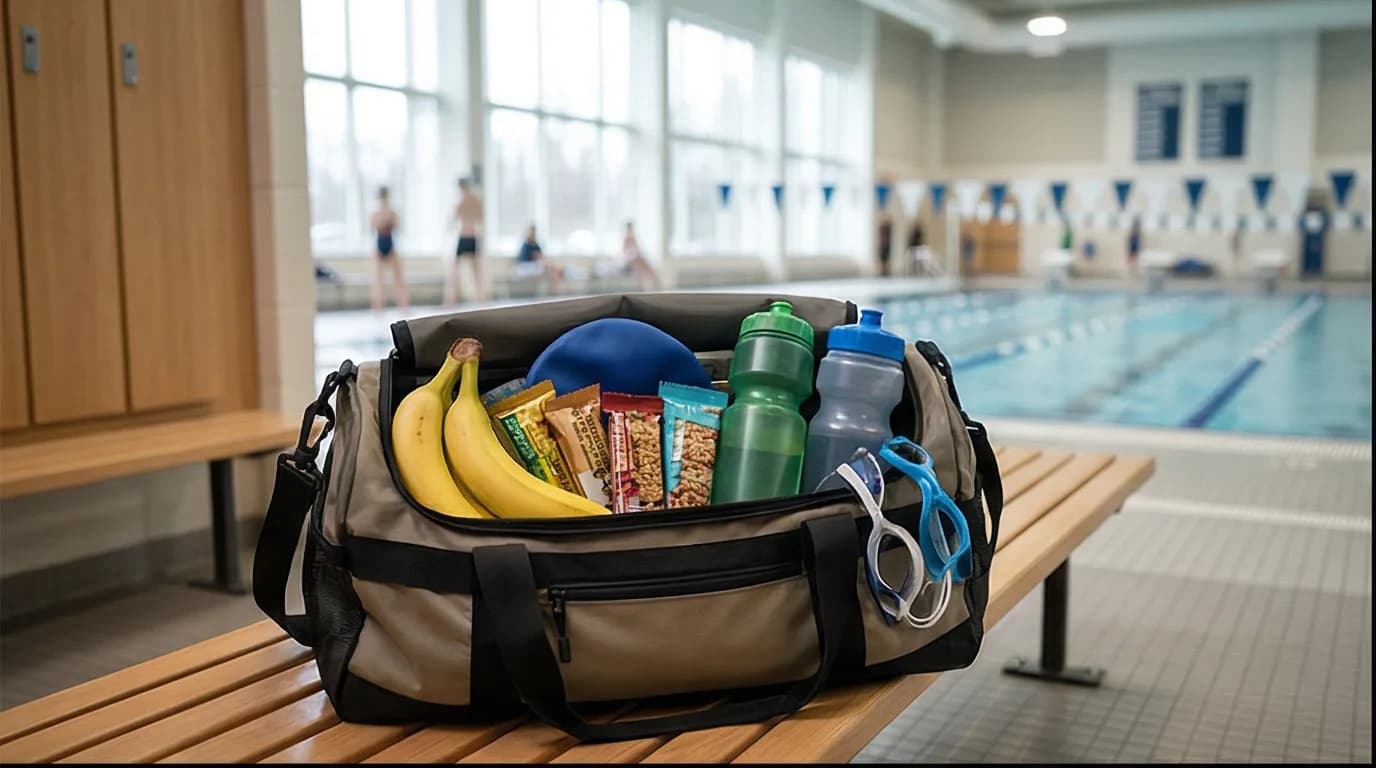
Start hydration the day before. Make sure your swimmer drinks consistently throughout the meet, not just before their events. Keep a water bottle in their bag and set gentle reminders if they tend to forget. Pair hydration with light snacking to keep electrolyte and energy levels steady.
Avoid the temptation to rely on the concession stand. Most of what is sold there falls squarely in the sugary-drink-and-heavy-snack category.
Build the Habit Early
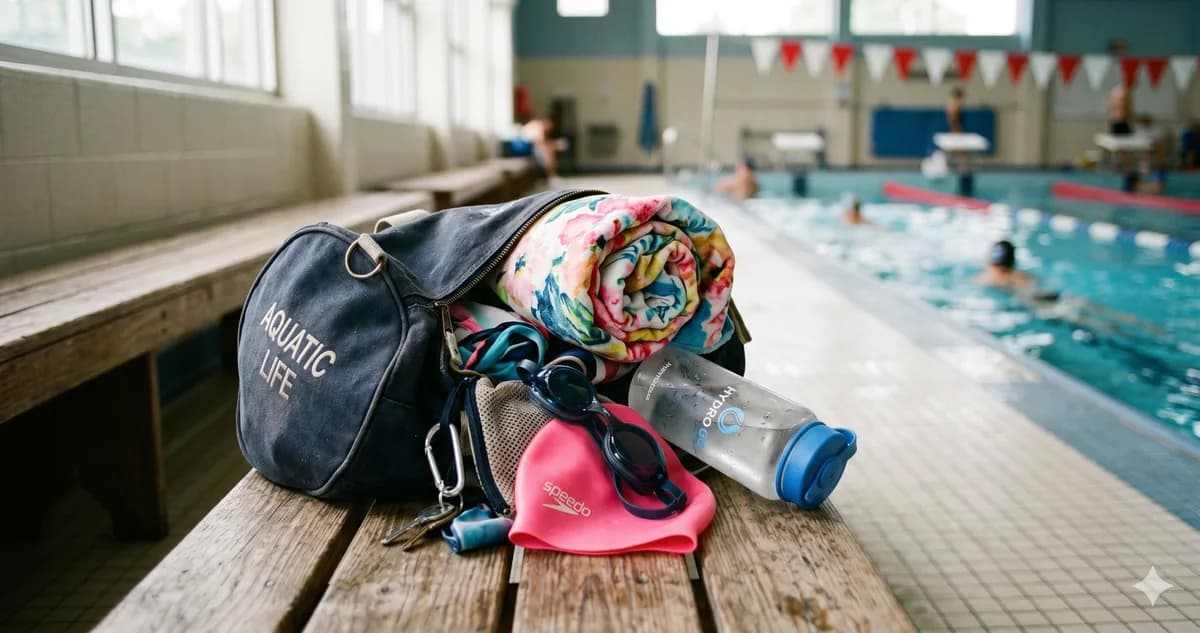
The best thing you can do is help your swimmer build hydration into their routine so it becomes automatic. A water bottle packed in the swim bag every day. A glass of water first thing in the morning. A post-practice drink on the drive home.
These small habits add up. A well-hydrated swimmer recovers faster, trains better, and feels stronger in the water.
Pack the bottle. Gophin will not tell you if they drank. It will show the official times once the meet file is published. Sign in free, no card.
Sources
-
- Arnaoutis, G., Kavouras, S.A., et al. (2015). "Fluid Balance During Training in Elite Young Athletes of Different Sports." 76% of young athletes (n=59) arrived at practice already hypohydrated; only about one in four began training properly hydrated. Journal of Strength and Conditioning Research, 29(12), 3447-3452.
-
- American College of Sports Medicine (ACSM). Position stand on exercise and fluid replacement. Adequate hydration maintains health, safety, and optimal performance.
-
- Shaw, G. et al. (2014). "Nutrition for swimming." Swimmers' energy demands 25-100% higher than non-athletes. PMC.