Quick answer
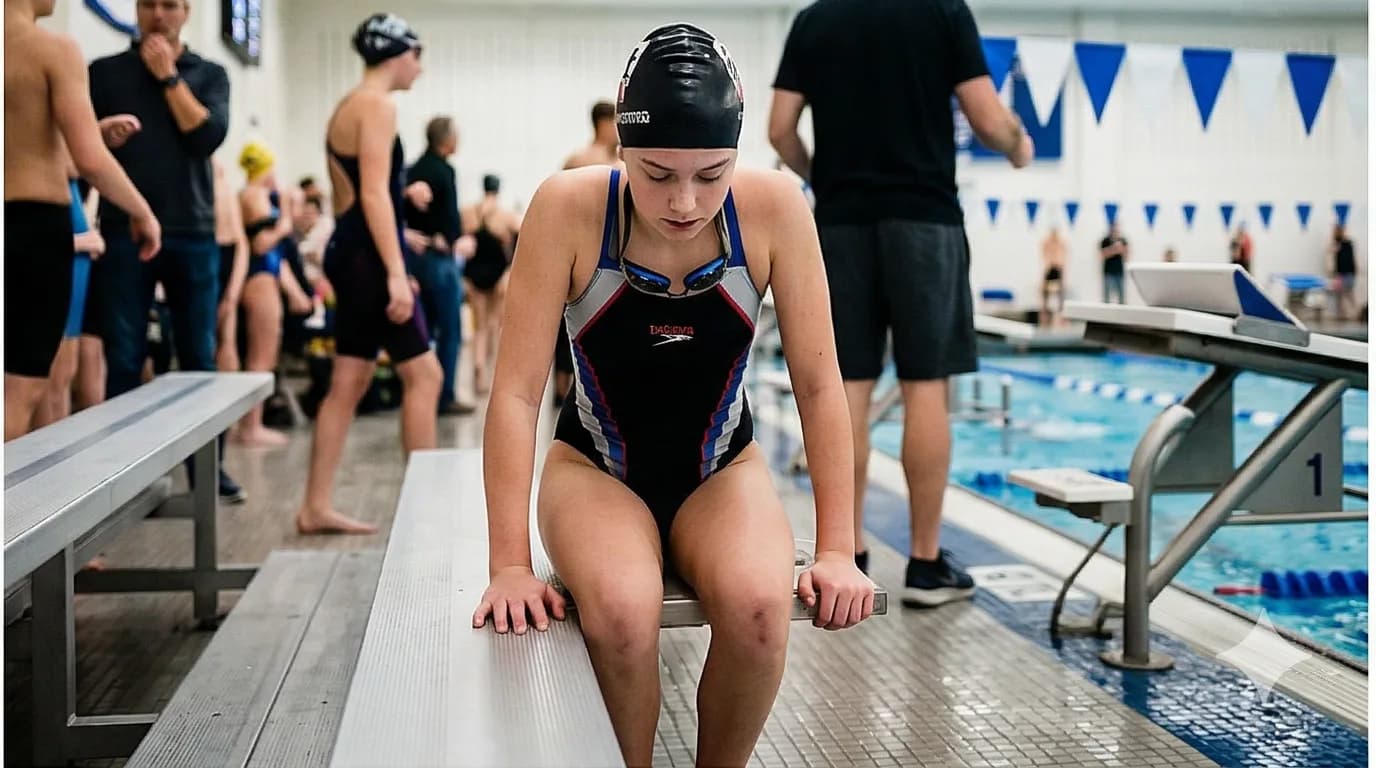
Kids read parental stress from the stands — clenched hands, a forced smile, the silent car ride. Research links parental pressure to worse motivation and dropout; support to enjoyment and staying in the sport. Manage your own nerves first.
At BC Provincials last year, I was pacing behind the bleachers during Rafa's 200 Butterfly. My hands were shaking. I realized my anxiety was probably worse than hers -- and she could feel every bit of it from the block.
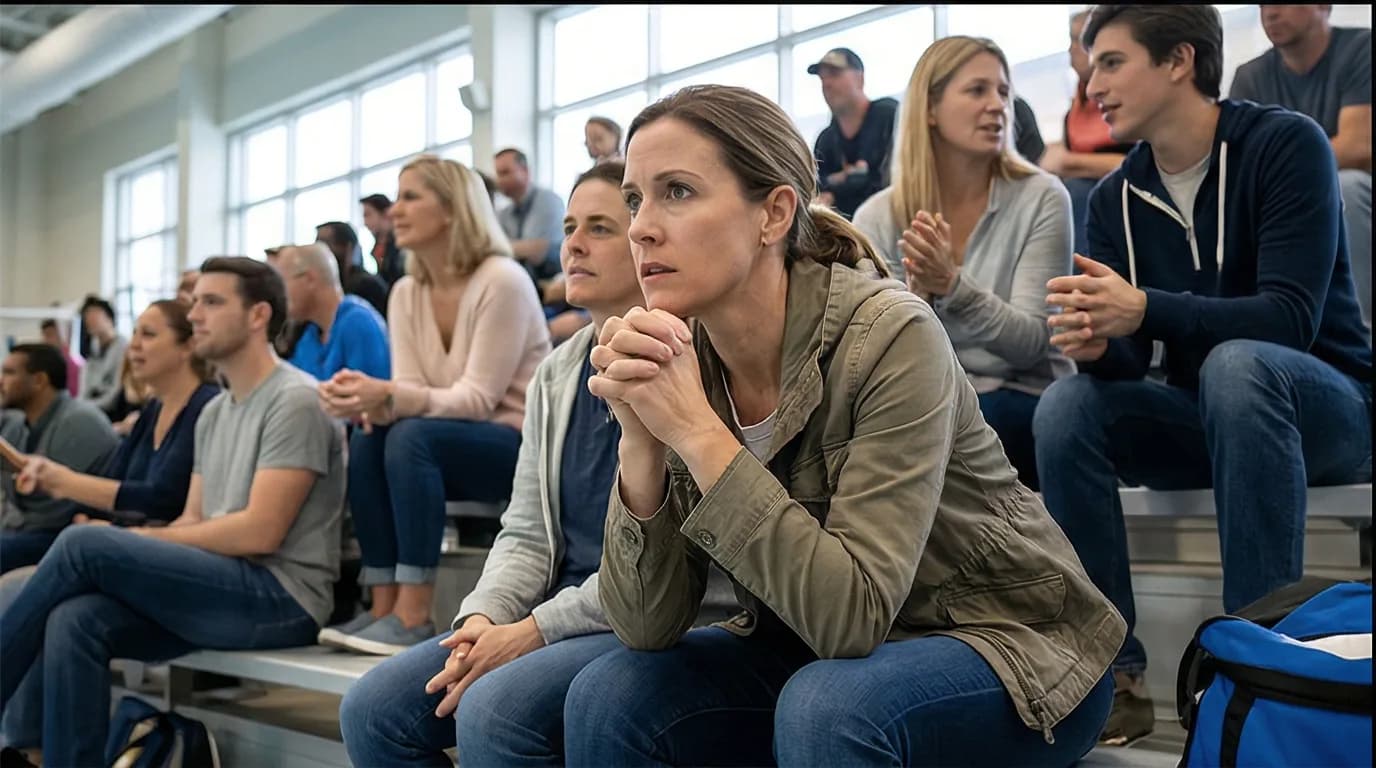
You are sitting in the stands, heart pounding, watching your child step onto the block for the 100 fly. Your hands are clenched. Your jaw is tight. You are barely breathing. And here is the uncomfortable truth: your child can feel every bit of that tension, even from across the pool deck.
Research in sports psychology consistently shows that parent anxiety directly impacts young athlete performance. A 2024 systematic review published in Frontiers in Psychology confirmed that parental pressure is linked to adverse motivational outcomes, while parental support fosters enjoyment and persistence. Children are remarkably skilled at reading adult emotions, and they mirror what they see. When you are tense, they are tense. When you are relaxed, they swim freer. It is that simple and that difficult.
Kids Are Emotional Sponges
According to Knight and Holt's 2014 research published in Psychology of Sport and Exercise, the quality of parental involvement -- whether it is perceived as supportive or pressuring -- directly shapes a young athlete's enjoyment, self-esteem, and motivation. Studies on emotional contagion in youth sports have found that children absorb parental stress through body language, facial expressions, and tone of voice. A clenched fist in the stands might seem invisible from lane 5, but kids report knowing exactly when their parents are nervous. They notice the forced smile after a slow race. They hear the edge in your voice on the drive home. Even silence can carry weight when it replaces the usual enthusiasm.
Before the age of 12 or 13, most children lack the emotional regulation skills to separate their own feelings from what they pick up from the adults around them. Your stress becomes their stress, often without either of you realizing it. A 2024 AAP Clinical Report led by Dr. Joel Brenner found that 70% of children drop out of organized sports by age 13 -- and the emotional environment created by parents is a key contributing factor.
Signs You Might Be Too Invested
This is not about blame. Every parent who cares will feel the pull. But it helps to honestly check in with yourself:
- Checking times obsessively. Refreshing results during warmup, comparing splits mid-meet, or tracking personal bests more closely than your child does.
- Talking strategy in the car. If the ride home regularly turns into a race review, your swimmer may start dreading the trip more than the event itself.
- Comparing with other parents. Conversations about whose kid dropped time, made a cut, or moved up a group can quietly shift your focus from your child's experience to external benchmarks.
- Physical symptoms of your own. Nausea before their races, difficulty sleeping the night before a meet, or replaying their swims in your head for days afterward.
If any of these sound familiar, you are in good company. Competitive swimming has a way of pulling parents in deeper than they ever expected.
Practical Ways to Manage Your Own Anxiety
The good news is that small changes make a real difference.
Name it. Simply acknowledging "I am nervous about this race" takes away some of its power. You do not need to pretend you do not care. You just need to be aware of where your anxiety ends and your child's experience begins.
Watch your body language. Unclench your hands. Relax your shoulders. Smile when they look up at the stands, not a performance-review smile but a genuine "I am happy to be here" smile. Kids read bodies faster than words.
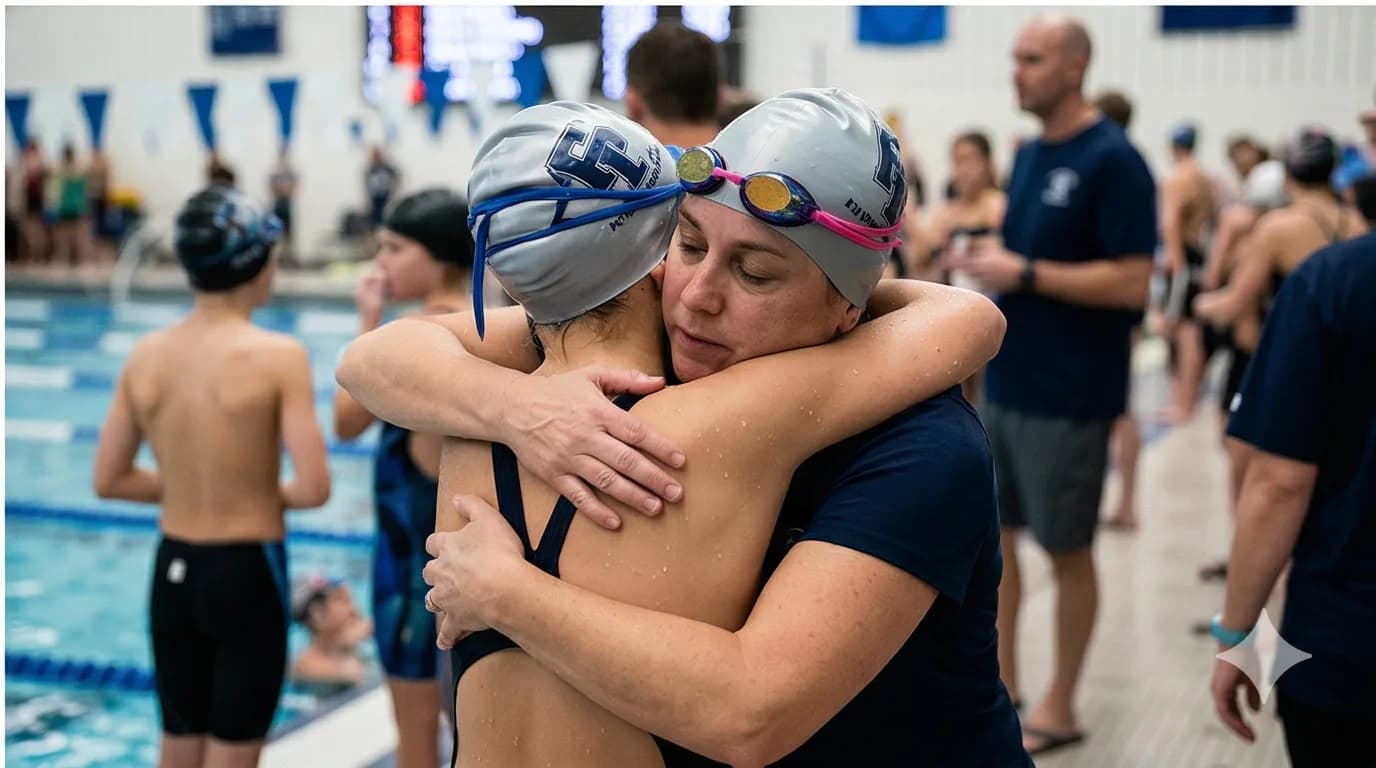
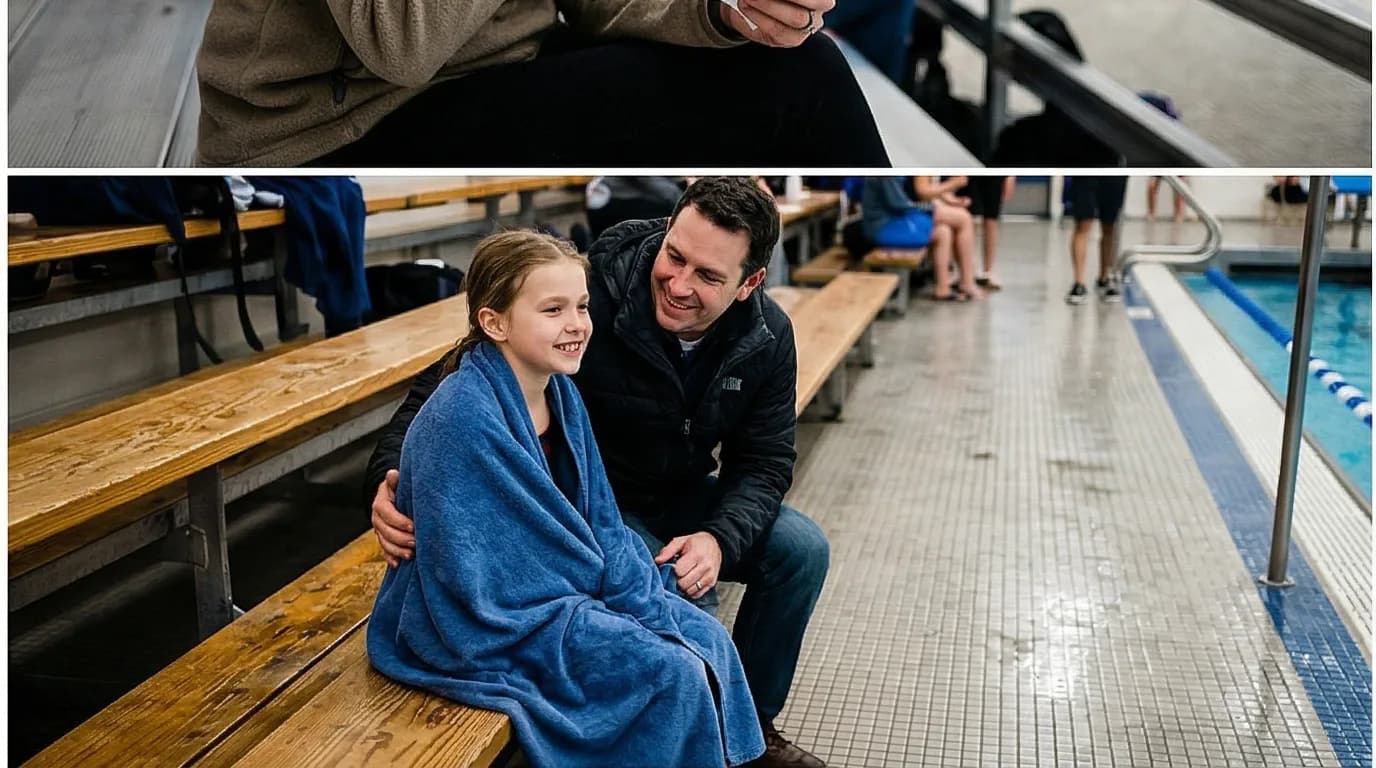
Create a post-race ritual that is not about times. Ask what their favorite part of the meet was. Ask if they had fun with their friends. Ask what they ate at the snack bar. Let the coach handle the performance conversation.
Give the car ride a break. Make a rule: no race talk for the first 15 minutes of the drive home. Play music. Talk about something completely unrelated. Let your swimmer decompress before you process together.
Talk to other parents honestly. Chances are, the parent next to you feels the same way. Sharing that vulnerability builds connection and reminds everyone that meets are supposed to be part of a childhood, not a career audition.
Your Calm Is a Gift
Your child takes cues from your body language and your tone long before they process your words. When you show up calm, present, and genuinely enjoying the experience, you give them permission to do the same. The fastest way to help your swimmer perform better is not a new training plan. It is a relaxed parent in the stands.
You do not have to be perfect. You just have to be aware.
Keep the phone for the heat sheet, not a live ranking hunt. Sign in to Gophin after the file is up if you want the official time. Free, no card. The stands are for the kid, not the refresh button.
Sources
- Frontiers in Psychology (2024). Systematic review: parental pressure linked to adverse motivational outcomes; parental support linked to enjoyment and persistence. Frontiers in Psychology.
- Knight, C.J. & Holt, N.L. (2014). Parental involvement in youth sport: positive involvement associated with greater enjoyment, self-esteem, and motivation. Psychology of Sport and Exercise.
- Brenner, J.S. & DiFiori, J.P. (2024). Overuse Injuries, Overtraining, and Burnout in Young Athletes. AAP Clinical Report. Pediatrics, 153(2).