Quick answer
To help a child manage pre-race anxiety, normalize the nerves (every swimmer feels them), shift focus from outcome to process (race plan, breathing, technique), use a simple breathing routine before the heat, and avoid pressure phrases like "just drop time." Stay calm yourself: kids mirror parental energy on deck.
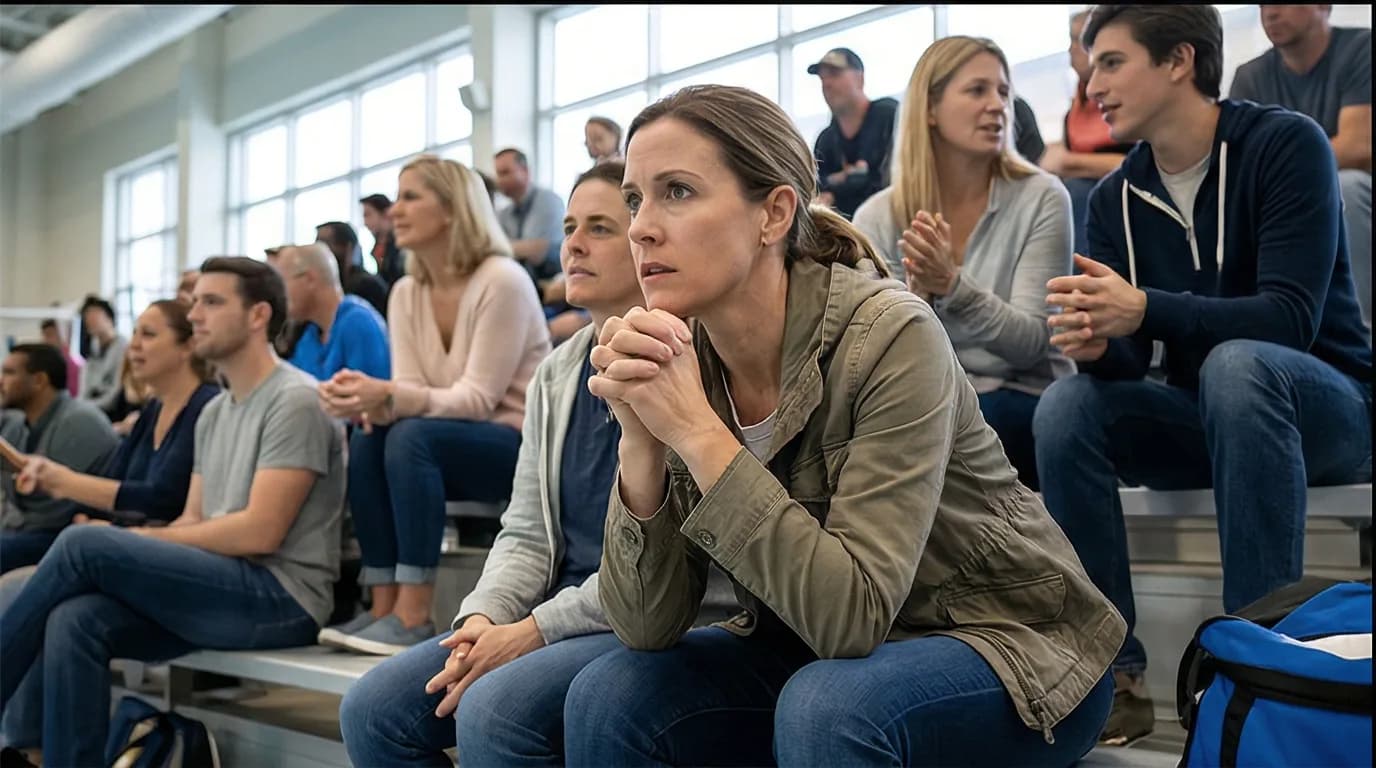
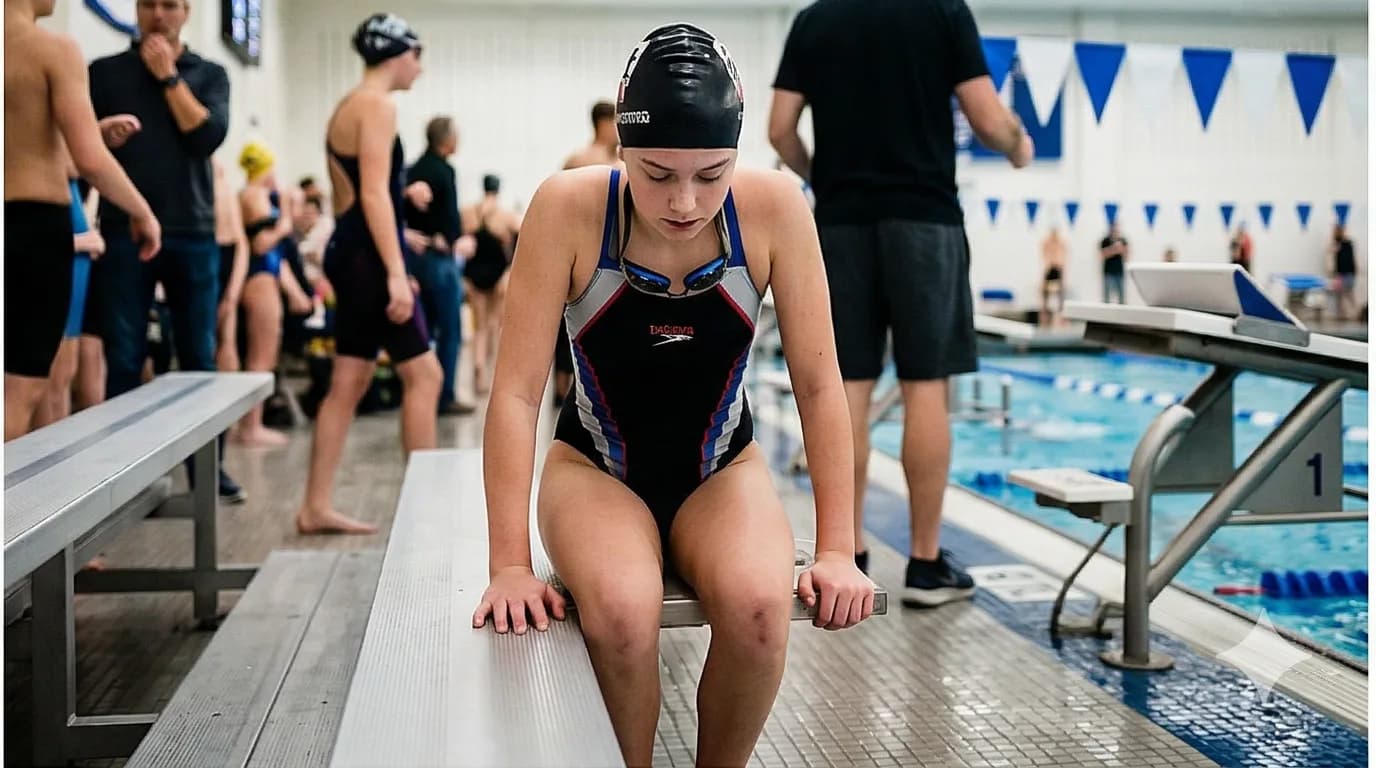
Last year at a meet in Surrey, I watched Rafa sitting on the bench before her 50 Free, legs shaking, hands gripping the edge of the seat. She looked up at me and asked, "What if I don't drop time?" I opened my mouth and nothing came out. I had no answer -- because honestly, I was asking myself the same thing.
If you have ever stood there not knowing what to say to your nervous kid, this one is for you.
The morning of a swim meet, your child is quiet. Maybe they say their stomach hurts. Maybe they are fidgeting, picking at their breakfast, or suddenly insisting they do not want to go. If this sounds familiar, you are not alone -- and neither is your child.
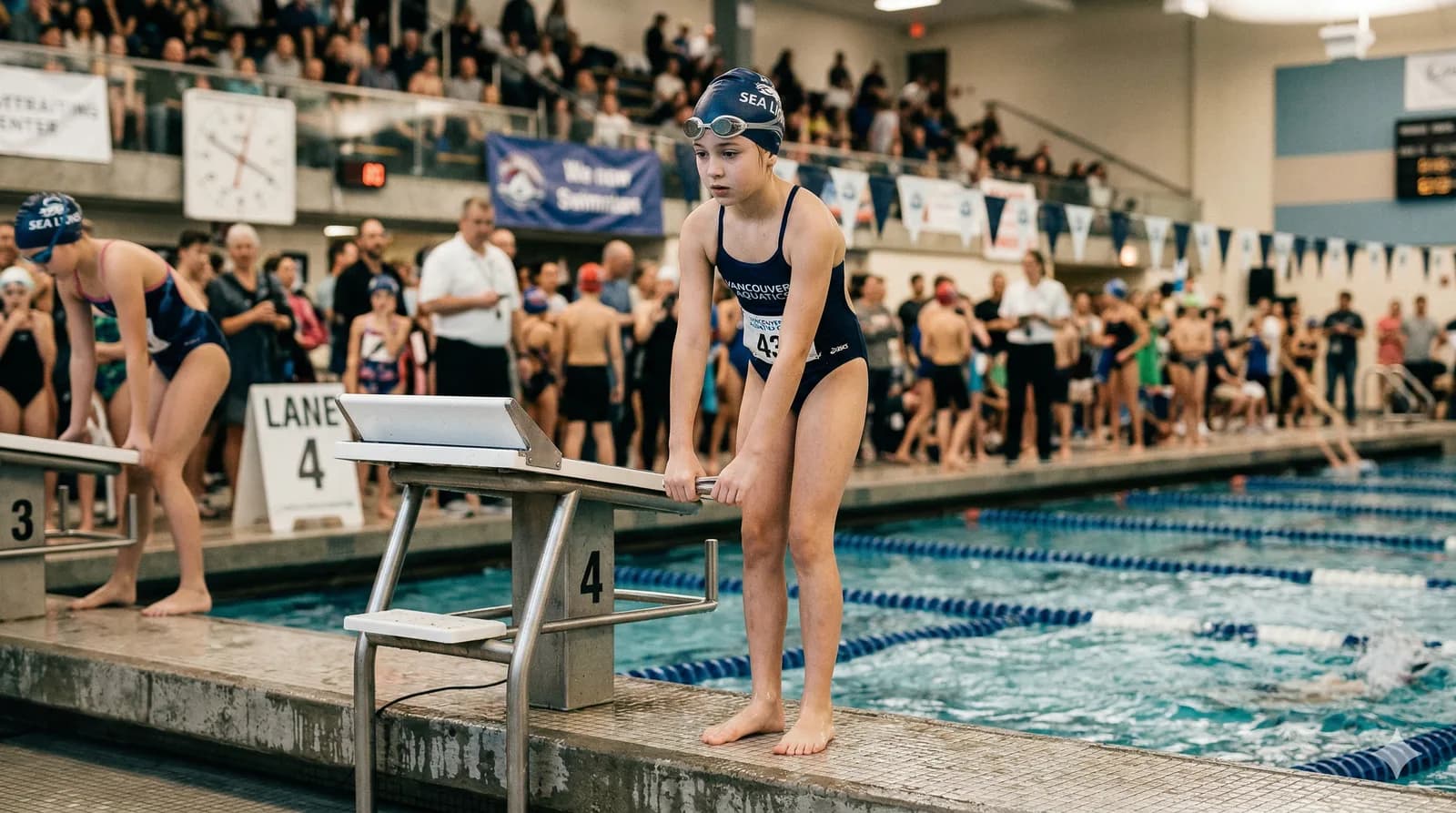
According to a study by Codonhato et al. (2018) on 98 NCAA swimmers, 42% reported feeling scared "most to all of the time" before big races. These are elite college athletes who have competed for years. If anxiety is that common among experienced swimmers, imagine what it feels like for a ten-year-old standing behind the blocks for the first time.
The numbers get even more sobering at the highest levels. A 2019 study led by Dr. Margo Mountjoy, published in the British Journal of Sports Medicine, found that 26% of aquatic athletes at the FINA World Championships were classified as depressed. And research by Gulliver et al. (2015) showed that 68% of elite athletes met criteria for a major depressive episode in the pre-competition period.
Pre-race nerves are not a problem to fix. They are a normal response to something that matters. The goal is not to eliminate anxiety but to help your child manage it so it does not take over.
Normalize It
The single most helpful thing you can do is let your child know that feeling nervous is normal. Say it clearly: "Most swimmers feel nervous before a race. Even the fast ones. It means you care about doing well, and that is a good thing."
Kids often think they are the only one who feels this way. Just knowing that anxiety is universal -- not a sign of weakness -- can take the edge off.
Breathing Techniques That Actually Work
When anxiety kicks in, the body goes into fight-or-flight mode. Heart rate goes up, muscles tense, and thinking gets foggy. Simple breathing exercises can reverse this response in minutes.
Try the 4-7-8 method with your child before the meet:
- Breathe in through the nose for 4 seconds
- Hold for 7 seconds
- Breathe out through the mouth for 8 seconds
- Repeat three times
This is not just a feel-good trick. Controlled breathing activates the parasympathetic nervous system, which slows the heart rate and reduces the stress response. Swimmers are already experts at breath control -- this just applies it on land.
Practice this at home first, not for the first time behind the blocks.
Focus on Effort, Not Times
One of the biggest anxiety drivers for young swimmers is the pressure to hit a certain time. When the entire conversation is about numbers -- "What was your time? Did you drop? What place did you finish?" -- kids learn that their value is tied to a stopwatch.
Shift the focus:
- Instead of "I hope you go fast," try "I hope you have a good race."
- Instead of "What time did you get?" try "How did that feel?"
- Instead of "You need to drop two seconds," try "Just focus on your starts and turns today."
When kids know they will not be judged by the clock, the pressure drops significantly.
What to Say Right Before a Race
Keep it simple. Your child does not need a pep talk or a strategy session two minutes before they race. They need calm, confident energy from you.
Good things to say:
- "Have fun out there."
- "I love watching you swim."
- "You have done this in practice a hundred times."
Things to avoid:
- Anything about times, placement, or competition
- "Just relax" (this never works for anyone)
- Long technical reminders about their stroke
Signs That Go Beyond Normal Nerves
Some anxiety before a race is healthy. But there are signs that indicate something deeper might be going on:
- Persistent refusal to attend meets or practice
- Crying or panic episodes that last more than a few minutes
- Physical symptoms like headaches or nausea that appear repeatedly before competition
- Withdrawing from teammates or losing interest in things they used to enjoy
- Sleep disruption in the days leading up to meets
If you are seeing a pattern of these behaviors, it is worth having a quiet conversation with your child's coach. Coaches often see things at practice that parents do not, and together you can figure out the best path forward. In some cases, talking to a sports psychologist can make a significant difference -- this is not an overreaction, it is good parenting.
The Bigger Picture
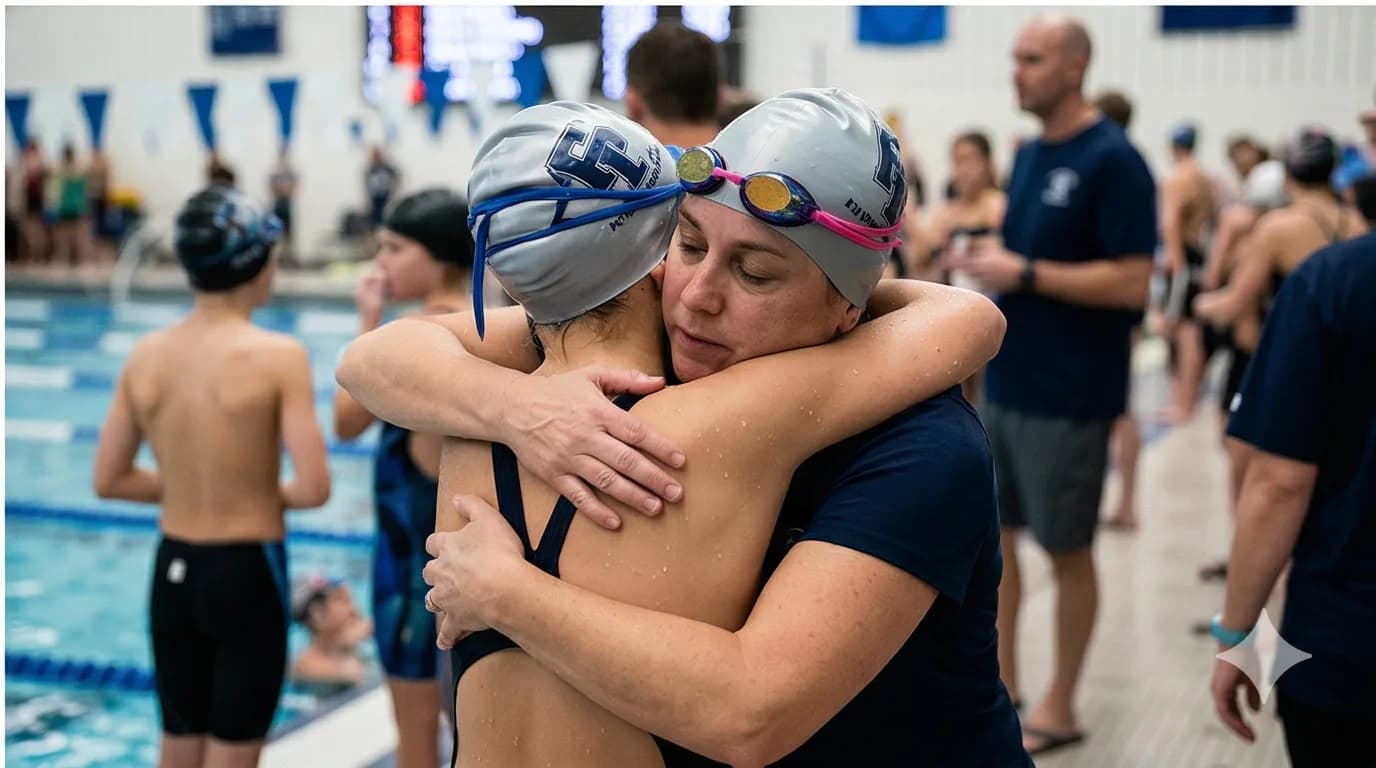
Anxiety in young athletes is not about swimming. It is about a child learning to face situations that feel bigger than them. How they learn to manage that feeling now -- with your support -- shapes how they handle pressure for the rest of their lives.
You do not need to have all the answers. You just need to be the person who makes them feel safe enough to try.
Do not open rankings on the blocks. After the meet file is up, sign in and open Best Times at home . Free, no card. The walk from the blocks is still for the person.
Sources
- Codonhato, R. et al. (2018). "Cognitive-motivational profile of competitive swimmers." Study of 98 NCAA swimmers, Sports Psychology review.
- Mountjoy, M. et al. (2019). "Mental health of elite aquatic athletes." 26% of FINA World Championship athletes classified as depressed. British Journal of Sports Medicine.
- Gulliver, A. et al. (2015). "Prevalence of mental disorders in elite athletes." 68% met criteria for major depressive episode pre-competition. PMC/PubMed.
After the meet file is up, sign in and open Best Times . Same event, same pool type. Free, no card.