Quick answer
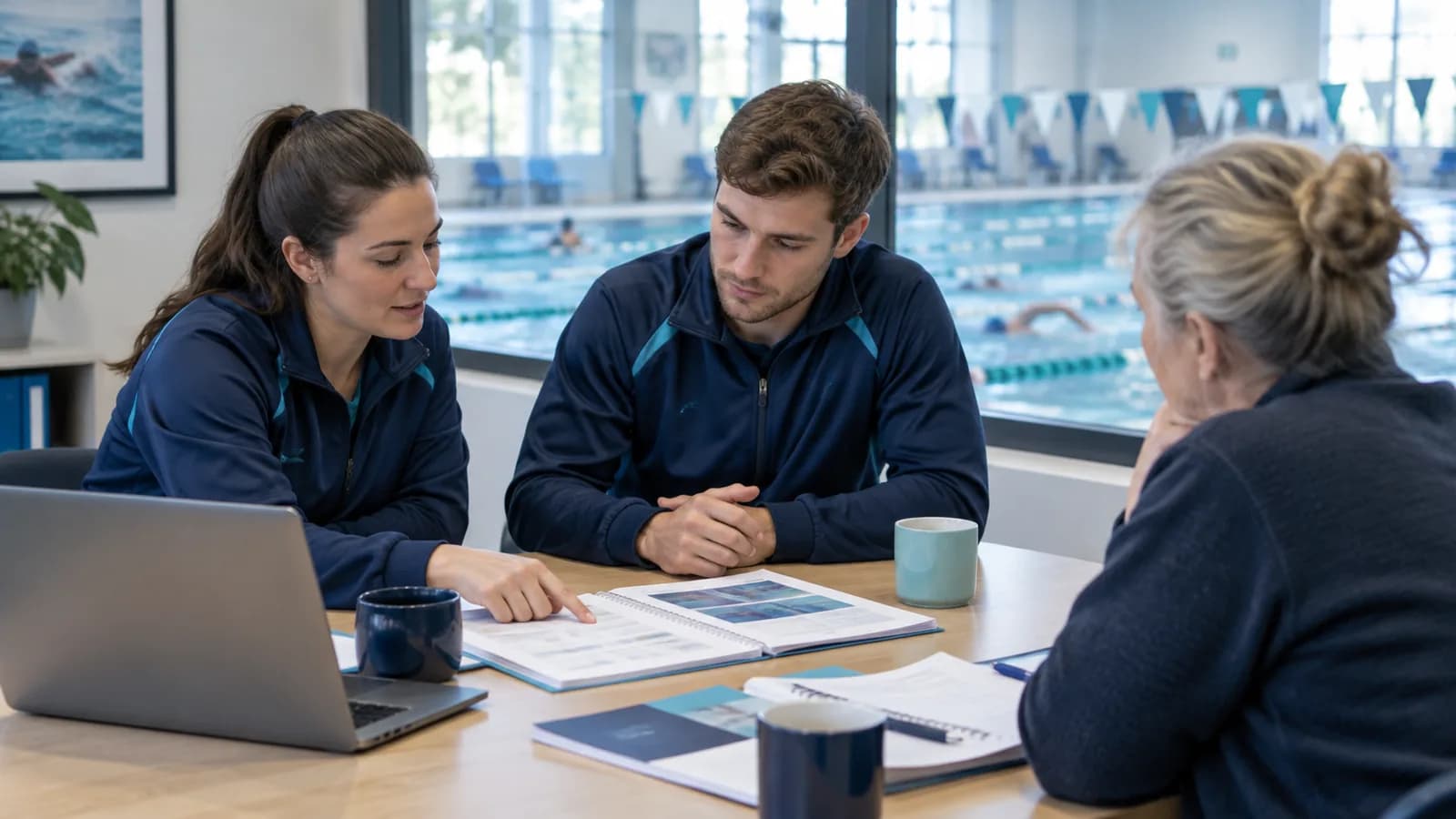
A parent–coach communication policy is a short club document that says who speaks first about what, which channels are official, when to wait before raising a concern and how a concern moves up if it is not resolved. Older swimmers raise training questions with their coach themselves; parents handle logistics for younger ones. Safety and wellbeing concerns never wait for that process: they go straight to formal reporting channels.
Most friction between swim families and coaches comes from missing rules, not bad intentions. A parent is not sure whether a text at 10 p.m. is welcome. A coach cannot tell whether a question about group placement is a request for information or the start of a complaint. A swimmer does not know if they are allowed to ask why they changed lanes.
A short written policy answers those questions before anyone is upset. It protects swimmers, because their voice comes first; coaches, because expectations are clear and communication with minors stays transparent; and families, because they know where to go when something matters.
Below: why it works, a copy-ready template and how to roll it out so it feels like an agreement, not a rulebook.
Why a club should put it in writing
Clubs develop more than technique and fitness. Independence, accountability and the ability to speak up are part of athlete development too, and they only grow when swimmers get to practise them.
Research on adolescence points the same way. The UCLA Center for the Developing Adolescent describes decision-making and emotional regulation as skills teens build through real-world opportunities to practise and to learn from outcomes. By about 16, given time to think it through, teens can reason about as well as adults [1]. A swimmer who asks their coach "what do I need to work on to move up?" is getting exactly that practice.
A policy also helps adults read reactions in context. Psychologist Lisa Damour points out that how a teen acts at home can be very different from what adults see elsewhere, and that a teen who is doing well but moody at home can be developing perfectly normally [2]. Tears in the car after a hard practice do not, on their own, show that something is wrong at the pool. They still deserve to be heard. A policy gives that frustration a calm path forward; it never tells anyone to stay quiet.
The template
Copy these sections into your club handbook and change the bracketed parts. Two pages is plenty.
1. Purpose
[Club name] believes that clear, respectful communication helps swimmers grow as athletes and as people. This policy explains who to talk to, how and when, so concerns are heard early and handled fairly.
2. Who speaks first, by age
| Swimmer age | Who raises it with the coach | Typical topics |
|---|---|---|
| [10 and under] | Parent | Schedules, absences, meet entries, transport, health notes |
| [11–13] | Swimmer, with parent support | Training questions, events, goals; parent still handles logistics |
| [14 and over] | Swimmer first | Training, events, attendance, behaviour, preparedness; a parent joins if the conversation stalls |
The age bands are a club decision; what matters is that ownership shifts toward the swimmer as they grow. Companion guides: should I talk to my swimmer's coach? for parents and how to talk to your swim coach for swimmers.
3. Official channels
- Club email [and the club's team app] are the official channels. Personal texting and private messaging apps are not.
- In the US, clubs follow the U.S. Center for SafeSport's Minor Athlete Abuse Prevention Policies (MAAPP). For adults covered by MAAPP, a parent or another adult must be included on electronic communications with a minor athlete, such as texts, emails and social media [3]. Clubs elsewhere can adopt the same habit: copy a parent on every message to a swimmer under 18.
- Absences, late arrivals and early departures are communicated before the practice or meet, by [email to the group coach].
4. The cooling-off rule
- No conversations about performance, results or group placement on deck during a meet. Coaches are working with every swimmer in the session.
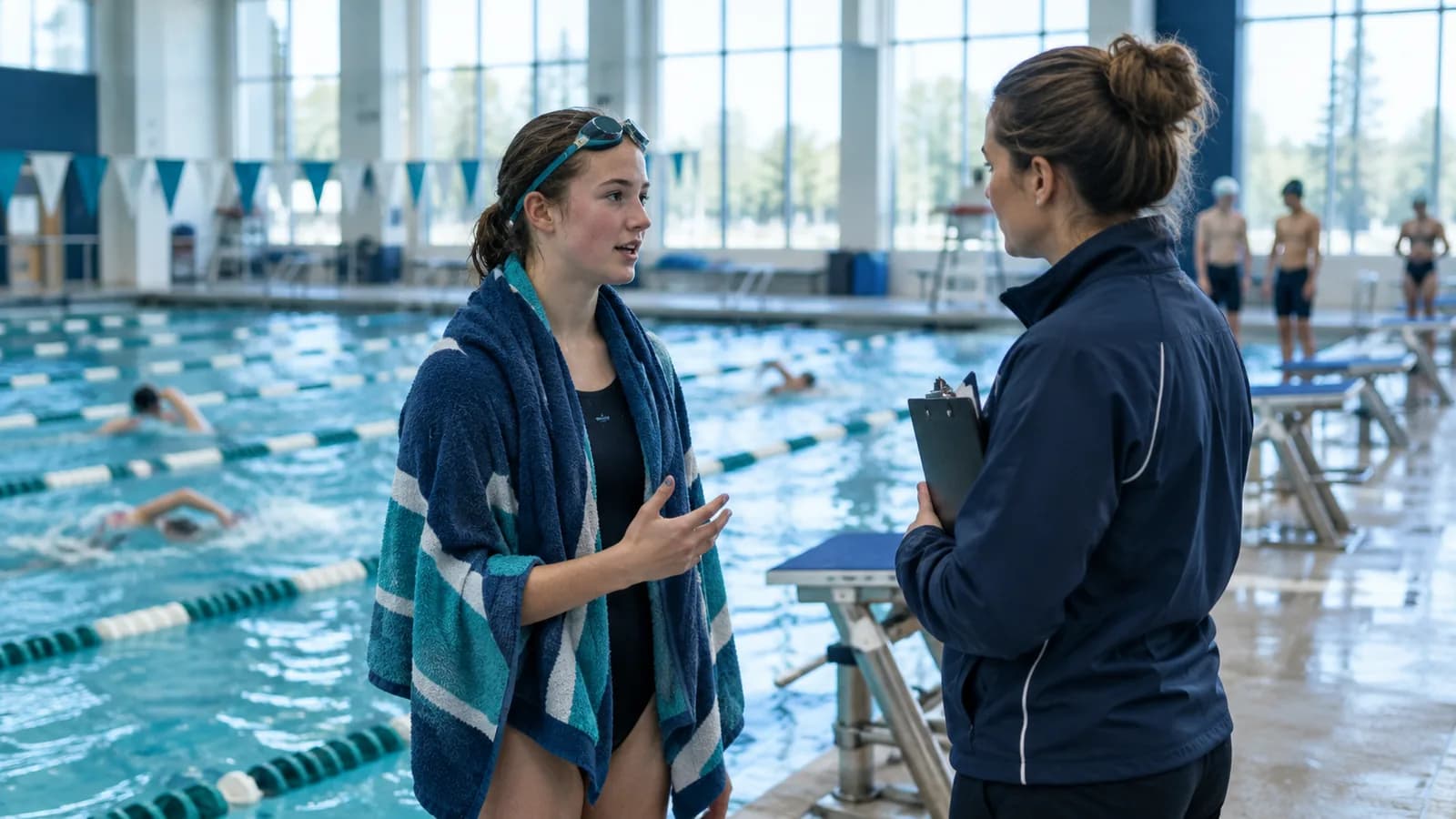
- Wait 24 hours after a race before raising a concern about it. This is a common club practice: the next-day conversation is calmer for everyone, including the swimmer.
- Book a time instead of catching the coach at the pool door.
5. The escalation ladder (for ordinary concerns)
- Swimmer → coach. The swimmer raises it at an agreed time.
- Swimmer and parent → coach. A meeting together if step 1 did not settle it.
- Head coach. If the group coach and family still disagree.
- Board or club welfare officer. In writing, for unresolved matters or concerns about conduct.
Families of swimmers [10 and under] can start at step 2.
The ladder matters because these questions belong inside the club. USA Swimming, for example, notes that team-level issues and code-of-conduct concerns go to the team, and that competitive issues such as team placement are not something it handles [4].
6. What coaches commit to
- Reply to messages within [two] working days.
- Explain group placement criteria in writing at the start of the season.
- Give feedback directly to swimmers, in ways that suit their age.
- Copy a parent on electronic messages to minors.
- Treat a family's concern as useful information, not an attack.
Placement questions are easier when everyone looks at the same results. A coach can build the training group in Gophin and refer to it when explaining the criteria.
7. What parents commit to
- Back the swimmer and the training plan, especially in front of the swimmer.
- Arrive with questions and curiosity before conclusions.
- No intimidation, no public criticism and no accusations without evidence.
- Respect the coach's time and the official channels.
More on the day-to-day side: how to be a supportive swim parent.
8. Safety and wellbeing: outside the ladder
Any concern about a swimmer's safety or wellbeing, including abuse, harassment, bullying, unsafe practices or inappropriate contact, does not follow the ladder above and does not wait 24 hours. Report it directly. Nobody needs permission to report.
- Canada: the club's safe sport or welfare officer, then the provincial or territorial swimming association. Swimming Canada's reporting page explains where each kind of complaint goes, including its independent third party. Matters involving national-level sport go to the Canadian Safe Sport Program, run by Sport Integrity Canada, at 1-866-971-2777 (toll free) or online; it receives reports under the Universal Code of Conduct to Prevent and Address Maltreatment in Sport (UCCMS) [5].
- United States: the U.S. Center for SafeSport at 833-5US-SAFE (587-7233) or its online form. Reports can be anonymous [6].
- Suspected child abuse, anywhere: police or child protection services first, in addition to the bodies above [6].
How to roll it out
A policy that lives only in a PDF changes nothing. Three moments make it real:
- Season start. Send it with registration and ask families to confirm they read it.
- Parent meeting. Walk through the age table and the ladder in ten minutes. Present the safety section on its own, so it never looks like a step on the ladder.
- Mid-season review. Ask coaches and a few families what worked, and adjust reply times or age bands to match reality.
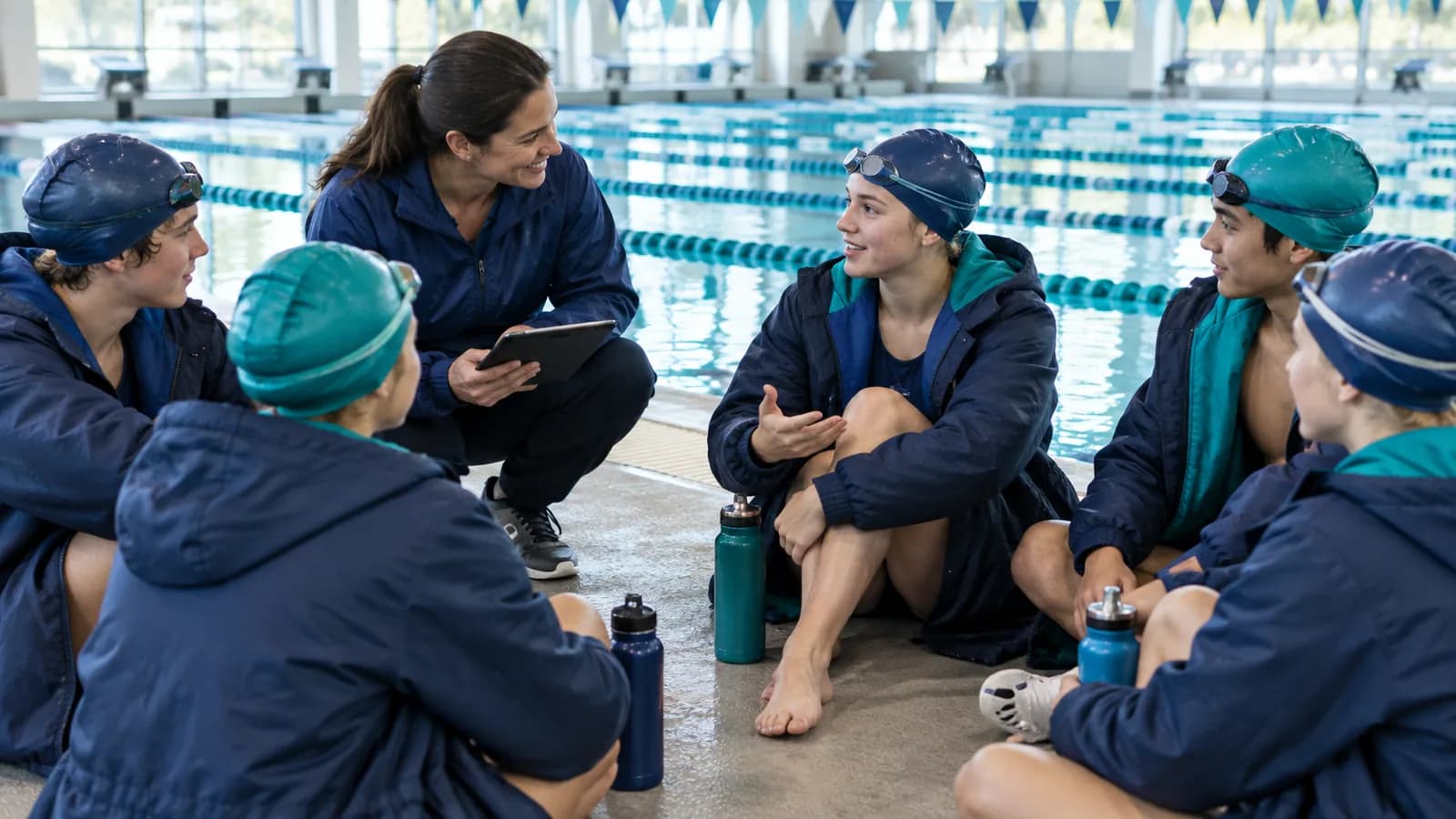
Give older swimmers a one-page version ("you speak first; here is how to book a talk") so the policy is theirs too. A regular weekly check-in gives quieter swimmers a routine way to raise things before they grow.
Start every meeting from the same facts
Progress and placement conversations often stall because each side remembers different races. In Gophin, Groups lets a coach or a parent put a training group together and see its swimmers' official meet results side by side, loaded automatically. Before a meeting, coach and family can open the same view and start from data instead of impressions. It is free.
Questions coaches ask
Does the policy stop parents from contacting coaches?
No. It sets who speaks first and which channels to use. Parents of younger swimmers handle logistics directly, any parent can join from step 2, and anyone can report a safety concern at any time.
What if a swimmer is too shy to speak to the coach?
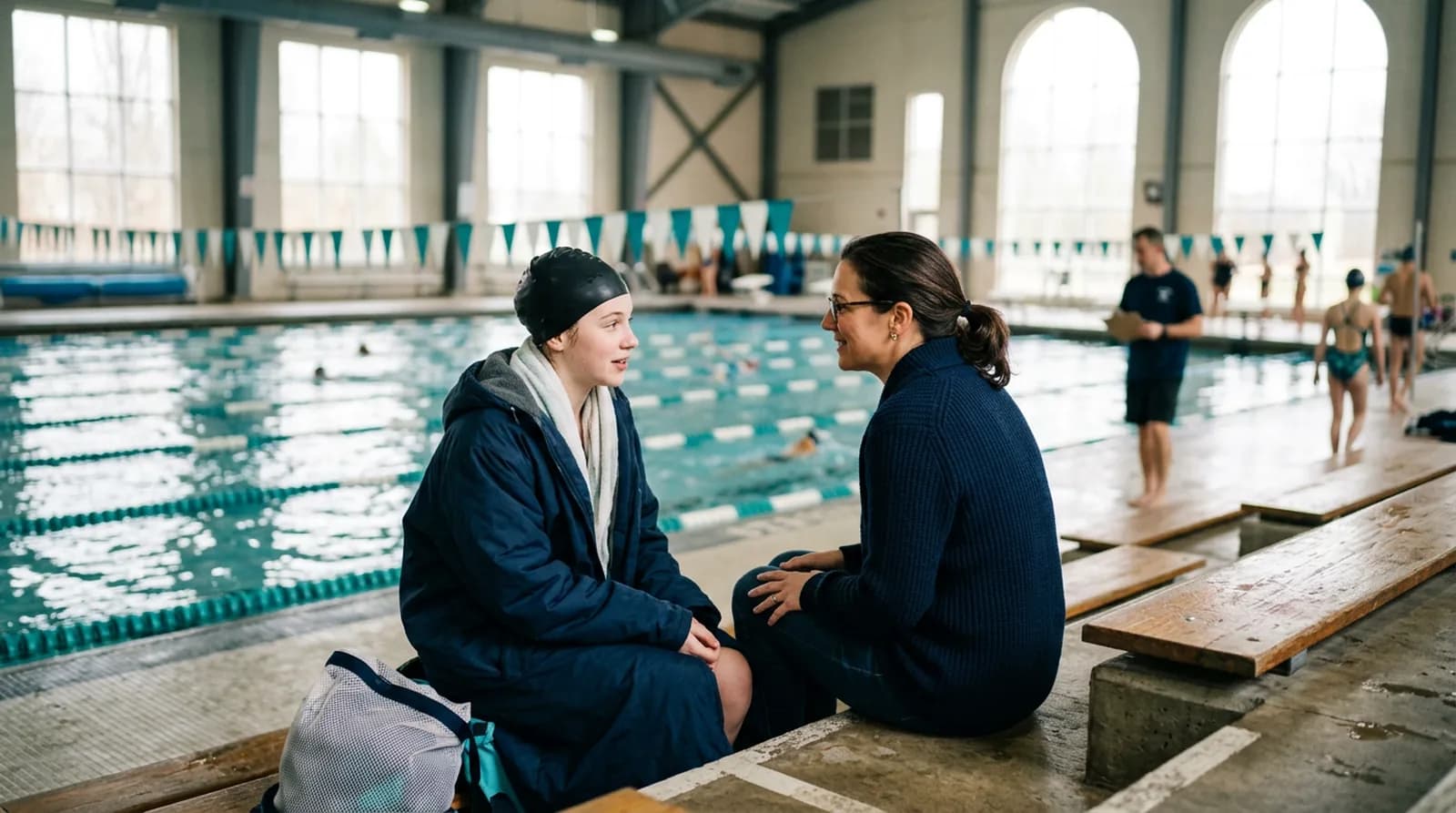
Let them prepare with a parent and bring notes, or start at step 2 with the parent in the room. The goal is gradual practice, not a test of courage.
Does the 24-hour rule apply to safety concerns?
Never. It covers performance and placement questions only. Safety and wellbeing concerns go straight to the club's safe sport officer, the provincial association or the Canadian Safe Sport Program in Canada, the U.S. Center for SafeSport in the US, or police and child protection.
Sources
- UCLA Center for the Developing Adolescent. "Decision Making & Emotional Regulation" (fact sheet: "Real-World Practice Helps Adolescents Learn to Make Reasoned Decisions and Manage Emotions"). developingadolescent.ucla.edu
- NAIS. New View EDU podcast, episode 59, "Schools and the Emotional Lives of Teenagers," with Lisa Damour. nais.org
- U.S. Center for SafeSport. "MAAPP: For Parents." maapp.uscenterforsafesport.org
- USA Swimming. "Safe Sport for Parents." usaswimming.org
- Swimming Canada. "Reporting maltreatment." swimming.ca/reporting-maltreatment; Sport Integrity Canada. "Report a safe sport concern" (Canadian Safe Sport Program). sportintegrity.ca/report-safe-sport
- U.S. Center for SafeSport. "Report a Concern." uscenterforsafesport.org





Comments
No comments yet. Questions about times, meets or the app are welcome.