Quick answer
Young-swimmer burnout looks like dreading practice, times sliding with no injury or growth-spurt story, pulling away from teammates, and mystery aches that vanish on weekends. One grouchy Tuesday is not burnout. Talk to the coach before you cut volume on your own.
There was a stretch last year when Rafa started saying "I don't want to go to practice" three or four times a week. This is a kid who begged us to let her go professional at eleven. Michelle and I would look at each other across the kitchen table, quietly terrified that the thing she loved most was slipping away.
That period taught us more about burnout than any article ever could. But here is what the research says too.
Your child used to leap out of bed for morning practice. Now you practically have to drag them to the car. Something has shifted, and you are not sure when it started.
Burnout in young swimmers is more common than most parents realize. According to a 2024 clinical report by Drs. Joel Brenner and John DiFiori, published in Pediatrics by the American Academy of Pediatrics, 70% of kids drop out of organized sports by age 13, and burnout is one of the leading reasons. The demanding training schedules, constant time comparisons, and pressure to improve can quietly wear down even the most passionate athletes. Research by Gustafsson et al. (2023), published in PMC, confirms that burnout is a significant factor in dropout among youth athletes in talent development programs. The tricky part is that burnout does not always look like exhaustion. Sometimes it looks like anger. Sometimes it looks like indifference. And sometimes it hides behind a forced smile at the blocks.
Here are five warning signs to watch for, and what you can do about each one.
1. Their Times Are Declining Without a Physical Explanation
Every swimmer has off weeks. But when performance drops consistently over weeks or months and there is no injury, illness, or growth spurt to explain it, burnout may be the culprit. A tired mind slows the body down just as much as a tired body does.
What to do: Resist the urge to push harder. Instead, ask your child how they are feeling about swimming. Not about their times. About the experience. Listen more than you talk.
2. They Dread Going to Practice
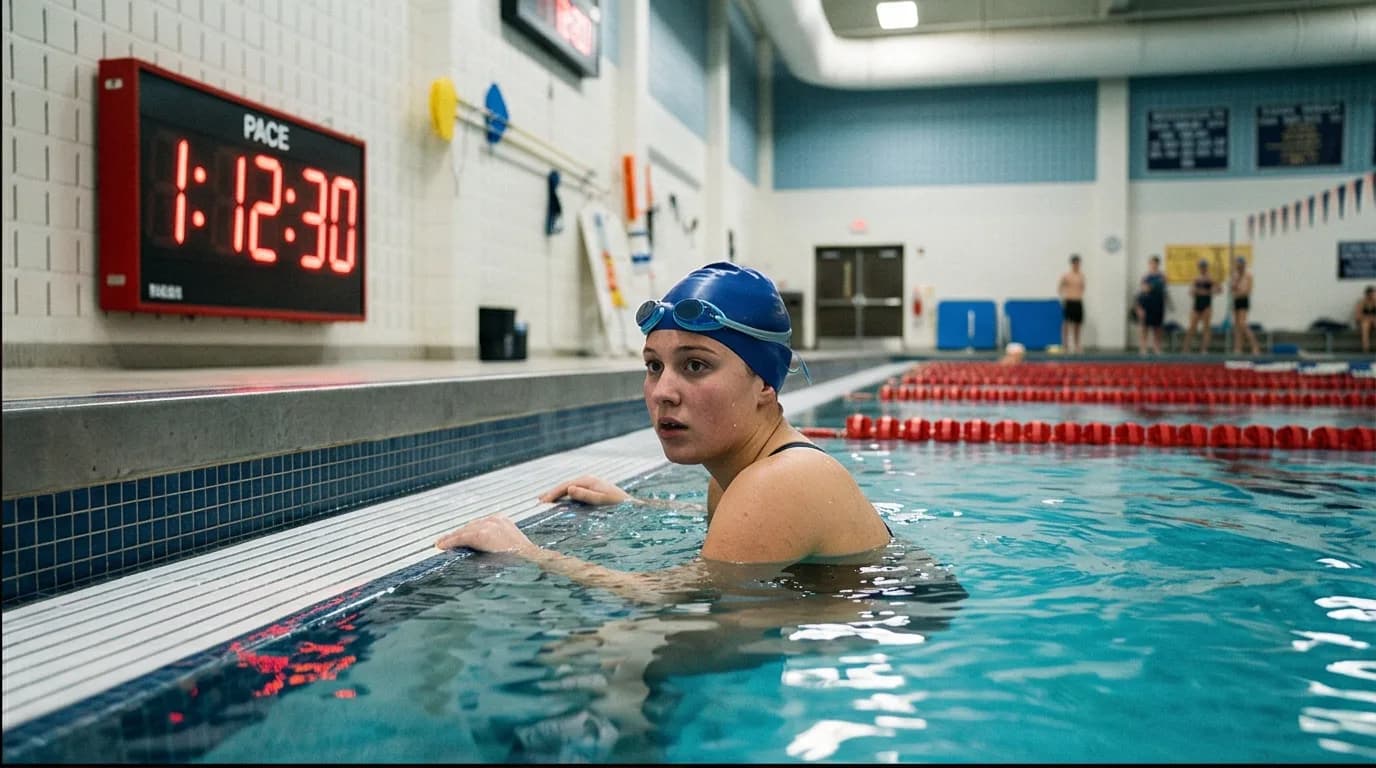
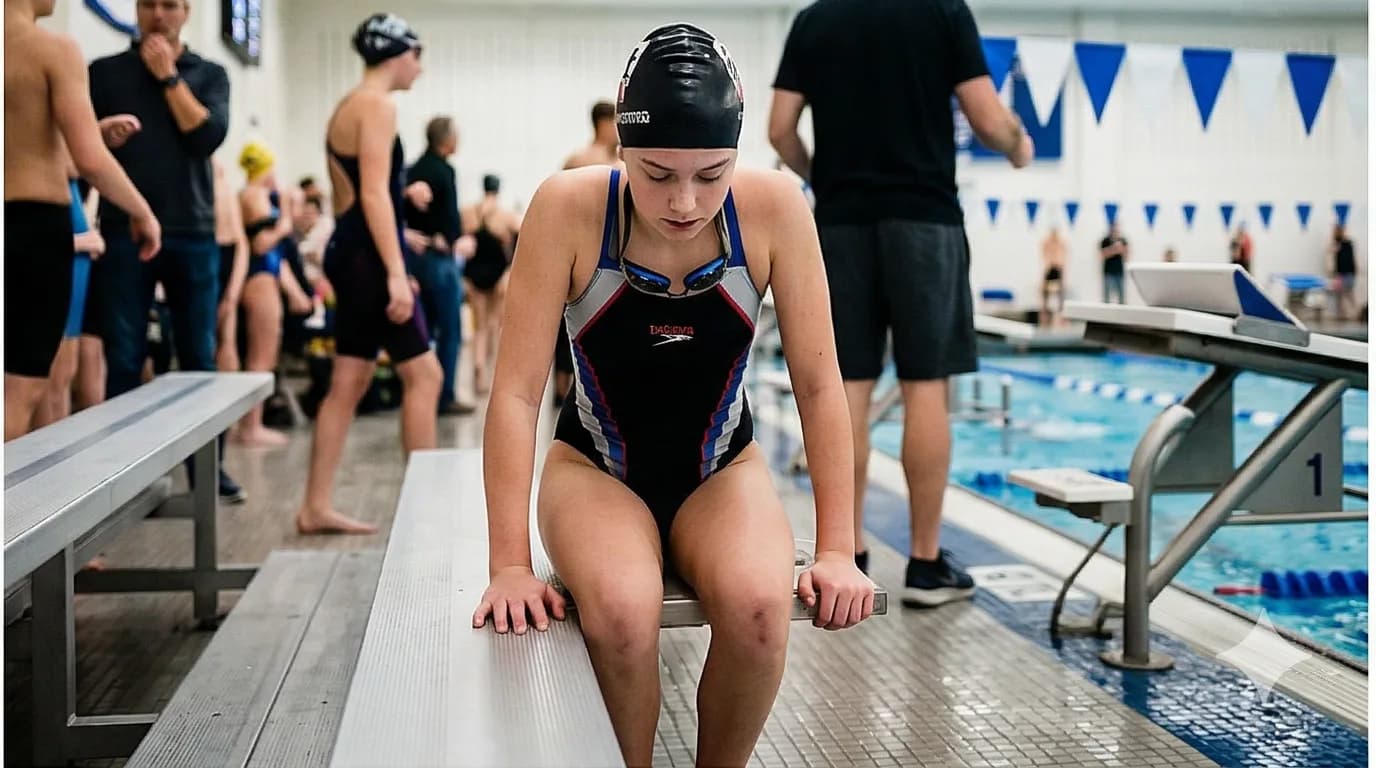
There is a difference between the occasional groan about an early alarm and a genuine pattern of resistance. If your child consistently finds excuses to skip practice, stalls before leaving the house, or seems visibly anxious as practice approaches, they may be emotionally tapped out.
What to do: Acknowledge their feelings without dismissing them. Saying "I can see you're not looking forward to practice" opens a door. Saying "everyone has hard days, just push through" closes it.
3. Physical Complaints That Do Not Add Up
Frequent headaches, stomachaches, or mysterious aches that seem to appear right before practice but vanish on weekends are often the body's way of expressing emotional distress. Young athletes do not always have the vocabulary to say "I'm overwhelmed." Their bodies say it for them.
What to do: Take the complaints seriously. See a doctor if needed to rule out genuine illness. But also recognize that stress manifests physically, especially in kids. A conversation with their coach about reducing volume temporarily may help more than a trip to the pharmacy.
4. Emotional Withdrawal
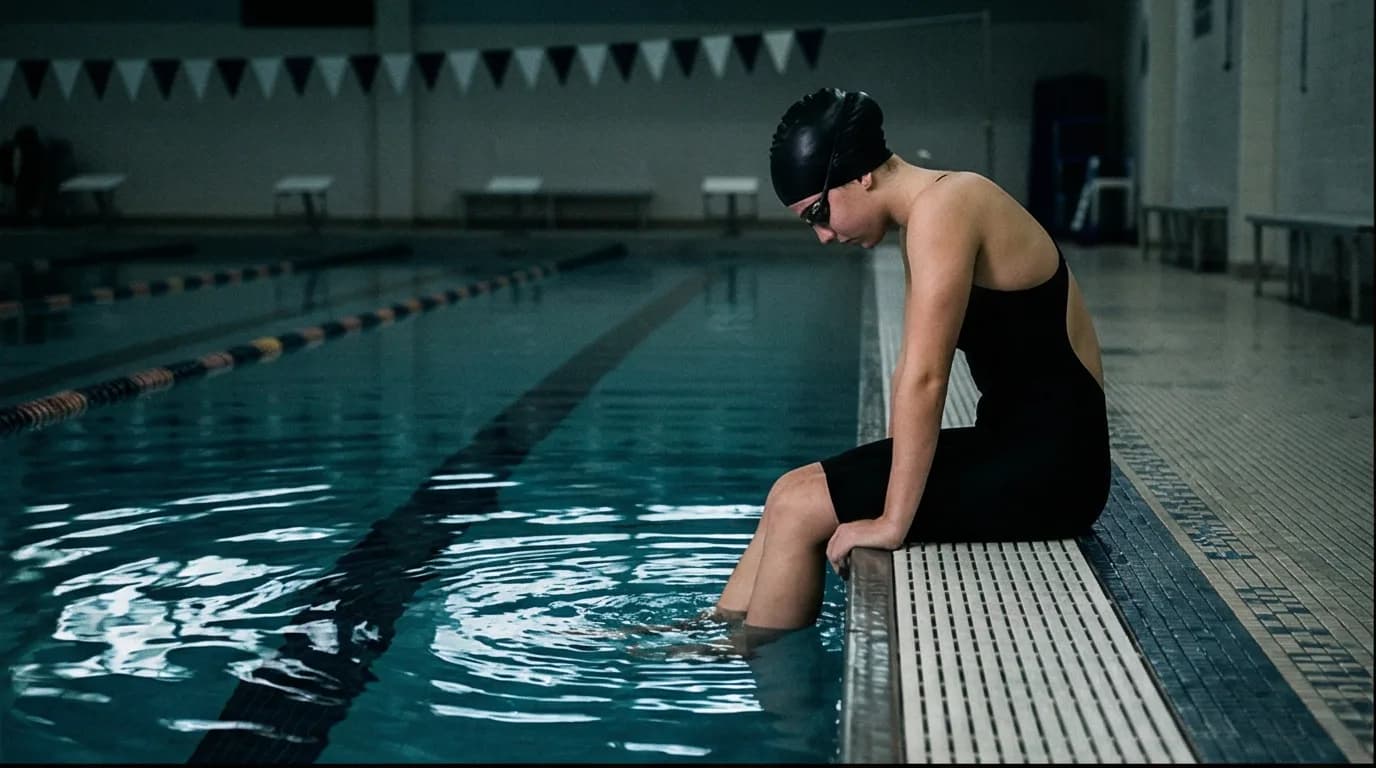
A swimmer headed toward burnout may become unusually quiet, irritable, or detached. They stop talking about their races, stop engaging with teammates, and pull away from the social side of the sport that once energized them. At home, they may seem flat or disconnected during conversations about swimming.
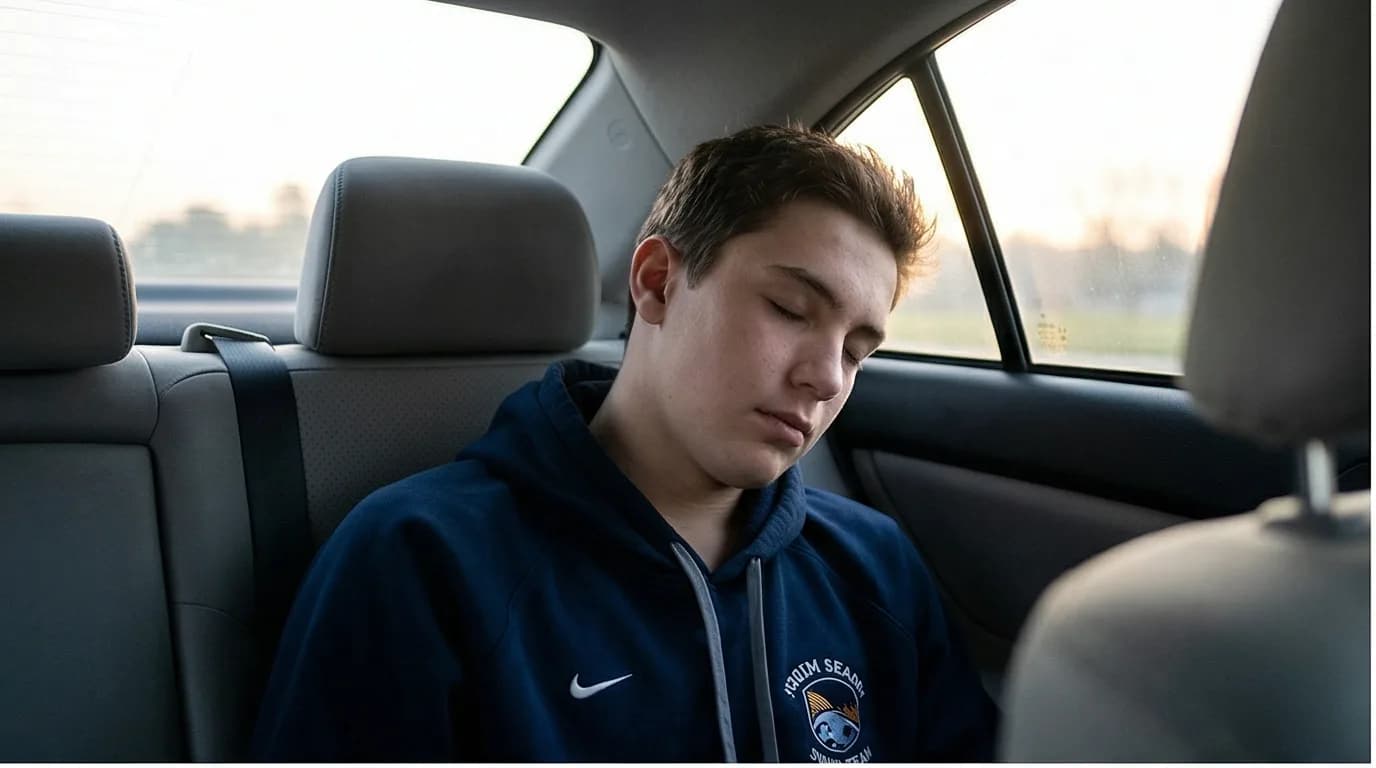
What to do: Do not force enthusiasm. Instead, protect the spaces where your child feels safe. Family dinners where swimming is not on the agenda. Car rides where they choose the music. Show them that your love is not conditional on their performance in the pool.
5. Loss of Interest in Things They Used to Enjoy
This is the sign that extends beyond the pool deck. When burnout deepens, it can spill into other areas of life. A child who loved hanging out with friends may start isolating. Hobbies that used to bring joy may be abandoned. Grades may slip. The emotional exhaustion of burnout does not stay neatly contained within the sport.
What to do: Pay attention to the full picture. If your child is losing interest in multiple areas of their life, it is time for a serious, compassionate conversation, and possibly a conversation with a sports psychologist or counselor.
Burnout Is Preventable
The most important thing to remember is that burnout is not a character flaw. It is a signal. It means your child has been giving more than they have been receiving, and something needs to change.
Talk to your child. Talk to their coach. Explore whether a break, a reduced schedule, or a shift in focus could help them rediscover why they fell in love with the water in the first place. Rest is not weakness. It is one of the most powerful tools an athlete has.
Your job is not to fix their times. It is to protect their love of the sport.
Gophin cannot diagnose burnout. If times have stalled in the same event and the same pool type for months, sign in (free, no card) and open Compare Seasons. Take that picture to the coach, not a feeling from one grouchy week.
Sources
-
- Brenner, J.S. & DiFiori, J.P. (2024). "Overuse Injuries, Overtraining, and Burnout in Young Athletes." AAP Clinical Report, Pediatrics 153(2). 70% of kids drop out of organized sports by age 13.
-
- Gustafsson, H. et al. (2023). "Burnout and dropout in talent development youth sports." PMC. Burnout as significant factor in youth athlete dropout.