Quick answer
Swimming builds discipline because you cannot fake a 5 AM set and the clock is public. Showing up and finishing when you would rather not is the skill, more than any one time. Discipline without rest is just grinding. Watch for dread, not only missed intervals.
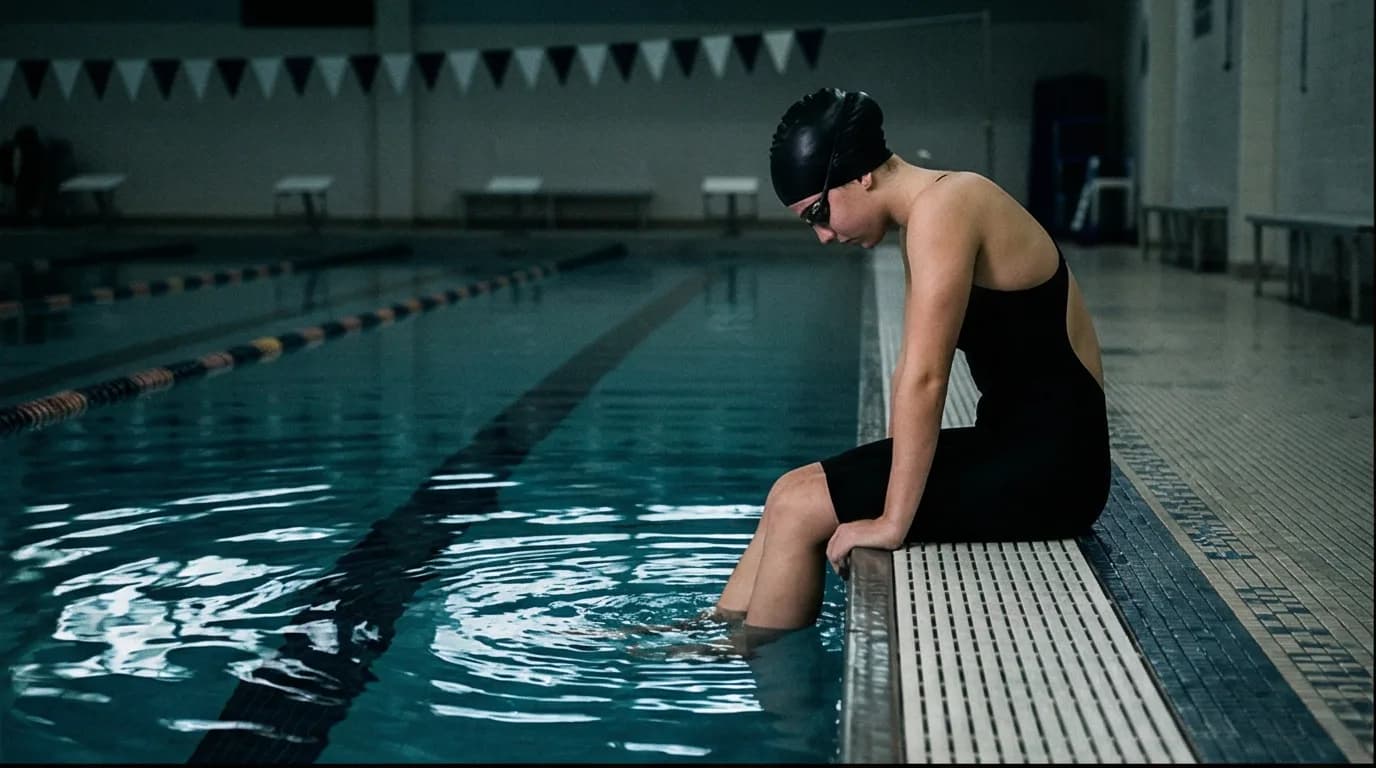
Last Friday night, Rafa's friends were on their phones scrolling through social media. Rafa was in bed by 9 PM. Nobody told her to. She has a meet on Saturday morning, and she made the call herself. She is fourteen, and she is already choosing discipline over what is easy.
That kind of self-regulation does not come from a lecture. It comes from years in the pool.
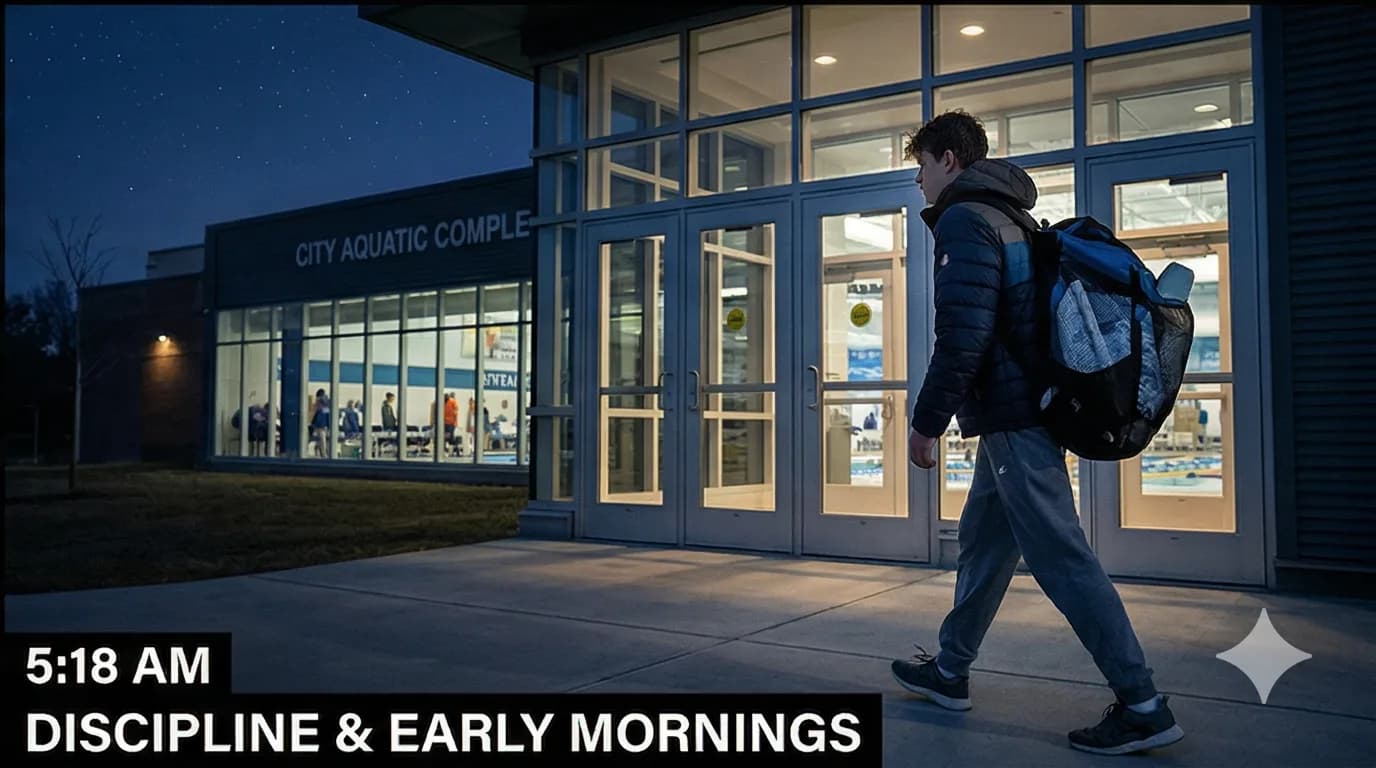
Nobody wakes up at 4:30 in the morning because it is fun. They wake up because they made a commitment, and they honour it even when every part of their body is telling them to stay in bed.
That is what competitive swimming teaches a child, and it is one of the most valuable lessons they will carry into adulthood. A 2006 review by Dr. Richard Bailey in the Journal of School Health found that structured sports participation is linked to improved self-discipline, emotional regulation, and personal accountability -- skills that extend far beyond the playing field.
Showing Up When It Is Hard
The foundation of discipline is consistency, and swimming demands it in a way few other sports do. Practices happen rain or shine, summer or winter. Many clubs run most of the year, with a real rest block if the coach is doing it right. The alarm still goes off more mornings than a kid would choose.
This daily act of showing up, especially when they do not feel like it, builds a muscle that has nothing to do with the body. It is the muscle of follow-through. It is the understanding that progress does not come from bursts of inspiration but from steady, unglamorous effort repeated over time.
By the time a swimmer reaches their teenage years, they have logged thousands of hours of this practice. They know, in a way that no lecture can teach, that consistency matters more than talent.
Doing the Sets You Hate
Every swimmer has a set they dread. Maybe it is the 10x200 butterfly on a tight interval. Maybe it is the kick set that makes their legs burn. Whatever it is, the coach puts it on the board and the swimmer does it.
This is where swimming teaches something that classrooms often cannot: the ability to do difficult, uncomfortable things without complaining. Not because the swimmer enjoys suffering, but because they understand that growth lives on the other side of discomfort.
Adults who were competitive swimmers often describe this as the skill they use the most. The ability to push through a task that is tedious, frustrating, or hard simply because it needs to be done. In school, that means studying for the exam you are dreading. In a career, it means finishing the project when motivation has evaporated.
Finishing Races You Are Losing
There is a particular kind of discipline in finishing a race when you know you are not going to win. The swimmer in last place still touches the wall. They still give everything they have, not for a medal, but because quitting is not an option.
This teaches children that effort has value independent of outcome. That completing what you started matters even when the result is disappointing. That the scoreboard does not determine your character -- your behaviour does.
It is a lesson many adults still struggle with. Swimmers learn it before they are twelve.
The Long Game: Delayed Gratification
Swimming improvements happen in centimetres and hundredths of seconds. A swimmer might train for six months and drop less than a second in their best event. To a child in a world of instant feedback and immediate rewards, this is an extraordinary exercise in patience.
Competitive swimmers learn to invest effort now for results that may not come for weeks, months, or even years. They learn that the relationship between hard work and achievement is real but not instantaneous. They develop the ability to trust the process even when the evidence of progress is not yet visible.
Research consistently shows that the ability to delay gratification is one of the strongest predictors of success in academics, careers, and relationships. According to Fraser-Thomas, Cote, and Deakin (2005), youth sport programs that emphasize long-term development over short-term results foster competence, confidence, and character -- exactly the qualities that grow when a young swimmer learns to trust the process. Swimming does not just teach this skill -- it demands it on a daily basis.
The Discipline-to-Success Pipeline
The patterns built in the pool transfer directly to life outside of it.
Swimmers who go to university are often described by professors as unusually organized, reliable, and self-motivated. Data from the National Federation of State High School Associations is about US high-school student-athletes across sports, not swimmers alone: average GPA 3.01 versus 2.59 for non-athletes, and lower dropout rates. Treat it as a student-athlete pattern, not a swimming miracle. They know how to manage their time because they have been balancing school and training for years. They know how to work independently because swimming, despite being a team sport, is ultimately a solo effort in the water.
In careers, former competitive swimmers bring the same qualities: persistence, accountability, the ability to perform under pressure, and a deep understanding that success is built day by day.
These are not abstract virtues. They are habits, forged in chlorine and repetition, that become part of who a person is.
More Than a Sport
When your child drags themselves to morning practice at five in the morning, they are not just training their body. They are training their character. And that character -- disciplined, resilient, determined -- will serve them long after the last race is swum.
Swimming does not just build athletes. It builds people who know how to show up, push through, and finish what they started.
That is a gift that lasts a lifetime.
The long game shows up on the clock across months, not one Saturday. Sign in to Gophin (free, no card) and open Compare Seasons. The mood at 5 AM is still your job at home.
Sources
- Bailey, R. (2006). "Physical education and sport in schools: a review of benefits and outcomes." Journal of School Health.
- Fraser-Thomas, J., Cote, J., & Deakin, J. (2005). "Youth sport programs: an avenue to foster positive youth development." Physical Education & Sport Pedagogy.
- National Federation of State High School Associations. Student-athlete GPA and dropout rate data (all sports, not swimming-only).