Quick answer
Eat a familiar carb-focused meal 3 to 4 hours before the first race (oatmeal, toast with banana, rice with lean protein), then a small snack 60 to 90 minutes before warm-up (fruit, granola bar, pretzels). Avoid heavy fats, fiber, and untested foods on race day. Hydrate steadily, not all at once.
I will never forget Rafa's first big meet. I woke up early, proud of myself, and made what I thought was a proper athlete's breakfast -- eggs, bacon, toast, the works. She ate it all. An hour later, during warm-up, she was on the pool deck looking pale and telling her coach her stomach hurt. She felt sick for her first two events. I did that to her. I learned the hard way that love and a heavy breakfast are not the same thing as good pre-race nutrition.
If you are still figuring out what to feed your swimmer on meet mornings, here is what I wish someone had told me.
Meet mornings are stressful enough without staring at the fridge wondering what to make for breakfast. Your swimmer has warm-ups in two hours, their first event is at nine, and you are trying to figure out if pancakes are a good idea or a terrible one.
Here is the straightforward guide you need.
Timing Is Everything
The most important rule has nothing to do with what they eat -- it is when they eat. A full meal should be finished two to three hours before their first event. This gives the body enough time to digest and convert food into usable energy without the sluggish, heavy feeling that comes from swimming on a full stomach.
If your swimmer has an early warm-up and simply cannot eat a full meal three hours ahead, a lighter option one to two hours before works. The closer to race time, the smaller and simpler the food should be.
What to Eat: Keep It Simple
The goal of a pre-meet meal is fuel, not a feast. According to research by Shaw et al. (2014) published in PMC, swimmers' energy demands are 25-100% higher than those of non-athletes, which means proper fueling is not optional -- it is essential. The study recommends carbohydrate intake of 6g/kg/day on lighter training days, scaling up to 10-12g/kg/day during high-intensity periods. Stick with foods that are:
- High in carbohydrates -- carbs are the primary energy source for high-intensity swimming. Think oatmeal, toast, bagels, rice, or pasta.
- Moderate in protein -- a little protein helps sustain energy. Eggs, yogurt, or a small portion of chicken work well.
- Low in fat and fiber -- heavy, greasy, or fiber-rich foods take longer to digest and can cause stomach discomfort in the water.
A pre-meet meal does not need to be elaborate. Simple, familiar, and easy to digest beats fancy every time.
Meet-Day Meal Ideas
Here are a few tried-and-true options that swim families swear by:
- Oatmeal with a banana and a drizzle of honey
- Toast with peanut butter and a glass of water
- A plain bagel with cream cheese and a piece of fruit
- Scrambled eggs with white toast
- Rice with grilled chicken (for swimmers who prefer savory)
- A small bowl of pasta with light sauce (great for afternoon sessions)
The key is familiarity. Meet day is not the time to experiment. If your swimmer has never eaten overnight oats before, do not debut them twenty minutes before a championship prelim.
Snacks Between Events
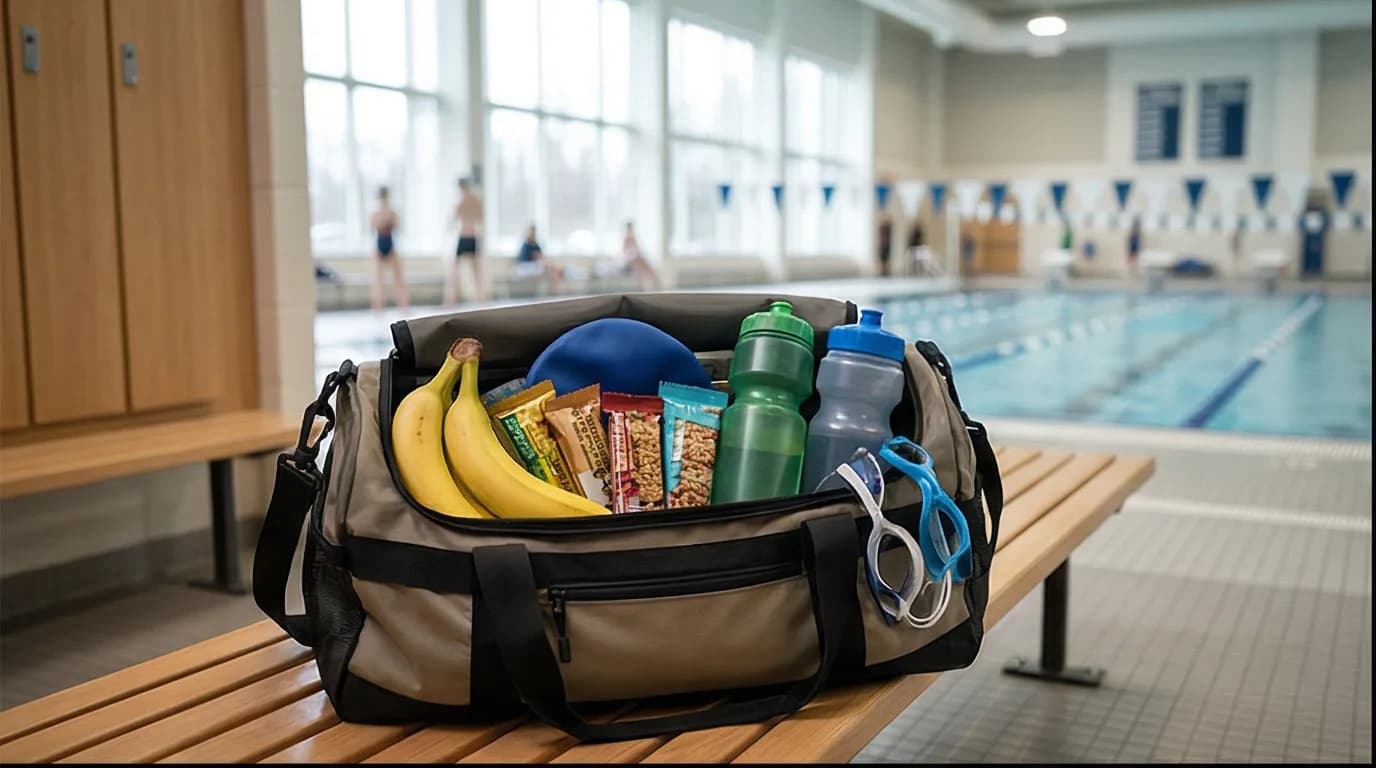
Most meets stretch across hours, and your swimmer will need to refuel between events. Pack snacks that are easy to eat, portable, and gentle on the stomach:
- Bananas
- Granola bars
- Pretzels
- Applesauce pouches
- Crackers with peanut butter
- Dry cereal
- Small portions of fruit
Keep portions small. A few bites between events is better than a full snack that sits heavy.
Stay Hydrated
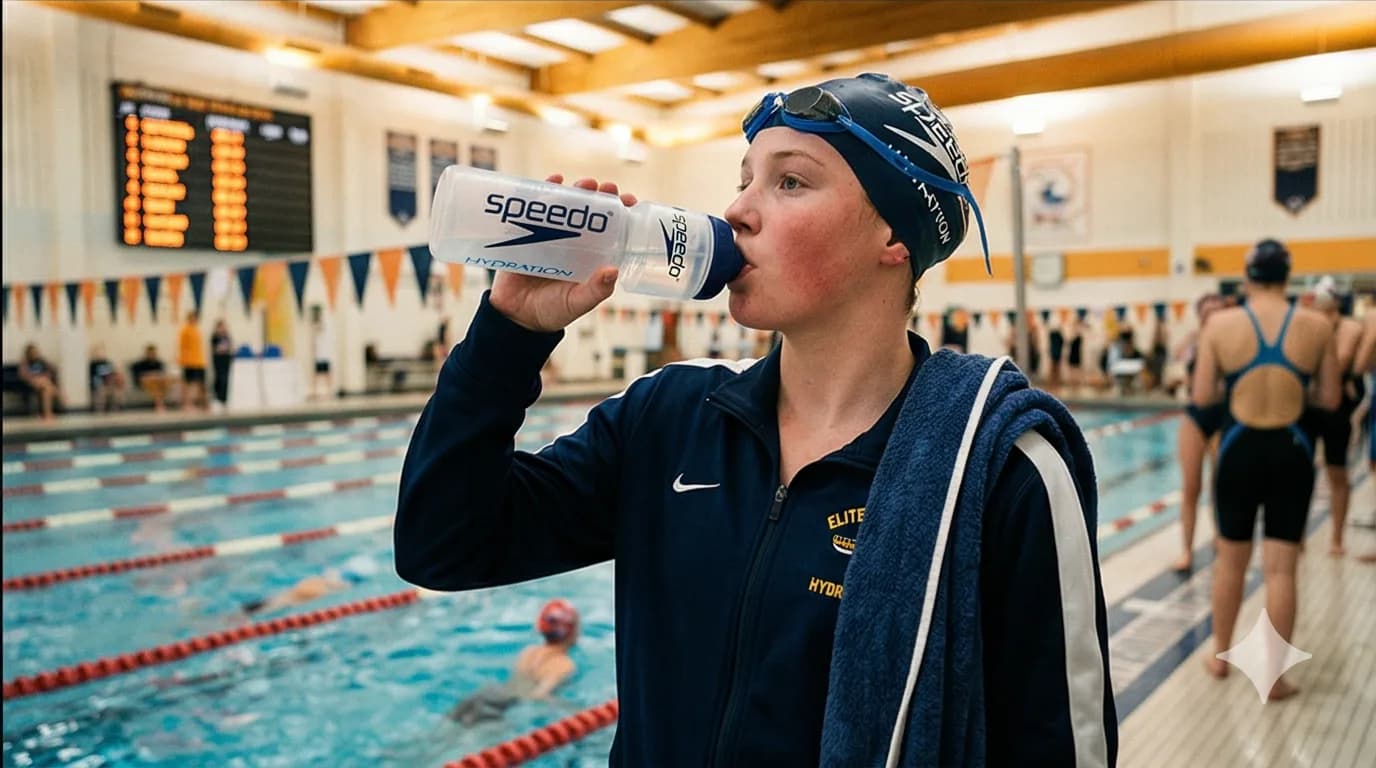
Swimmers often forget they are sweating because they are in the water. A 2014 nutrition review published in PMC confirmed that energy demands in competitive swimming are 25-100% higher than in sedentary individuals, making hydration even more critical. Dehydration affects performance, focus, and recovery. Make sure your swimmer drinks water consistently throughout the day -- not just when they are thirsty.
Water is the best option. Sports drinks can help during long meets, but plain water handles most situations perfectly well. Avoid sugary juices and sodas, which can cause energy crashes mid-meet.
What NOT to Eat
Some foods are notorious for causing problems on race day:
- Fried or greasy food -- burgers, fries, and fried chicken sit heavy and take hours to digest
- High-fiber foods -- beans, raw vegetables, and bran cereals can cause bloating and cramping
- Dairy-heavy meals -- for some swimmers, a big glass of milk or a cheese-loaded meal causes stomach issues
- Sugary snacks and candy -- the quick energy spike is followed by a crash, usually right when they need it least
- Anything new -- this cannot be stressed enough. Race day is for reliable foods, not experiments.
The Bigger Picture
Nutrition on meet day matters, but it is just one piece. Consistent eating habits during the training week build the foundation. A well-fueled swimmer does not need a magic pre-race meal -- they need steady, balanced nutrition every day so that race day is just another day of eating well.
And if your swimmer eats a questionable breakfast and still drops time? That happens too. Do not overthink it. Feed them well, keep them hydrated, and let them race.
Sources
- Shaw, G. et al. (2014). "Nutrition for swimming." Carbohydrate recommendations: 6g/kg/day (low intensity) to 10-12g/kg/day (high intensity). Energy demands 25-100% higher than non-athletes. PMC.
- PMC Nutrition Review. Energy demands in competitive swimming 25-100% higher than sedentary individuals. PMC.
After the meet file is up, sign in and open Best Times . Same event, same pool type. Free, no card.