Quick answer
After a bad race, do not start with analysis. "I love watching you swim" beats "what happened?" Technique belongs to the coach, later. Your job in the next thirty seconds is to be a parent.
After a bad 200 IM at a meet in Langley, Rafa walked toward me with tears running down her face. My instinct -- my immediate, gut-level instinct -- was to talk about the time. To explain what went wrong on the breaststroke leg, to say something about the split. I caught myself, but barely. That was the day I learned that the first words out of my mouth matter more than any race analysis.
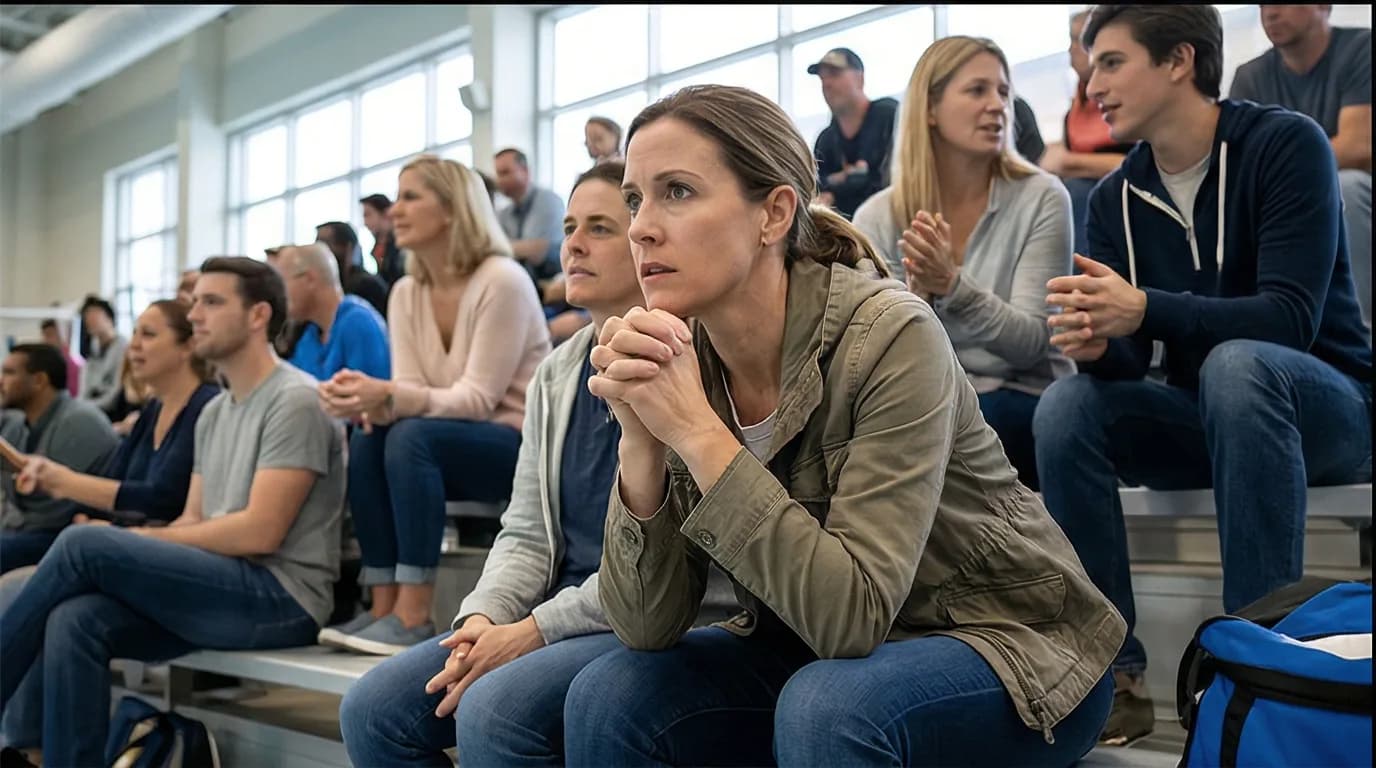
If you have ever been that parent standing behind the bleachers, unsure of what to say, you are not alone.
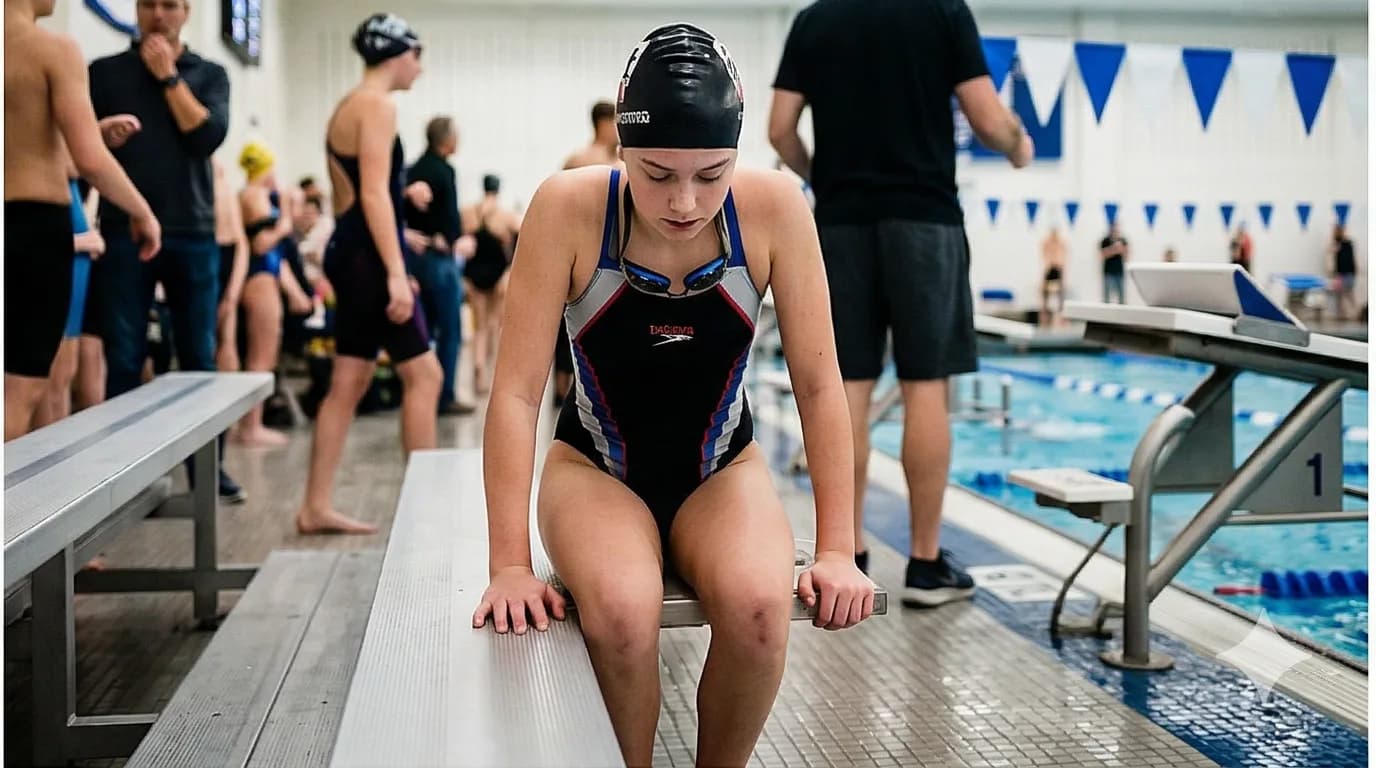
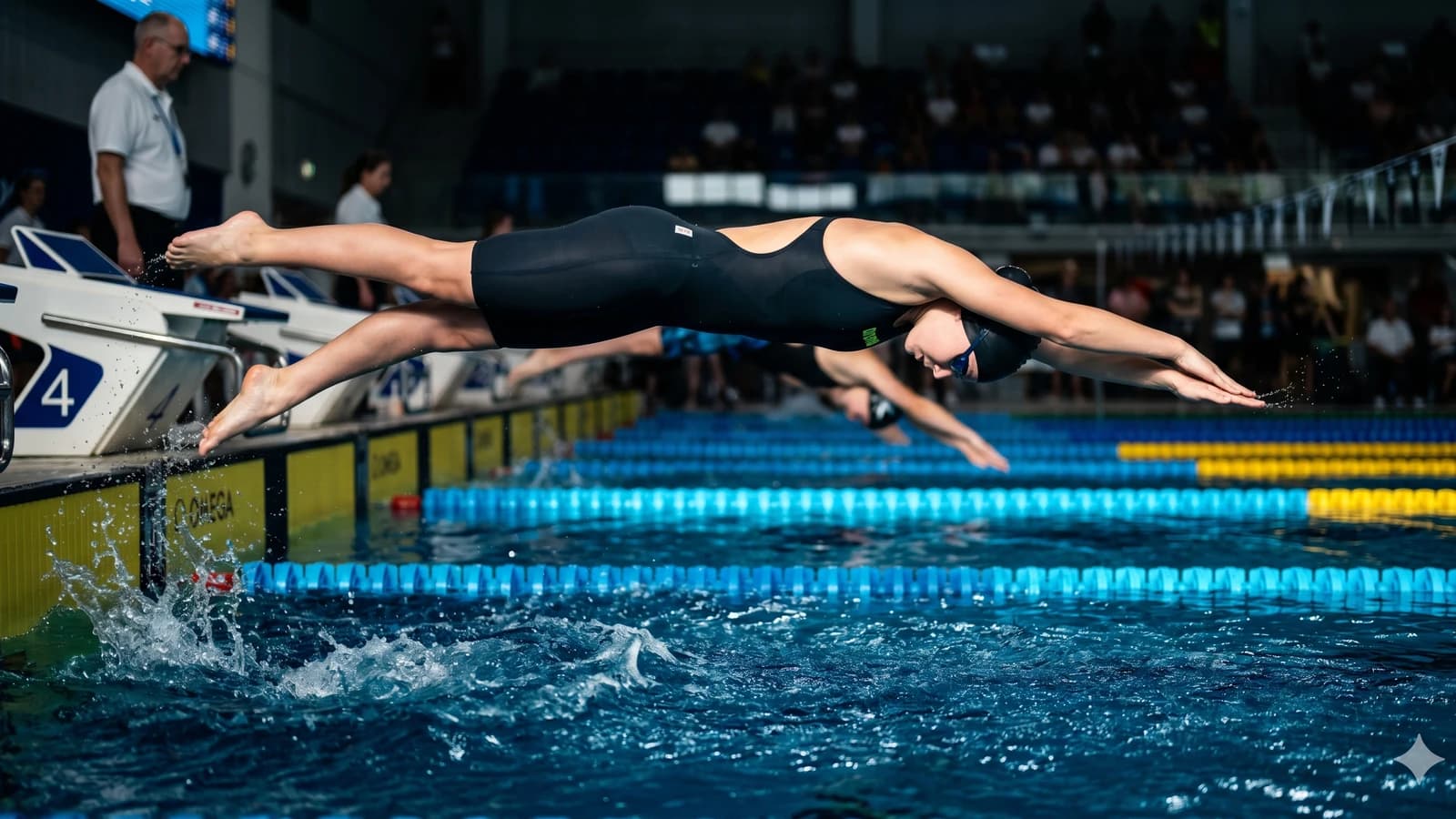
Your swimmer just touched the wall, looked at the scoreboard, and you saw their face fall. Maybe they added time. Maybe they got disqualified. Maybe they just felt off and have no idea why.
You are standing behind the bleachers, and they are walking toward you with wet eyes and a towel over their shoulders. What you say in the next thirty seconds matters more than you think.
Resist the Urge to Fix It
The instinct is immediate: ask what happened, analyze the race, offer suggestions. You want to help. That is natural.
But your swimmer does not need a coach right now. They need a parent.
The worst thing you can say is, "What happened?" -- because it implies something went wrong that needs an explanation. Your child already knows the race did not go well. Making them narrate their failure out loud, while still dripping wet and emotionally raw, does not help them process it. It makes them relive it.
The Best Thing You Can Say
Research by Knight and Holt (2014), published in Psychology of Sport and Exercise, found that positive parental involvement in youth sport leads to greater enjoyment, self-esteem, and motivation. Sports psychologists have studied this extensively, and the answer is surprisingly simple. The words that make the biggest positive impact on a young athlete after a tough competition are:
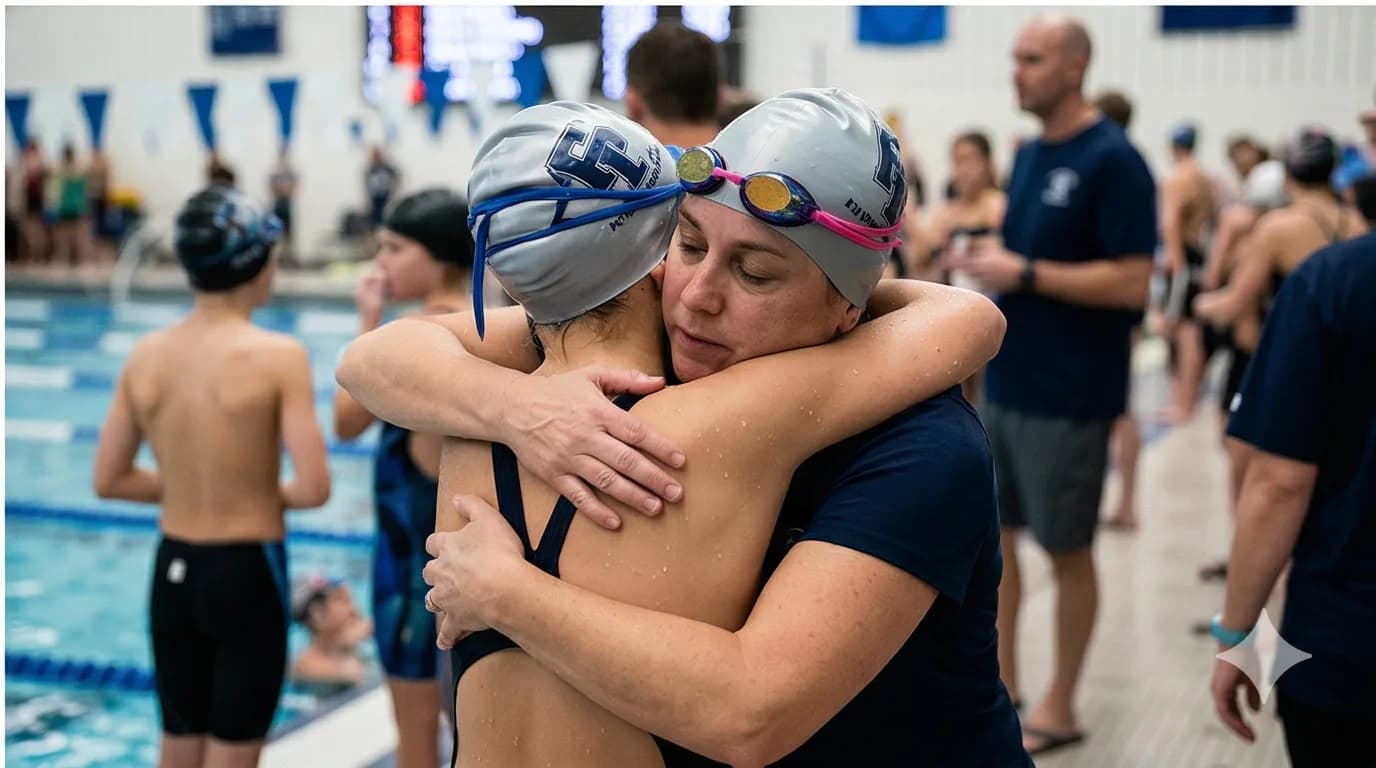
"I love watching you swim."
That is it. No analysis. No silver linings. No time comparisons. Just a statement that your presence at the pool has nothing to do with the scoreboard and everything to do with them.
Other responses that work well:
- "I'm proud of you."
- "Tough race. I'm glad you were out there."
- "Want to grab something to eat?"
Notice what all of these have in common: none of them mention the clock.
What Not to Say
A 2024 systematic review published in Frontiers in Psychology confirmed what many coaches already suspect: parental pressure is linked to adverse motivational outcomes in young athletes, while parental support is linked to enjoyment and persistence. Some phrases feel supportive but carry hidden pressure:
- "You'll get them next time" -- this puts the focus on future performance and creates an expectation they may not be ready to carry.
- "At least you weren't last" -- this teaches them to measure their worth against other kids instead of their own growth.
- "Your teammate swam that time last month" -- comparing them to another child after a bad race is one of the fastest ways to build resentment, both toward you and the sport.
- "You didn't look like you were trying" -- you were not in the water. You do not know how hard they were working. This one stings more than most parents realize.
Let Them Process
Bad races are part of swimming. Every fast swimmer in history has had races they wanted to forget. The ability to process a disappointing result, learn from it, and come back stronger is one of the most valuable skills the sport teaches.
But that processing takes time. Some swimmers want to talk right away. Others need an hour, or a full night's sleep, before they are ready. Do not force the conversation.
When they are ready -- and they will let you know -- ask about effort and feeling, not the clock:
- "How did that feel compared to your last race?"
- "Were you happy with how you handled the start?"
- "Is there something you want to work on in practice?"
These questions give them ownership of their experience. They get to decide what mattered and what comes next.
It Is Not About the Race
Here is the truth that is easy to forget in the moment: your child's relationship with swimming will be shaped far more by how you respond to bad races than by how you celebrate good ones.
The swimmers who stay in the sport the longest, who love the water into adulthood, almost always had parents who made the pool feel safe -- especially when the results were not.
Be that parent.
The time can wait until you are home. Sign in to Gophin later if you want the official result and splits. The walk from the blocks is for the person, not the spreadsheet. Free, no card.
Sources
- Knight, C.J. & Holt, N.L. (2014). "Parental involvement in youth sport." Positive involvement linked to greater enjoyment, self-esteem, and motivation. Psychology of Sport and Exercise.
- Frontiers in Psychology (2024). Systematic review: parental pressure linked to adverse motivational outcomes; parental support linked to enjoyment and persistence. Frontiers in Psychology.