Quick answer
Track official race times. Compare the same event, same pool type, with the right cut. Improve is the coach and the kid in the water — not an in-app workout. Sign in to Gophin free, no card. The spreadsheet was the problem. Practice notes were never the product.
It was past midnight in my home office in Vancouver. I had five browser tabs open, a half-broken spreadsheet, and screenshots of Rafa's meet results scattered across my desktop. I was trying to piece together whether she'd actually improved over the season or if I was just seeing what I wanted to see. That's the night I decided to stop patching things together and build something that could actually make sense of it all.
Want to put this philosophy into practice? See how Track. Compare. Improve. works with real data →
Track, because truth beats guesswork
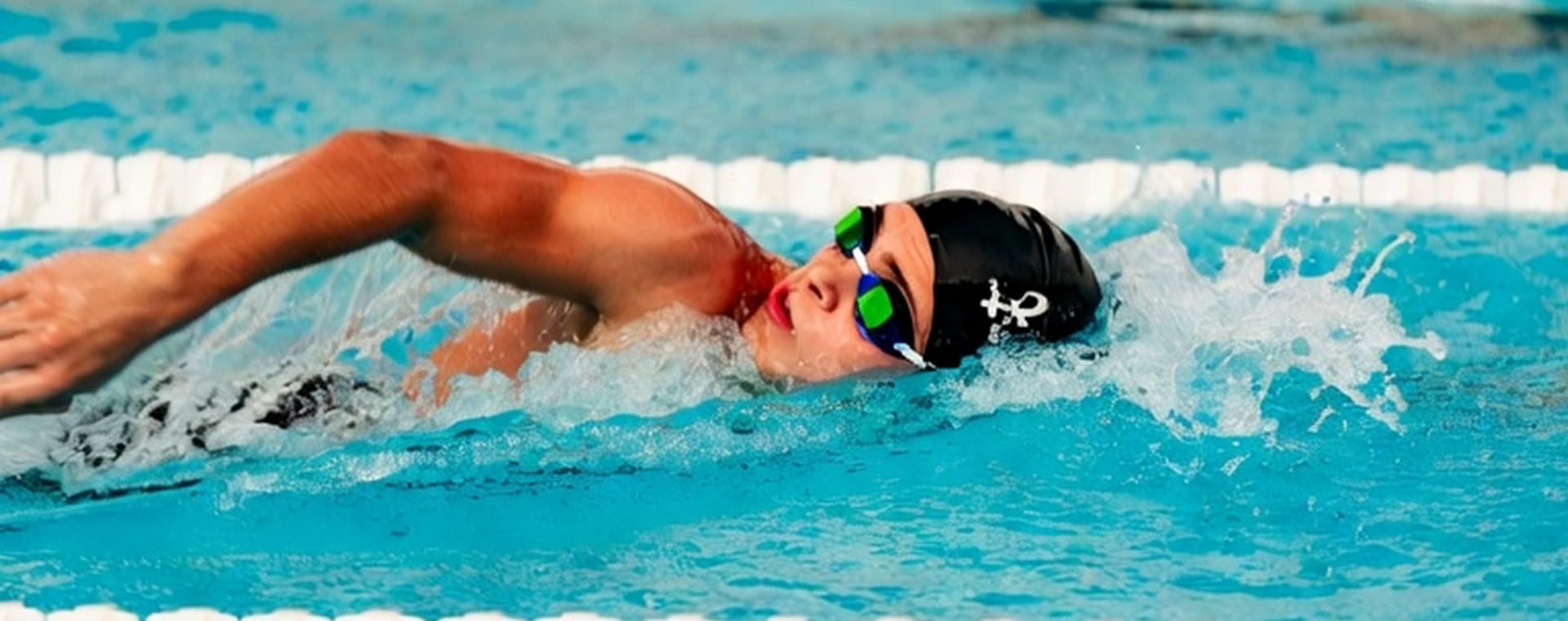
Every official split and race is a piece of the story. Tracking is the commitment to collect that story with honesty. It is taking the stopwatch out of pockets and into a shared source of truth. When we track, we fight the fog of "I think" with the clarity of "I know." Gophin tracks competition, not practice laps.
Example: An evolution chart that shows 100m backstroke times stalling tells the team to revisit race strategy before the championship taper. Tracking is how we respect the work done in silence.
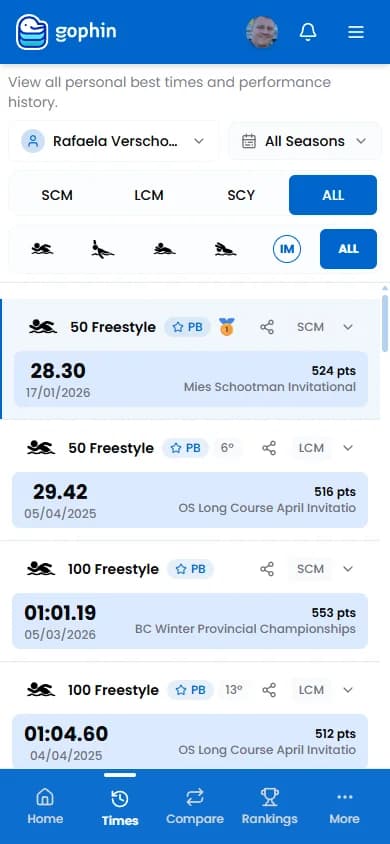

Tracking rituals keep every performance connected to a shared history.
Compare, because context turns numbers into meaning
Comparison is not about ranking the team; it is about aligning with reality. We compare athletes with their past selves, with peers in the same lane of development, and with the standards that matter. When context is present, data stops being a scoreboard and becomes a compass.
Example: A swimmer’s 100 free looks flat until you layer in course changes and rest cycles. With context, you see they are ahead of last season by 0.4 seconds at the same stage. Comparison turns doubt into direction. Learn how to compare your times against official benchmarks in our Compare Standards tutorial.
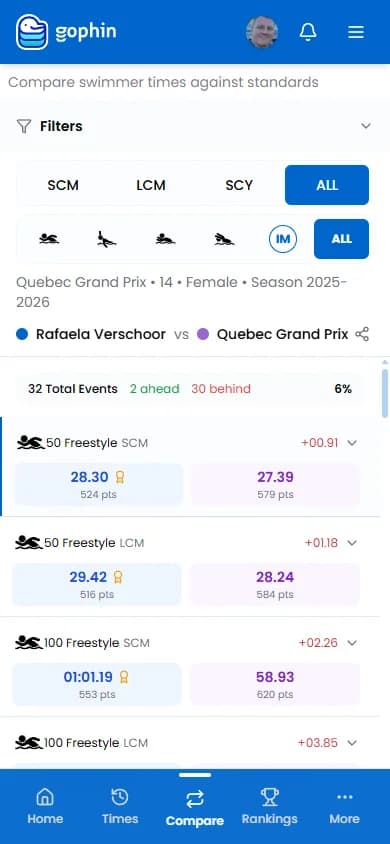
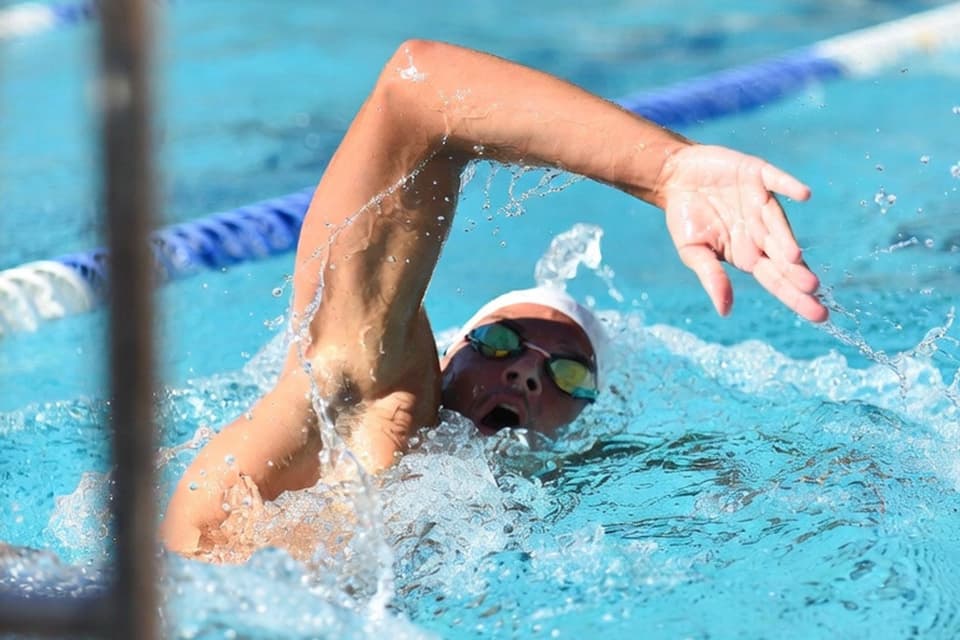
Contextual comparisons keep the focus on fair progress rather than noise.
Improve, because evolution deserves a plan
Improvement is the promise we deliver when tracking and comparison stay consistent. We make adjustments backed by evidence, celebrate the micro wins, and explain the path forward with calm conviction. Improvement is not luck; it is the result of clarity.
Example: Evolution charts reveal that back-half times tighten every season after the swimmer focuses on negative-split races. That pattern becomes visible proof that the coaching plan is working.
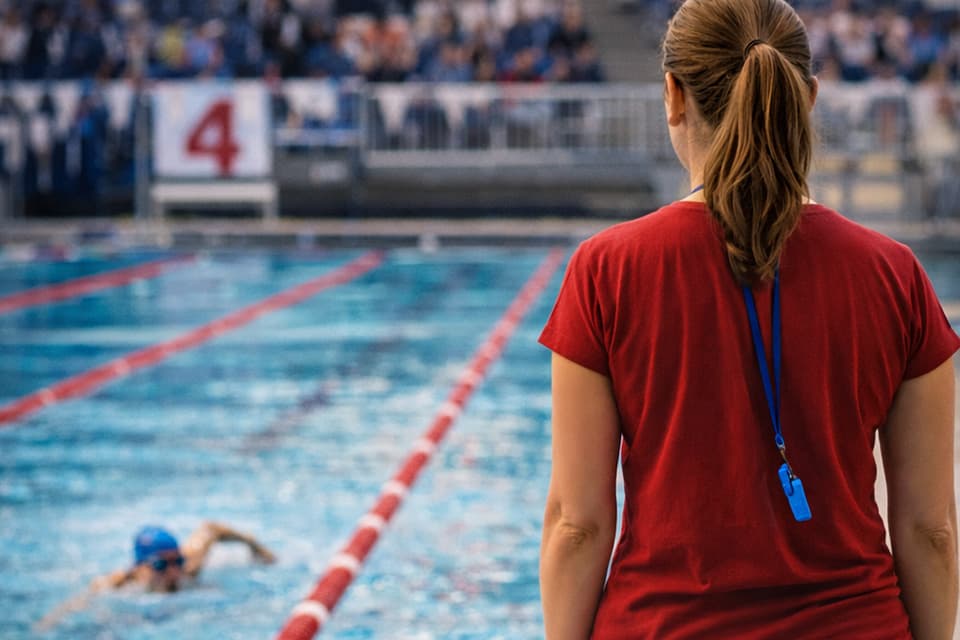
Improvement plans turn every insight into action on deck.
Clarity + Consistency = Sustainable evolution
This manifesto is simple: Track relentlessly. Compare with context. Improve with intent. When we do, swimmers feel seen, coaches lead with certainty, and families trust the journey. Data is not about screens; it is about sustaining the evolution every athlete deserves. Ready to put it into practice? Start with our guide on how to track swimming times.