Quick answer
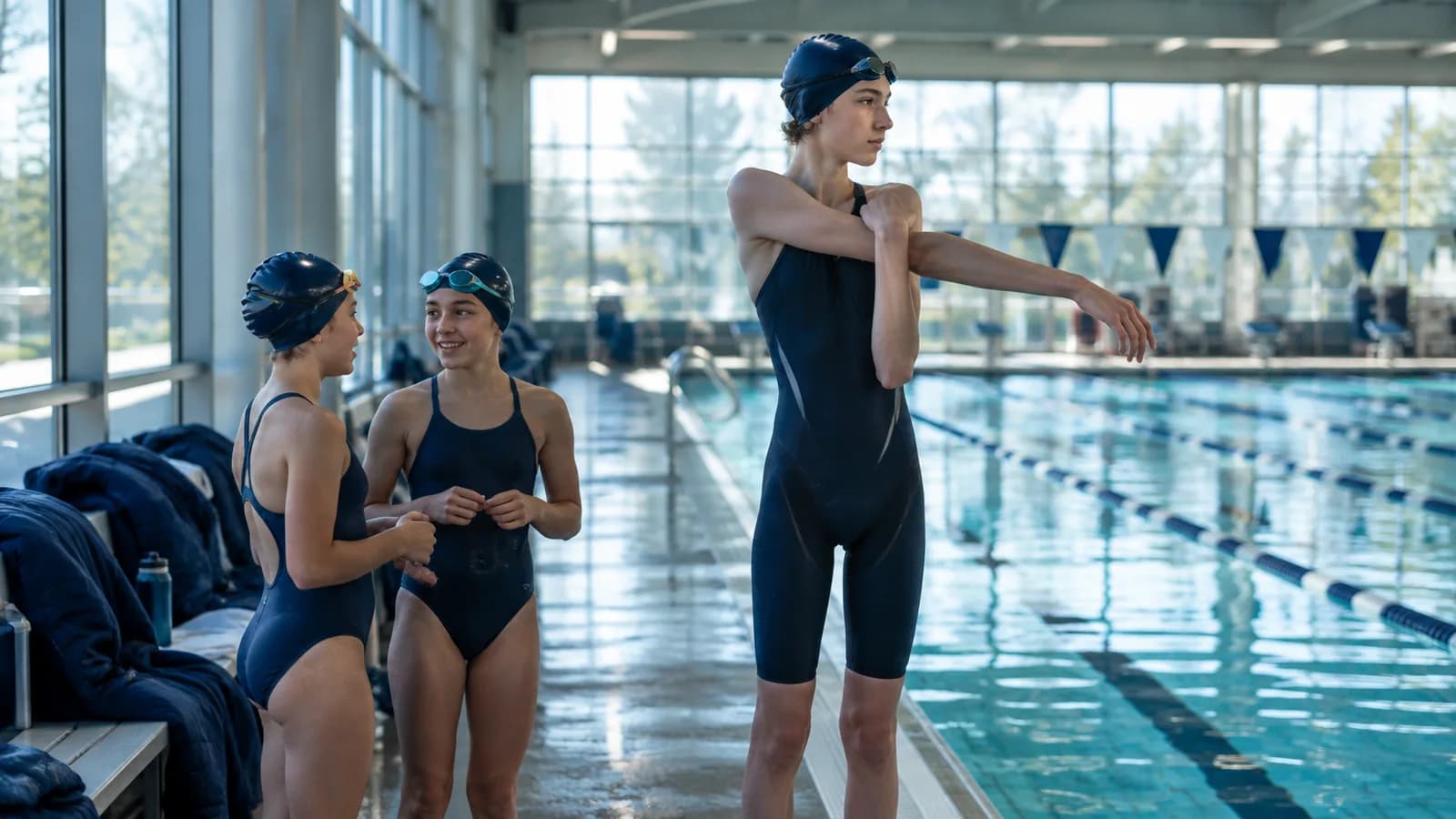
When you grow fast, your arms and legs get longer before your strength and timing catch up. Your stroke, turns and underwater kick feel different, and your times can stall or slip for a while. That is a mechanical reset, not lost fitness. Work on technique, re-learn your walls, sleep and eat enough, and compare season to season instead of meet to meet.
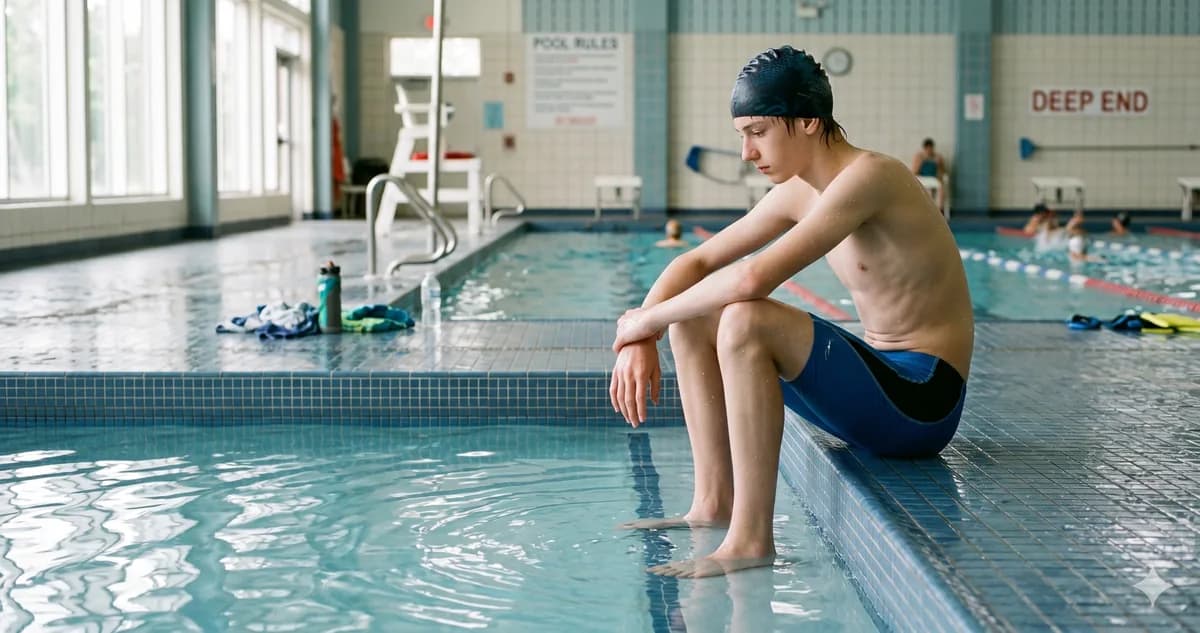
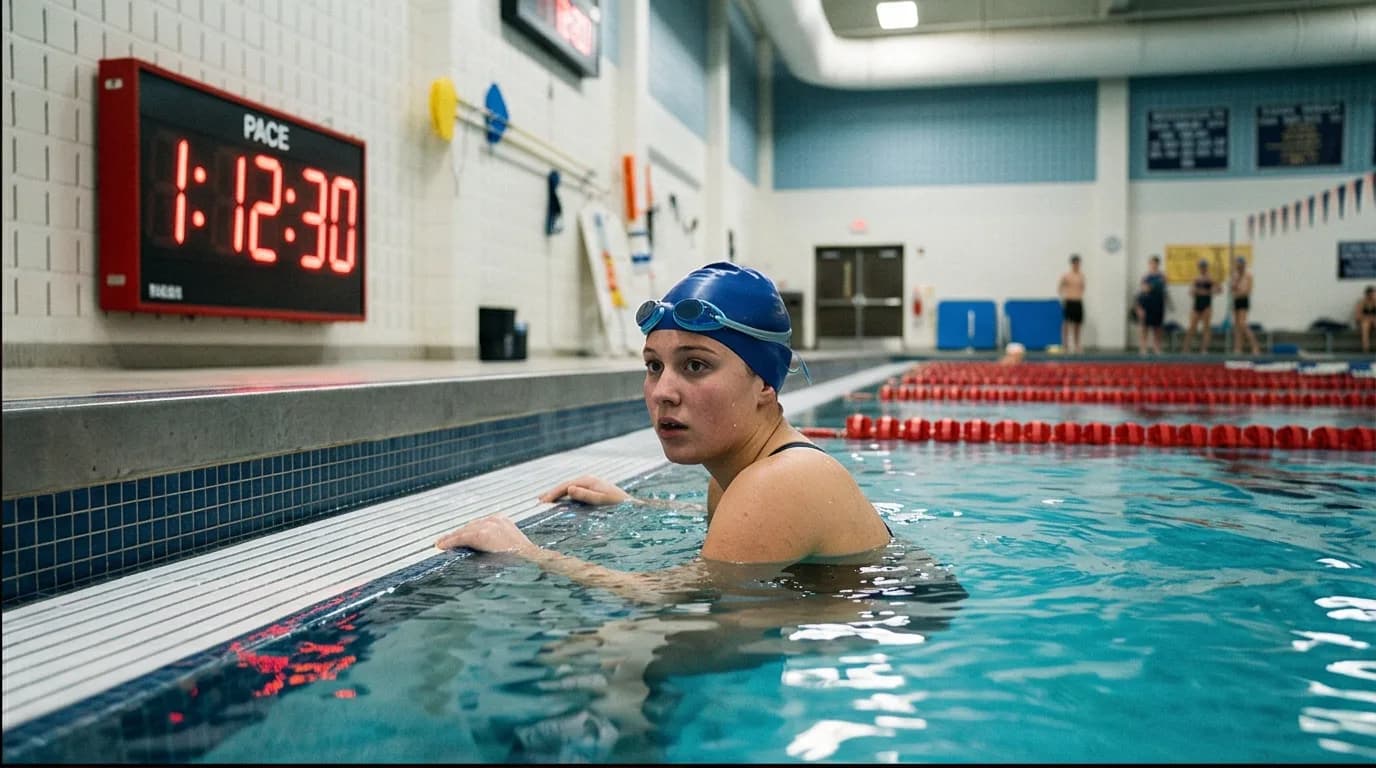
You came back after the break taller, and in the water something feels off. The wall shows up at the wrong moment. Your hand seems to slide through the water instead of grabbing it. You are training as hard as ever, maybe harder, and the clock says you are slower.
If that sounds like you, you are not losing it. You are swimming in a new body, and it takes time to learn how to drive it.
This one is written for you, the swimmer. If your parents want the version for them, send them our article on growth spurts and swim performance for parents.
What it feels like in the water
Here is what swimmers notice most:
- Your timing is off. Longer arms take longer to travel through each stroke, so the rhythm that fit last year does not fit now.
- Your catch feels slippery. Your hand enters at a new spot, and the angle that used to hold water now lets some of it go.
- Walls arrive at a different spot. Each stroke covers more distance and your body is longer, so flip turns land too close or too far and finishes come up short or jammed.
- Your stroke count changes. You might take fewer strokes per length, or the count jumps around from day to day.
- Your underwater kick loses its snap. Longer legs are bigger levers. They are harder to move fast until your muscles catch up.
- You feel more drag. A longer body that is not yet strong enough to hold a tight line tends to sag, often at the hips and legs.
- You are more tired. Growing takes energy. You may need more sleep and more food than you did a year ago.
None of this means you are doing it wrong. Your body just changed faster than your stroke.
A mechanical reset, not lost fitness
Here is the key idea: you can be fitter than last year, better at your drills, and still swim a bit slower for a while.
The race clock measures everything at once. Fitness, technique, timing and strength for your size all add up to one number. A growth spurt scrambles the last three for a while. Your fitness does not disappear because you got taller.
Think of moving up to a bigger bike. It can go faster, but at first you wobble and misjudge corners. Nobody would say you forgot how to ride. In the pool the re-learning just takes longer, because your body keeps changing while you learn it.
Why the fastest 12-year-old is not always the fastest 18-year-old
Some swimmers go through puberty early. At 11 to 13 they are bigger and stronger than their age group, and they win a lot. Others grow later and spend those years chasing.
A study of age-group swimmers found that the sport over-selects early maturers: late maturers were missing from its sample altogether, and when the researchers adjusted times for maturity, the freestyle advantage of the early maturers disappeared [1]. A lot of what looks like talent at 12 can simply be a head start in growth.
Another study followed the careers of 6,003 swimmers in sprint events [2]. Swimmers who had early success tended to peak before 20 and stall somewhere between 16 and 20. Swimmers whose success came later kept improving until about 20 to 24. The researchers concluded that how you progress into adult swimming says more about your potential than your results as a kid.
Two lessons from that:
- If you grew early and won on size and power, now is the time to build the technique that carries you when everyone else catches up.
- If you are growing now, or have not yet, the scoreboard at 13 is not the final word.
What you can do about it
You cannot speed up growing. You can make the reset smoother.
In the pool
- Lean into technique. Drills and stroke work are where your new arms and legs learn to hold water. It is the main job right now.
- Recount and re-learn your walls. Count strokes per length in practice so you know your new number. Find your new marker for the flags and the wall, then practise turns at race speed until they feel automatic again.
- Keep the underwater kick work. It may feel weak for a while. Do not drop it. It comes back as your legs get stronger, and it is a big part of every race.
Out of the pool
- Strength and core, with your coach. Holding a longer body in a straight line takes core strength. Follow the dryland your coach gives you rather than adding heavy weights on your own.
- Sleep and eat enough. A growing body that trains most days needs more of both. Our guide to how much sleep swimmers need is a good place to start.
- Watch for pain. Tired is normal. Pain that sticks around, especially in your shoulders, is not. Tell your coach and your parents, and read our guide to swimmer's shoulder.
In your head
- Compare season to season, same course. Your lifetime best was set in a different body. Put this season's best next to last season's in the same pool length. Researchers who follow young swimmers through these years track progress the same way, with season-best times [3]. You can line up your seasons in Gophin in a few taps.
- Set process goals. "Hold my stroke count on every length" or "six kicks off every wall" are things you control today. More ideas in our article on process goals in swimming.
- Tell your coach. Your coach cannot feel what you feel. Saying "my turns feel weird since I grew" helps them help you. Our guide on how to talk to your swim coach makes that easier.
When motivation wobbles
Between about 13 and 15, a lot changes at once. School gets harder, friends matter more, and there are other things you want to try. Slower times on top of all that can make you wonder if swimming is still worth it.
That feeling is normal. A flat stretch does not mean you have peaked. Our articles on why plateaus are normal and why times stop dropping mid-season explain what else can be going on.
Some swimmers decide, after a while, that they want to swim for fitness, for friends or just because they like it, rather than for cuts. That is not failure. If you dread every practice for weeks, though, talk to someone you trust instead of pushing through.
Remember: you do not improve every month; you improve over years.
See the long arc
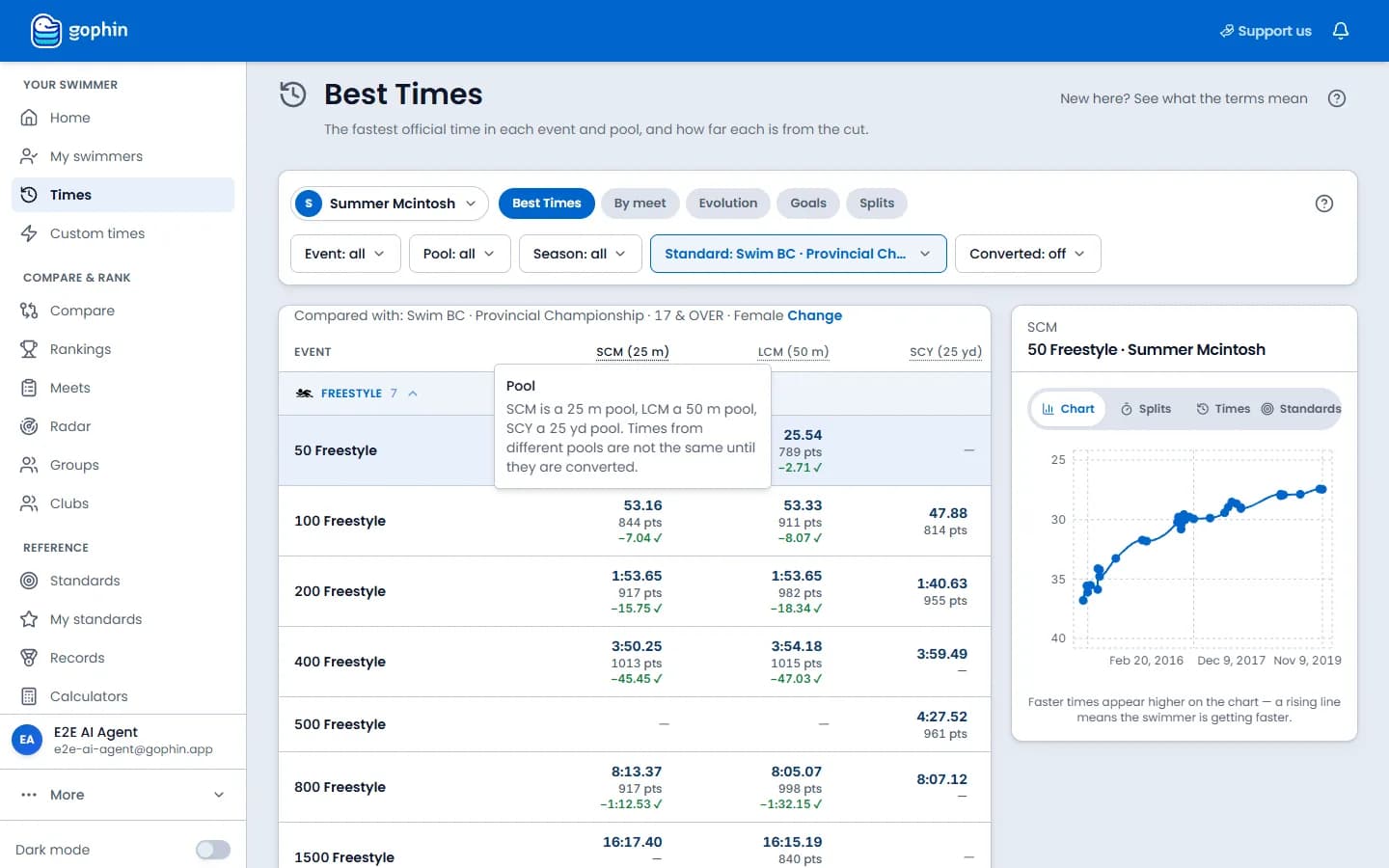
Gophin loads your official meet results automatically, so nothing needs typing in. Compare → Seasons puts this season next to last season, event by event, in the same course: season best against season best. Times → Best Times opens any event's whole history as a chart. When one meet feels like a step back, you can see whether the bigger line is still heading the right way. It is free.
Sign in and open Compare → Seasons →
Questions swimmers ask
Why did I get slower after I grew?
Your arms and legs got longer before your strength and timing caught up. Your catch, turns, stroke count and underwater kick all change, and a longer body creates more drag until it gets stronger. It is a mechanical reset, not lost fitness.
How long until I get faster again after a growth spurt?
There is no fixed timeline. It depends on how fast and how long you grow and how much technique work you put in. Compare season-best times in the same course and talk to your coach, rather than judging yourself meet by meet.
Should I train harder to make up for it?
Not on your own. More metres do not fix timing that changed because you grew. Technique work, re-learning your walls, sleep and food usually help more. Your coach decides the training load, so tell them how you feel.
Sources
- Abbott, S., Hogan, C., Castiglioni, M. T., Yamauchi, G., Mitchell, L. J. G., Salter, J., Romann, M., & Cobley, S. (2021). "Maturity-related developmental inequalities in age-group swimming: the testing of 'Mat-CAPs' for their removal." Journal of Science and Medicine in Sport, 24(4), 397–404. doi.org/10.1016/j.jsams.2020.10.003
- Brustio, P. R., Cardinale, M., Lupo, C., & Boccia, G. (2022). "Don't throw the baby out with the bathwater: talent in swimming sprinting events might be hidden at early age." International Journal of Sports Physiology and Performance. pubmed.ncbi.nlm.nih.gov/35894878
- Post, A. K., Koning, R. H., Visscher, C., & Elferink-Gemser, M. T. (2024). "Growing up and reaching for the top: A longitudinal study on swim performance and its underlying characteristics in talented swimmers." Journal of Sports Sciences, 42(2), 132–145. pubmed.ncbi.nlm.nih.gov/38412227





Comments
No comments yet. Questions about times, meets or the app are welcome.