Quick answer
A real swim meet warmup has four phases: dryland activation (5 to 10 minutes), pool aerobic warmup (15 to 25 minutes), race-pace work (short sprints and starts), and pre-race rehearsal. Plan to start warmup roughly 60 to 90 minutes before your event so muscles are primed but not fatigued at the blocks.
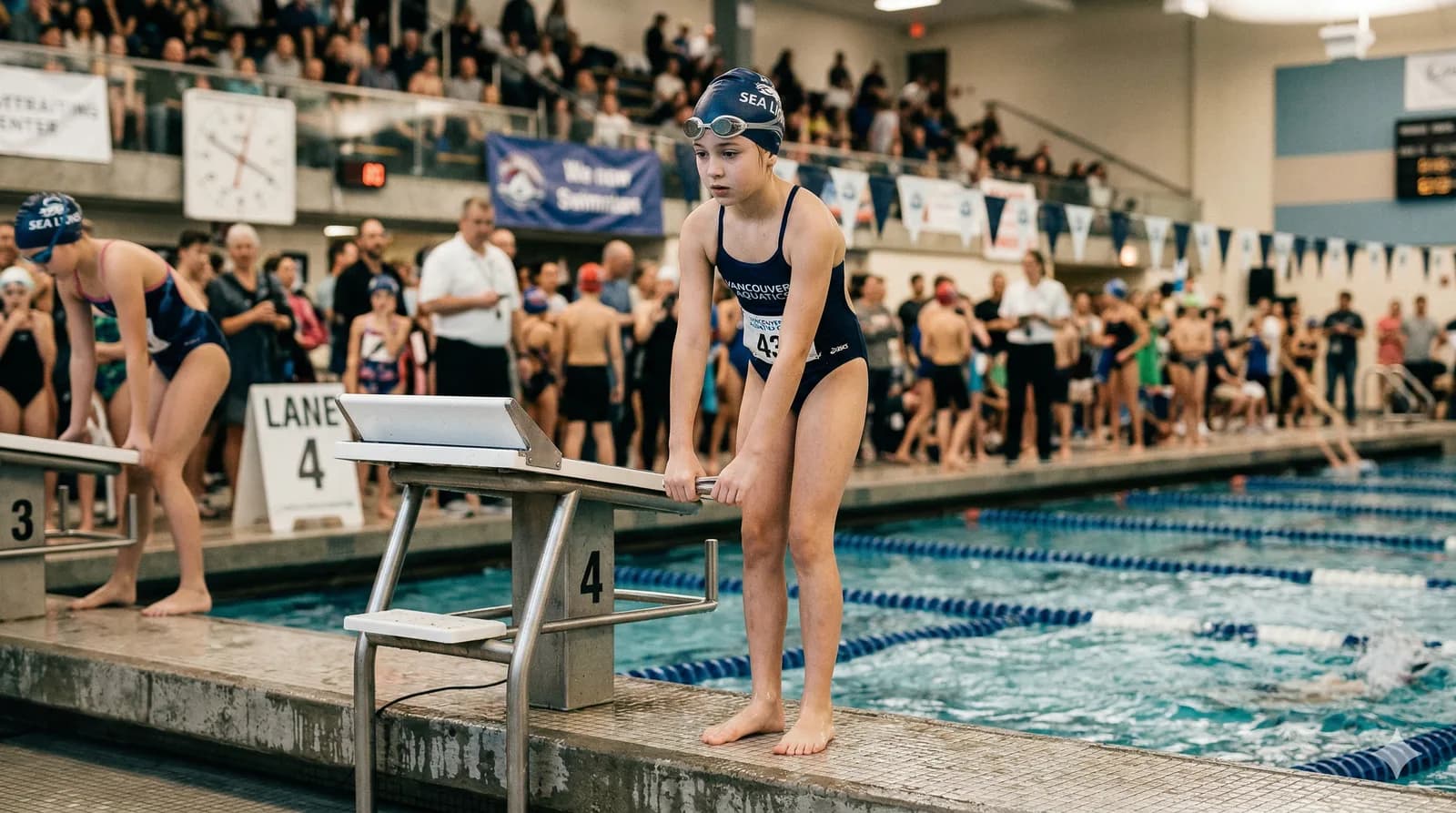
It is 6:45 AM. You have been on the pool deck for fifteen minutes. You are halfway through warmup, and the swimmer in the next lane is already done and sitting on the bench. Your coach said go for thirty more minutes. You stop in the middle of a 100, look at your coach, and ask the question every swimmer asks at some point.
"Is this enough?"
Probably not yet. And how you answer that question on race day quietly decides how your first event goes.
Warmup is the part of meet day that swimmers most often shortchange and most often regret. This is what a real warmup looks like, why each part of it matters, and how to time it so you are sharp when your event is called.
Why Warmup Actually Matters
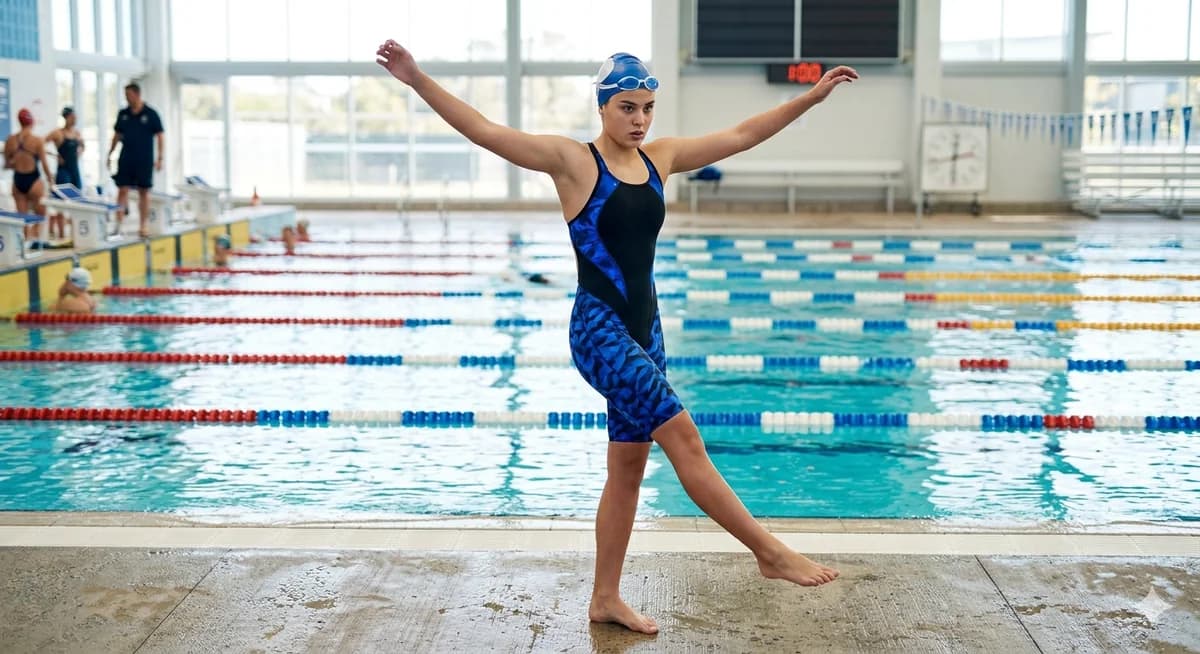
A warmup is not just splashing around to "loosen up." Done right, it does three concrete things to your body before your first race.
It raises core body temperature. Muscles work better when they are warm. Cold muscles produce less force, react more slowly, and are more likely to strain. Even a small increase in core temperature improves stroke power and reduces injury risk.
It activates your nervous system. A race demands explosive movement, fast reactions off the blocks, and high-frequency stroke turnover. Your nervous system needs to be primed for that, not woken up at the sound of the buzzer.
It clears initial lactate. A short, controlled high-intensity effort during warmup actually helps your body deal with lactate more efficiently when the race starts. Going from zero to maximum effort cold is a recipe for early arm-and-leg burn.
A peer-reviewed scoping review of swim warmup protocols, published in Sports Medicine - Open, found that the most effective in-water warmups include moderate aerobic swimming (around 1,000 meters at conversational pace) followed by short higher-intensity efforts, with a transition window kept short enough that the body stays warm. Skipping any one of these pieces leaves performance on the table.
In simple terms: a proper warmup makes your first race feel like your second race usually does. And nobody wants to "warm up" with their first event of the day.
Phase 1: Dryland and Dynamic Movement (5-10 minutes)
Before you get in the water, you should already be moving. Most swimmers skip this part entirely. Do not.
A good dryland warmup has two pieces:
General movement (3-5 minutes): Light jogging, jumping rope, or fast walking around the deck. The point is to elevate heart rate and warm the body. You should feel slightly warmer, with a faster but still comfortable breathing pattern.
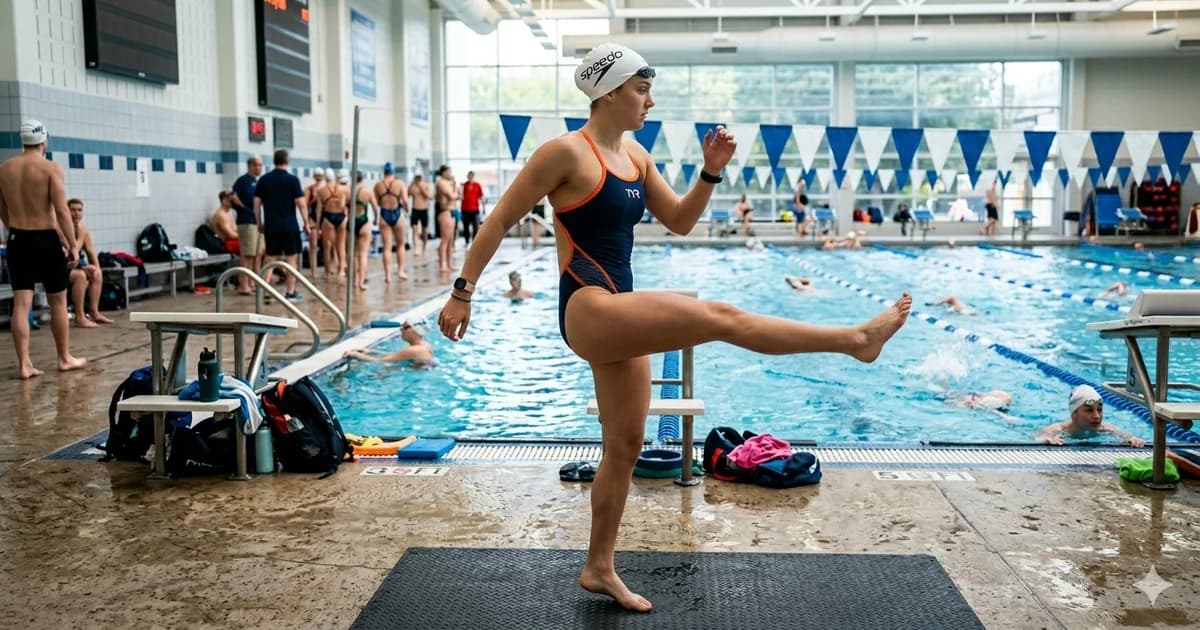
Dynamic stretches (3-5 minutes): Movement-based stretches that take joints through their full range. Skip the long static holds. Examples that work for swimmers:
- Arm circles, both directions, gradually larger
- Leg swings, front-to-back and side-to-side
- Walking lunges with a torso twist
- High knees and butt kicks
- Hip openers (standing 90/90 rotations)
- Cat-cow on hands and knees for spine mobility
- Shoulder dislocates with a band or towel
- Standing torso rotations
If you race a sprint or anything explosive (50s, 100s), add a few short power activations at the end:
- Streamline jumps (3-5 reps)
- Medicine ball throw downs if a ball is available
- Simulated dive setup with explosive arm swing
The goal is central nervous system stimulation, not fatigue. Stop before you feel tired.
US Masters Swimming and youth coaching resources both recommend a similar dryland sequence. The science behind it is straightforward: explosive dryland movements before pool warmup have been shown to improve sprint performance, especially the first 15 meters of the race.
Phase 2: Pool Warmup (25-35 minutes)
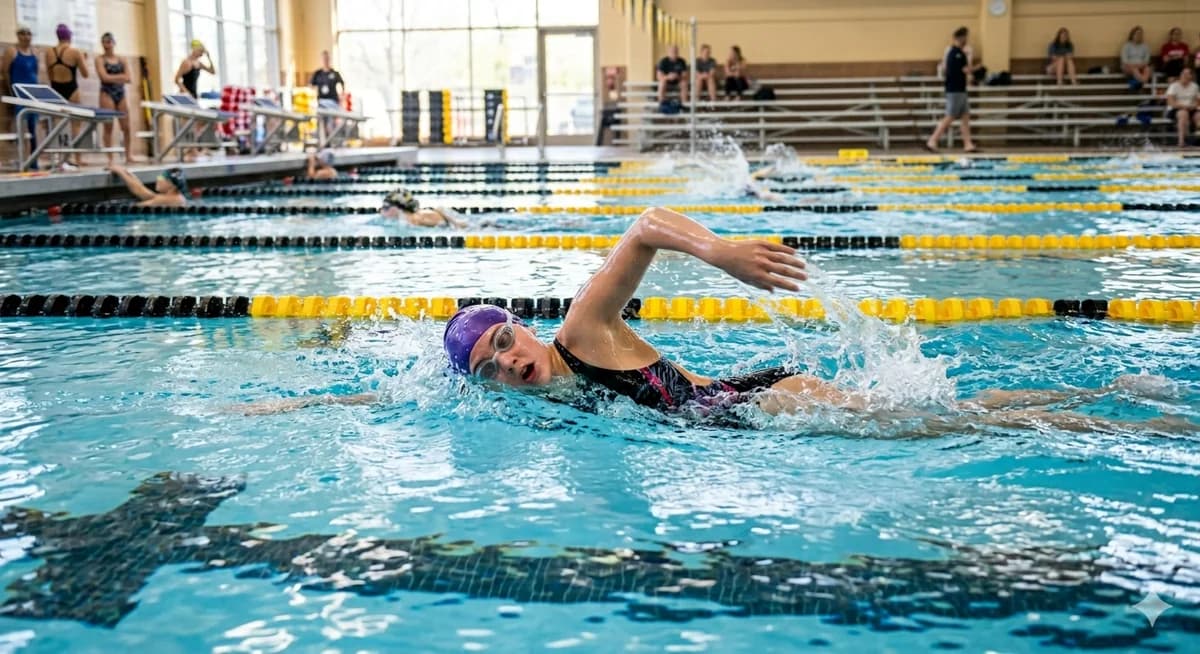
Once you get in the water, the warmup follows a predictable structure. Many coaches will give you a written set on deck. If they do not, this is the standard build.
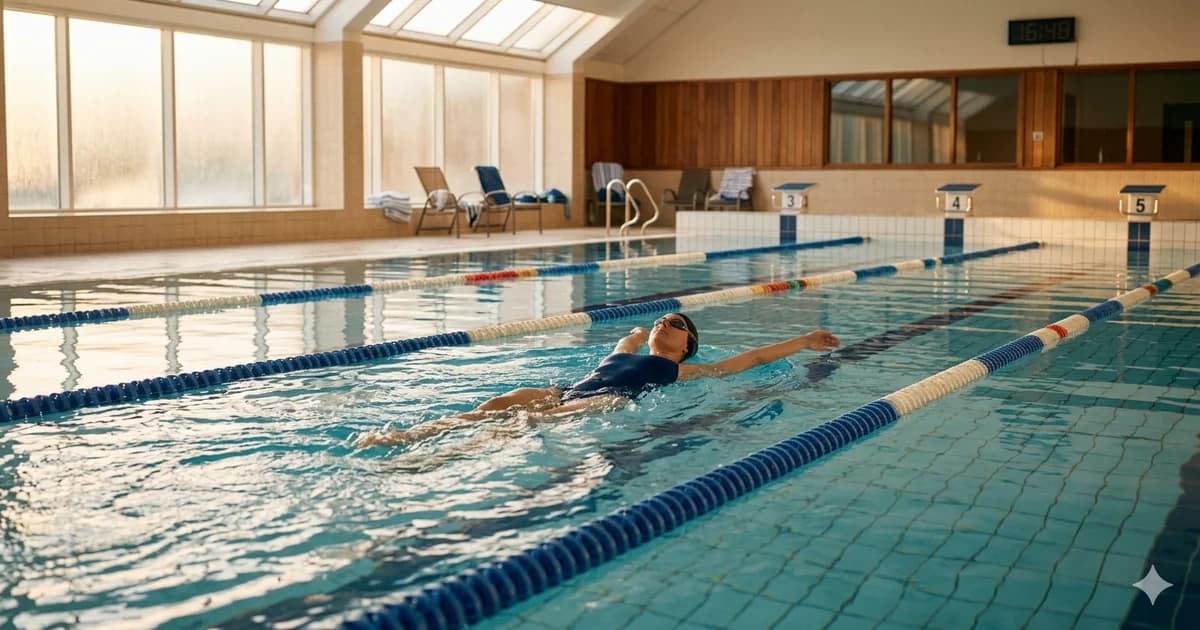
Easy aerobic swim (800-1,200 meters total):
- 400-600 meters easy freestyle, focusing on long strokes and steady breathing
- 200-400 meters of mixed strokes or your secondary stroke at easy pace
- 100-200 meters of drills (single-arm, catch-up, fingertip drag, kick on side)
Build sets (200-400 meters):
- 4 to 8 by 50, building from easy to moderate-fast
- Or 3-4 by 100, descending (each one a little faster than the last)
- Rest enough to maintain quality (15-30 seconds per 50)
Race-pace activation (100-300 meters):
- 4 to 6 by 25, fast, with full rest (30-45 seconds)
- Or 2-3 by 50, alternating fast/easy
- Practice your turn, your breakouts, and your underwater work
- If you race breaststroke or butterfly, do at least one 25 of your stroke at race effort
Starts and turns (5-10 minutes if available):
- 2-4 dives if a sprint lane is open
- Practice your race-specific turn (open turn for fly/breast, flip turn for free/back)
- One or two race-pace 25s off the blocks to lock in the rhythm
Easy swim down (100-200 meters):
- A short cooldown to flush out lactate from the race-pace work and stay loose
The total warmup distance for most age group swimmers comes out to roughly 1,500-2,500 meters, depending on age, event, and how much pool time the meet allows.
Phase 3: Timing Your Warmup to Your Event
Here is where most swimmers go wrong. They get out of warmup, sit down, scroll on a phone for two hours, then walk to the blocks cold.
A good rule of thumb for age group meets:
- Finish your in-water warmup roughly 45-60 minutes before your first event
- Stay warm during the gap (parka, warm-up pants, light movement every 10-15 minutes)
- About 15-20 minutes before your event, do a short dryland re-activation: a few jumping jacks, arm swings, and dynamic stretches
- About 5-10 minutes before, find quiet headspace, focus on race plan, control breathing
If the meet has a continuous warmup pool, you can also do a quick 100-200 meter re-warmup right before your race. Many championship meets have this. Use it if it is available.
If your event is later in the session (4+ hours after the main warmup), you may need a second full warmup, often shorter (800-1,200 meters), about an hour before your race. Talk to your coach about what they want.
For coordinating warmup timing with the meet schedule, our how to read a heat sheet guide walks through reading start times and event order.
Phase 4: Specific Adjustments by Event
Not every event needs the same warmup. A few adjustments to make:
Sprint events (50s, 100s):
- More race-pace 25s in warmup
- More dive starts if available
- Shorter total warmup volume (closer to 1,500 meters)
- Stronger emphasis on power activation in dryland
Distance events (400+):
- Longer aerobic warmup (1,200+ meters)
- Pace work at goal race pace, not faster
- Fewer all-out sprints in warmup, more controlled descending sets
- Save the explosive power for race day
IM events:
- Include all four strokes in warmup
- Practice transitions (back-to-breast, breast-to-fly turns)
- Include at least one race-pace 25 per stroke
Backstroke and breaststroke:
- Spend extra time on the specific kick (dolphin kick on back, breast kick on streamline)
- Practice your underwaters off the wall
Common Mistakes That Cost Swimmers Time
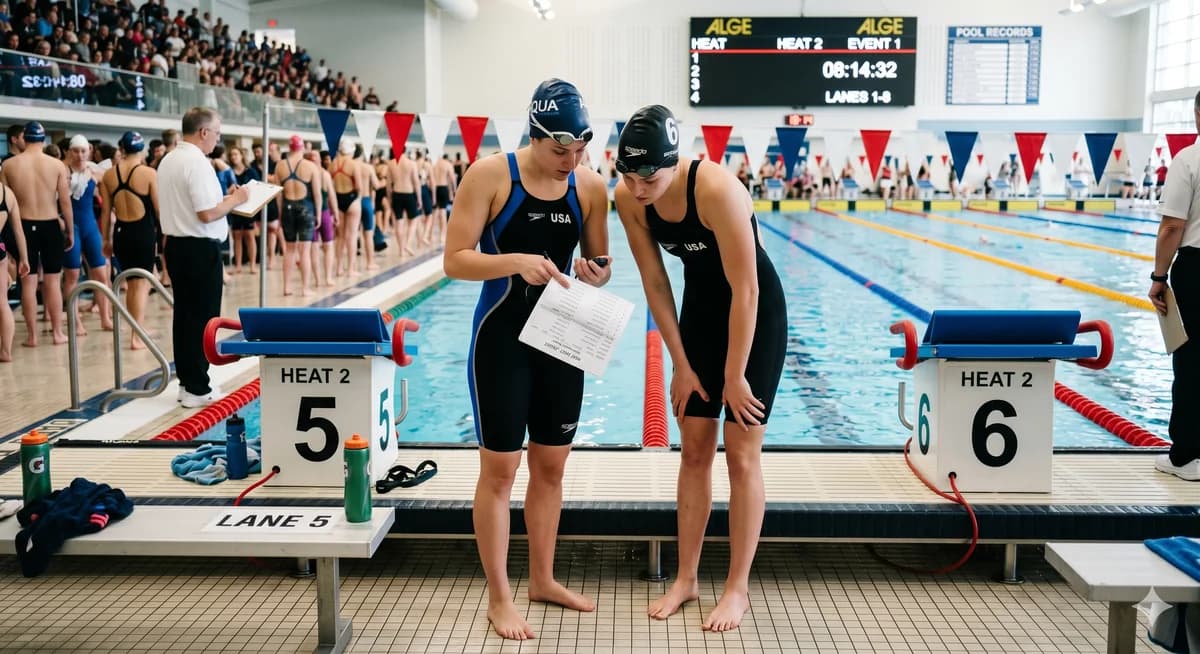
These show up at almost every meet. Avoid them.
Skipping dryland. "I'll just stretch in the pool." You will not. The water is too warm and supportive to fully activate explosive movement patterns. Get the dryland in.
Over-warming up. Doing 3,500 meters in warmup before a 50 free is a way to be tired before the race starts. Stick to a sensible total volume.
Going too hard in pool warmup. Build sets should descend smoothly, not turn into hidden race-pace efforts. Save the speed for the race-pace activation phase, then save the rest for the race.
Bad pacing in warmup intervals. Sprinting your aerobic 400 leaves nothing for the race. Treat warmup like training: hit the right pace for each segment.
Skipping the race-pace activation. This is the biggest cost. A swimmer who never touches race speed in warmup arrives at the blocks with a nervous system that is half-asleep. The first 25 of the race ends up being a "wake up" lap.
Leaving the warmup pool with two hours to kill. Heat dissipates fast on a cold deck. Without a re-activation, your body is essentially cold by the time you race. Keep moving. Keep layered up.
Trying something new on race day. New warmup drills, new dive cues, a new stroke focus, none of this belongs at a meet. Save experiments for practice.
For race-day fueling and hydration, our pre-meet nutrition guide and hydration guide cover what to eat and drink between events.
Tracking the Pattern: What Worked, What Did Not
The fastest way to dial in your warmup is to pay attention. After each meet, write down:
- What warmup you did (dryland, distance, race-pace activation, timing)
- How you felt at the start of your race
- Your time and how it compared to your best
- Any adjustments you would make next time
Over a season, patterns show up. Maybe you swim faster after a longer dryland. Maybe a 1,500-meter warmup is your sweet spot. Maybe the 60-minute gap is too long for you and 40 minutes works better.
log warmup-to-race patterns inside Gophin, no card needed. Best Times and Meets are free for everyone, so you can compare race results across meets and start to see what warmup approach actually moves the needle for you.
One Last Thing
Warmup is not the part of the day that wins races. But a bad warmup is a fast way to lose them.
Get on deck early. Move on land before you get in the water. Build your aerobic base, sharpen your speed, hit the wall a few times at race effort. Stay layered up between warmup and race. Re-activate before you step on the blocks.
Then race the warmup you did, not the one you wish you had done.
open Gophin and watch race-day execution improve, no card needed.
Sources
- Sports Medicine - Open. "Swimming Warm-Up and Beyond: Dryland Protocols and Their Related Mechanisms, A Scoping Review." Peer-reviewed analysis of warmup protocols and performance impact. sportsmedicine-open.springeropen.com
- U.S. Masters Swimming. "How Swimmers Should Warm Up for a Meet." Practical warmup protocols and dryland recommendations. usms.org
- SwimSwam. "How to Make the Most of Your Swim Meet Warm-Up." Coaching breakdown of typical warmup structures. swimswam.com
- USA Swimming coaching resources. Race-day preparation and pre-race activation guidelines. usaswimming.org